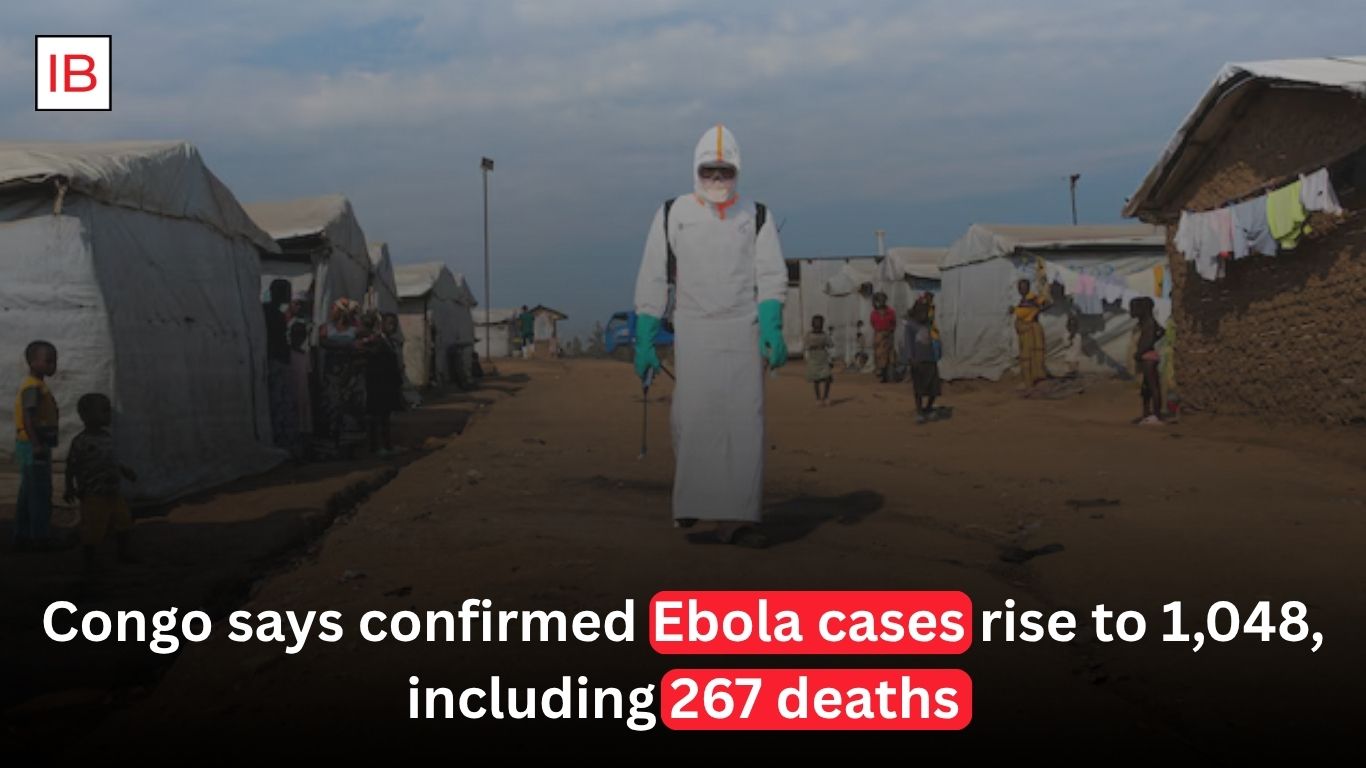
Health Officials Warn Virus Continues to Spread Across Eastern Regions. The Democratic Republic of the Congo has reported a sharp increase in Ebola infections, with confirmed cases rising to 1,048 and the death toll reaching 267 as health authorities struggle to contain one of the country’s largest outbreaks in recent years.
The epidemic, caused by the rare Bundibugyo strain of the Ebola virus, was officially declared in May and has continued to spread across eastern Congo despite ongoing containment efforts. Public health officials warn that active community transmission remains a major concern.
Rare Ebola Strain Complicates Response
Unlike some previous Ebola outbreaks, the current epidemic involves the Bundibugyo variant, for which there is currently no approved vaccine or targeted treatment.
Health experts say the lack of specific medical tools makes traditional containment measures such as isolation, contact tracing and public awareness campaigns critical to slowing the spread of the virus.
The outbreak has become one of the most significant Ebola emergencies seen in recent years.
Ituri Province Remains Epicenter
Most infections have been concentrated in Ituri Province in northeastern Congo, though cases have also been detected in neighboring regions.
Health authorities continue to monitor new clusters as the virus spreads beyond its original outbreak zone, raising concerns that additional provinces could be affected if transmission is not brought under control.
Officials say tracking infections has become increasingly difficult as the outbreak expands.
Security Challenges Hamper Containment
Efforts to contain the virus have been complicated by ongoing insecurity in eastern Congo.
Armed groups remain active in several affected areas, making it difficult for health workers to reach communities and carry out surveillance operations. Population displacement and limited healthcare infrastructure have further strained response efforts.
Authorities also face challenges locating and monitoring individuals who may have been exposed to the virus.
Thousands of Contacts Under Monitoring
International health agencies report that thousands of people have been identified as contacts of confirmed Ebola patients.
However, officials acknowledge that many potential contacts remain untraced, increasing the risk of continued community transmission. Public health experts warn that unidentified cases could fuel new outbreaks and make containment more difficult.
Health teams are working to strengthen contact-tracing networks and improve disease surveillance.
Regional Spread Raises Alarm
The outbreak is no longer confined solely to Congo.
Neighboring Uganda has reported imported Ebola cases linked to the epidemic, prompting authorities to increase border monitoring and strengthen screening procedures.
Regional health organizations are coordinating efforts to prevent further cross-border transmission and reduce the risk of a wider outbreak across Central and East Africa.
Treatment Centers Under Pressure
Aid organizations say medical facilities treating Ebola patients are facing growing pressure as case numbers continue to rise.
Healthcare workers are dealing with shortages of resources and increasing demand for treatment services. International partners have called for additional funding, equipment and personnel to support response operations.
Humanitarian agencies warn that without increased assistance, the outbreak could continue expanding in the coming weeks.
Global Health Agencies Intensify Response
The World Health Organization and other international partners remain actively involved in efforts to contain the virus.
Response teams are supporting local authorities through surveillance programs, laboratory testing, public education campaigns and emergency medical assistance.
Health experts stress that community cooperation will be essential to slowing transmission and preventing further loss of life.
Critical Weeks Ahead
With infections continuing to rise and hundreds of lives already lost, officials say the coming weeks will be crucial in determining the trajectory of the outbreak.
While containment efforts are ongoing, significant challenges remain, including security concerns, healthcare shortages and difficulties tracking exposed individuals.
For now, health authorities are urging vigilance as they work to prevent the Ebola epidemic from becoming an even larger regional health emergency.