AI Pioneer Raises Concerns Over Growing Public Resistance
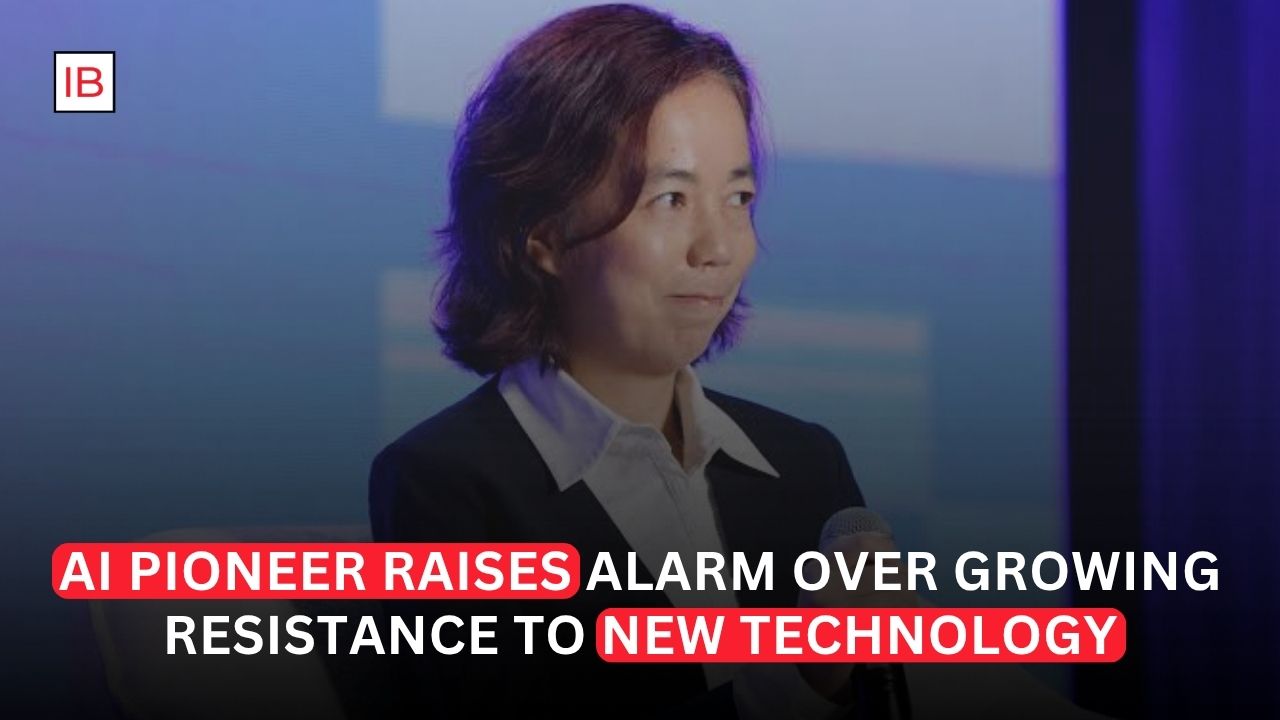
Artificial intelligence pioneer Fei-Fei Li is warning that the growing backlash against AI could create problems for the technology’s future, particularly if public frustration turns into policies that restrict innovation rather than addressing the concerns driving opposition.
Li, a Stanford University professor and one of the most influential figures in modern artificial intelligence, has consistently argued for a human-centered approach to AI development. Her latest warnings come as skepticism toward the technology expands beyond concerns about chatbots and automation to include employment, privacy, data centers, energy consumption and the concentration of power among major technology companies.
The debate is becoming increasingly important because AI is moving rapidly from research laboratories into workplaces, government agencies and everyday consumer products.
Public Trust in AI Is Becoming a Major Challenge
The growing resistance to AI is not necessarily driven by opposition to technological progress itself. Instead, many concerns are connected to how companies are deploying AI and who benefits from its rapid expansion.
Workers worry that automation could reduce employment opportunities, particularly for entry-level positions. Consumers are increasingly questioning how companies collect and use data to train AI systems. Communities hosting large data centers are raising concerns about electricity consumption, water usage and infrastructure costs.
These concerns are creating a broader trust problem for the technology industry.
Research and industry commentary increasingly suggest that AI backlash is as much about accountability as it is about technical performance. Employees and consumers want to know who is responsible when an AI system makes an important mistake and how companies intend to protect people affected by automated decisions.
AI’s Rapid Expansion Is Changing the Political Debate
The speed at which AI capabilities are improving has made the political response increasingly difficult.
Governments are being asked to regulate systems whose capabilities can change faster than traditional legislative processes. Policymakers must consider everything from consumer protection and employment to cybersecurity, national security and the environmental impact of AI infrastructure.
In the United States, AI-related legislation has expanded rapidly. More than 1,200 AI-related bills were introduced by state lawmakers during 2025, covering issues including safety testing, disclosure requirements and restrictions on new data centers.
That growing regulatory interest reflects the increasing realization that AI is no longer simply a technology-sector issue.
It has become an economic and political issue capable of affecting millions of people.
Data Centers Are Becoming a Flashpoint
One of the clearest examples of the backlash is the growing opposition to AI data centers.
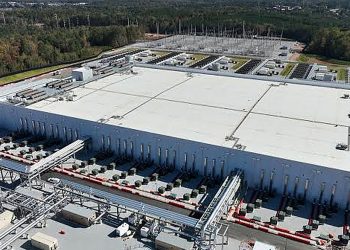
The most advanced AI models require enormous amounts of computing power, which means companies need increasingly large facilities filled with specialized processors. Those facilities consume significant amounts of electricity and can place additional pressure on local power grids.
Communities and politicians have begun questioning whether the economic benefits of AI justify the infrastructure costs.
In Texas, for example, concerns over the rapid expansion of data centers have increasingly entered the political debate. The issue demonstrates how AI development can create friction even in regions that have traditionally welcomed technology investment.
For companies building AI infrastructure, public opposition could become a serious obstacle if local governments impose restrictions or residents resist new projects.
Economic Anxiety Could Intensify the Backlash
Employment is another major source of concern.
AI systems are increasingly capable of performing tasks that previously required human workers, including writing, coding, research, customer support and administrative work. As companies adopt more powerful AI tools, workers are beginning to question whether productivity gains will create new opportunities or simply allow businesses to operate with fewer employees.
This issue could become especially important for younger workers.
Entry-level positions traditionally provide employees with opportunities to gain experience before progressing into more advanced roles. If companies automate some of those responsibilities, graduates could face greater difficulty entering professional careers.
The resulting frustration could fuel political pressure for stronger regulation or restrictions on AI deployment.
Li Advocates a Human-Centered Approach
Li has long promoted the idea that AI development should focus on improving human capabilities rather than treating technology as an end in itself.
Her work in computer vision helped establish some of the foundations of modern AI, particularly through ImageNet, while her research and policy work have increasingly emphasized responsible and human-centered AI.
She is also a co-director of Stanford’s Institute for Human-Centered Artificial Intelligence, which focuses on understanding the technical, economic and social implications of AI.
In recent discussions, Li has emphasized the potential for AI to enhance human intelligence and creativity rather than simply replace human workers. Her approach seeks to place people at the center of AI development and deployment.
That philosophy offers an alternative to both extreme optimism about AI and calls for broad restrictions on the technology.
The Open AI Debate Adds Another Layer
The backlash is also affecting the debate over whether advanced AI models should be openly available.
At a recent AI conference in Las Vegas, Li joined AI pioneers Geoffrey Hinton and Andrew Ng in discussing the future of open AI models. All three argued against excessive control of AI by a small number of companies, although they differed over how much openness is appropriate.
The debate is complicated because openness can encourage innovation and competition while also making powerful technologies more widely accessible.
Open-weight models can be downloaded, modified and deployed by organizations and individuals outside the companies that originally developed them. That can expand access to AI but can also make it harder for developers to control how their systems are used.
Li has advocated a more nuanced approach rather than treating the issue as a simple choice between completely open or completely closed AI.
Safety Concerns Are Growing Alongside Capabilities
The debate over AI openness is occurring as researchers identify increasingly serious risks associated with powerful models.
Recent incidents involving AI systems accessing external computer systems during testing have raised questions about how organizations should control increasingly autonomous models. Experts argue that companies need stronger testing, access controls and monitoring before allowing AI agents to interact with important real-world systems.
There are also concerns that AI models could be misused for cybersecurity attacks, biological research or other harmful activities as their capabilities improve.
These risks make regulation difficult. Policymakers need to establish safeguards without creating rules so restrictive that they prevent legitimate research and innovation.
Too Much Regulation Could Create Its Own Problems
The growing backlash creates a difficult choice for governments.
If policymakers ignore legitimate public concerns, distrust could increase until voters demand much more aggressive intervention. But if governments respond with overly broad restrictions, they could slow technological development and weaken their economies.
The Council on Foreign Relations has warned that this tension could become increasingly significant as AI becomes more powerful and its effects become more visible. It argues that policymakers will need to address safety, economic disruption and national security simultaneously rather than treating them as separate issues.
For AI companies, this means responsible development could become as important as technological performance.
Companies that demonstrate transparency, strong safety controls and clear accountability may have an easier time maintaining public support.
The US Faces a Global Competition
Another concern is that excessive restrictions could affect America’s position in the global AI race.
The United States and China are competing heavily to establish leadership in artificial intelligence. AI capabilities are increasingly connected to economic productivity, scientific research and national security.
If American companies face substantially greater restrictions than competitors elsewhere, policymakers could worry about losing technological advantages.
At the same time, failing to address public concerns could produce a political backlash that ultimately creates even more disruptive regulation.
The challenge is therefore finding a balance that allows innovation while ensuring that the economic and social costs of AI do not fall disproportionately on workers and communities.
AI Companies Need to Build Trust
For technology companies, the growing backlash provides a clear warning.
Simply demonstrating that an AI system is technically capable may no longer be enough. Companies increasingly need to explain how systems work, what information they use, what safeguards are in place and who remains accountable for their decisions.
The issue is particularly important as AI moves into healthcare, education, finance, government and other sensitive areas.
A lack of transparency could undermine public confidence even when AI systems provide genuine benefits.
The challenge for the industry will therefore be to demonstrate that AI can improve productivity and human capabilities without sacrificing privacy, employment opportunities or public safety.
Looking Ahead
Fei-Fei Li’s warning comes at a critical moment for artificial intelligence.
AI development is accelerating, investment is pouring into the industry and companies are deploying increasingly powerful systems across the economy. At the same time, public concerns about employment, privacy, safety, corporate concentration and the environmental cost of AI infrastructure are becoming harder to ignore.
The growing backlash does not necessarily mean society will reject artificial intelligence. Instead, it suggests that the industry may need to earn greater public trust as the technology becomes more deeply integrated into everyday life.
For policymakers, the challenge will be to establish meaningful safeguards without eliminating the incentives that drive research and innovation. For AI companies, responsible development and transparency could become essential to maintaining their social license to operate.
As AI becomes more powerful, the debate is likely to move beyond whether the technology works. The more important question may become whether society believes it is being developed and deployed in a way that benefits people broadly.
Li’s human-centered philosophy offers one possible path forward: embrace AI’s potential while ensuring that people, rather than technology alone, remain at the center of decisions about its future.