Nigerian Sugar Giant Uses Major Equity Raise to Strengthen Balance Sheet and Support Long-Term Expansion
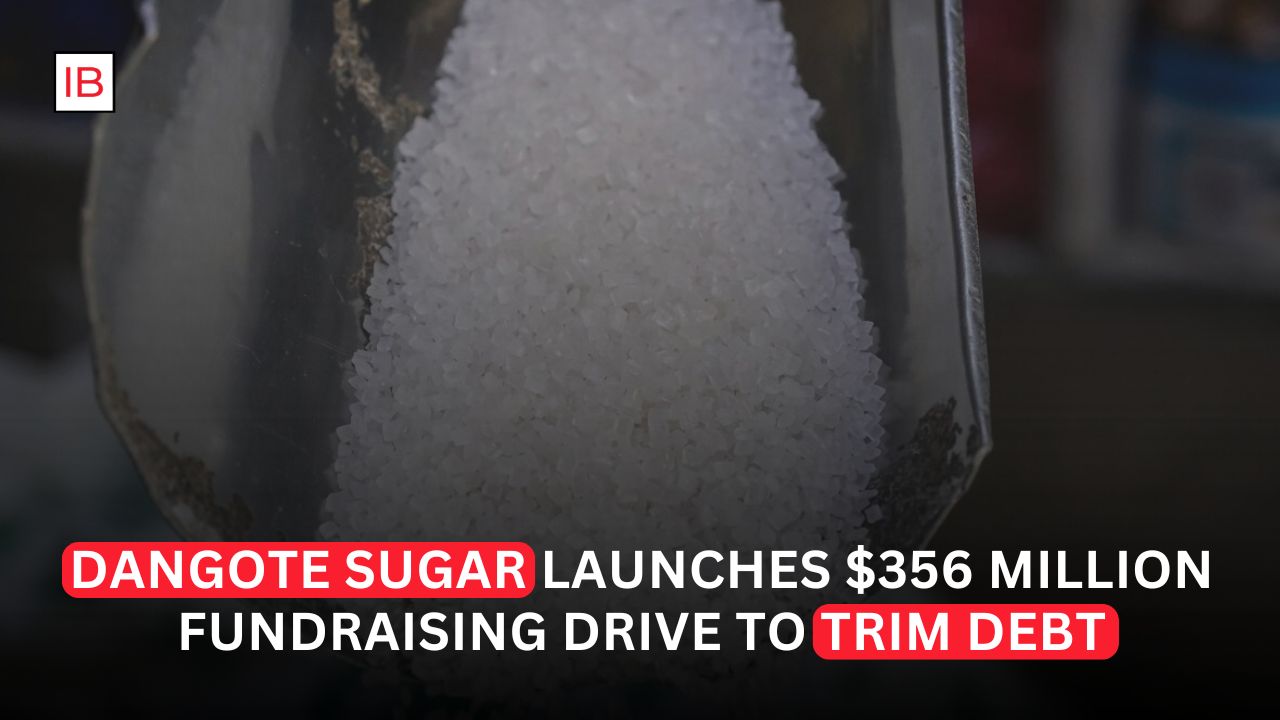
Dangote Sugar Refinery has raised about $356 million through a major share sale, giving Nigeria’s biggest sugar producer fresh capital to reduce debt, strengthen its balance sheet and continue an ambitious expansion program aimed at increasing domestic sugar production.
The fundraising represents an important step for the company after several years of financial pressure caused by currency weakness, high borrowing costs and the heavy reliance on imported raw sugar.
Dangote Sugar launched a 485.9 billion naira rights issue, offering new shares to existing shareholders at 60 naira each. The transaction involved about 8.1 billion new ordinary shares and was structured so eligible investors could purchase two new shares for every three already held.
Share Sale Targets Debt Reduction
The primary objective of the capital raise is to reduce Dangote Sugar’s financial leverage.
The company has faced a significant debt burden as it invested heavily in expanding production capacity and managing working-capital requirements.
At the end of March 2026, Dangote Sugar reported financial liabilities of about 625.1 billion naira, while cash and cash equivalents stood at only about 50.1 billion naira.
The capital injection therefore provides the company with an opportunity to replace some expensive borrowing with equity funding.
Reducing debt could also lower finance costs and leave more of the company’s operating earnings available for investment and shareholders.
Balance Sheet Pressure Has Been Significant
Dangote Sugar’s fundraising comes after a difficult financial period.
The company was heavily affected by the sharp depreciation of Nigeria’s currency, which increased the local-currency cost of imported raw sugar and created substantial foreign-exchange losses.
Finance costs also became a major burden.
In 2025, the company recorded a pre-tax loss of about 72.3 billion naira, although that represented a substantial improvement from the 270.9 billion-naira loss recorded a year earlier. Revenue increased to approximately 665.6 billion naira during the year.
The improvement suggested that the worst of the financial pressure may have passed, but the balance sheet remained stretched.
Moving Away From Expensive Debt
The rights issue marks an important shift in Dangote Sugar’s financing strategy.
The company had increasingly relied on commercial paper and other short-term funding to support its operations.
At March 2026, its financial statements showed borrowings, commercial paper and bank overdrafts among its major financial obligations.
That approach can become expensive in an environment where interest rates are high.
By raising equity instead, Dangote Sugar can reduce its dependence on short-term borrowing and improve its liquidity position.
Analysts have described the capital raise as a balance-sheet restructuring exercise that could materially reduce leverage and debt-servicing pressure.
Funding the Sugar for Nigeria Strategy
Debt reduction is not the only reason for the share sale.
Dangote Sugar also plans to use its stronger financial position to continue its Sugar for Nigeria backward-integration program.
The company’s long-term objective is to produce 1.5 million metric tons of sugar annually from locally grown sugarcane.
Achieving that target requires substantial investment in farmland, sugarcane cultivation, processing facilities and related infrastructure.
The strategy is designed to reduce Nigeria’s dependence on imported raw sugar while creating a more integrated domestic supply chain.
Cutting Exposure to Foreign Exchange
Local production could also help Dangote Sugar reduce its exposure to currency fluctuations.
Imported raw sugar has historically been a major cost for the company.
When the naira weakens against the dollar, the local cost of those imports rises.
That can squeeze margins and increase the amount of working capital required to maintain operations.
Increasing domestic sugarcane production would allow the company to source more of its raw material locally.
Over time, that could reduce foreign-exchange risk and make earnings more predictable.
Expansion Requires Major Investment
Dangote Sugar’s ambitions are substantial.
The company plans to expand cultivation and processing operations at existing and greenfield sites, including projects in Nasarawa, Taraba and Adamawa State.
The broader program requires significant capital over several years.
The company’s 2025 annual report said the backward-integration program is expected to become a key driver of profitability and value creation once fully implemented.
Management also expects the program to create employment, strengthen the supply chain and support Nigerian farmers through outgrower arrangements.
Nigeria Wants More Domestic Sugar Production
Dangote Sugar’s strategy also fits into Nigeria’s broader effort to reduce dependence on imported food and industrial inputs.
Sugar is widely used by food and beverage manufacturers, confectionery companies and other industries.
Nigeria’s large population creates substantial underlying demand, but local agricultural production has historically struggled to meet the country’s requirements.
Expanding domestic production could therefore create opportunities for Dangote Sugar while supporting the government’s industrial and agricultural objectives.
Stronger Balance Sheet Could Improve Profitability
A successful debt-reduction program could have a direct impact on future earnings.
Finance costs were one of the biggest obstacles to profitability during the company’s difficult years.
In 2025, finance costs were about 110.3 billion naira, although that was significantly lower than the 210.5 billion naira recorded in 2024.
Lower borrowings would reduce interest expenses and could allow a greater share of operating profits to flow through to the bottom line.
That could become particularly important if sugar demand and selling prices remain strong.
Investors Face Dilution
The share sale also comes with an important consequence for existing investors.
The rights issue significantly increases the number of Dangote Sugar shares in circulation.
The company issued approximately 8.1 billion new shares compared with around 12.15 billion existing shares before the transaction. If fully subscribed, the share count would rise to about 20.24 billion.
Existing shareholders who do not participate could therefore see their ownership percentage diluted.
However, the rights structure gives existing investors the opportunity to maintain their proportional holdings by subscribing to the new shares.
A Critical Test for Management
The capital raise gives Dangote Sugar greater financial flexibility, but it does not guarantee success.
Management must now demonstrate that the new capital can generate stronger returns.
Reducing debt should help lower financial costs, while investment in local sugar production needs to produce higher volumes and eventually improve margins.
The company therefore faces a dual challenge: repair the balance sheet while simultaneously financing long-term expansion.
Building a More Integrated Sugar Business
The broader strategy is intended to transform Dangote Sugar from primarily a sugar refiner and importer into a more vertically integrated agricultural and industrial company.
The company already operates a major refinery at Apapa with installed capacity of about 1.44 million metric tons per year.
The next stage is to build a stronger domestic supply base behind that refining capacity.
If successful, the approach could give Dangote Sugar greater control over its raw-material supply and reduce vulnerability to international commodity prices and currency movements.
Looking Ahead
Dangote Sugar’s $356 million-equivalent share sale gives the Nigerian sugar producer an important opportunity to repair its balance sheet while continuing its long-term expansion strategy.
The rights issue was structured around a 485.9 billion-naira fundraising and involved roughly 8.1 billion new shares at 60 naira each.
The immediate priority is reducing financial pressure.
Dangote Sugar’s financial liabilities remained substantial at the end of March, while its cash position was relatively small compared with its obligations.
Reducing debt could lower finance costs and provide the company with more room to invest.
At the same time, the capital raise supports the company’s Sugar for Nigeria strategy, which aims to produce 1.5 million metric tons of sugar annually from locally grown sugarcane.
The success of the strategy will ultimately depend on whether Dangote Sugar can turn the fresh capital into stronger production, lower costs and sustainable profitability.
For Nigeria, the expansion could also have broader implications by reducing dependence on imported sugar, supporting farmers and strengthening domestic agricultural supply chains.
Dangote Sugar is therefore using the share sale for more than just debt reduction. It is attempting to reset its financial position while building a more locally integrated sugar business capable of competing in a challenging economic environment.
If management can successfully combine lower leverage with higher domestic production, the fundraising could mark a turning point for the company after several years of currency and financing pressures.