Spanish Prime Minister Pedro Sánchez, long Europe’s most vocally progressive leader on migration, has found himself increasingly isolated on the continent after roughly 50,000 undocumented migrants crossed into the Spanish enclave of Ceuta from Morocco, triggering sharp condemnation from fellow European leaders and warnings that some could suspend Spain’s participation in Europe’s passport-free Schengen zone.
A Sudden and Overwhelming Surge
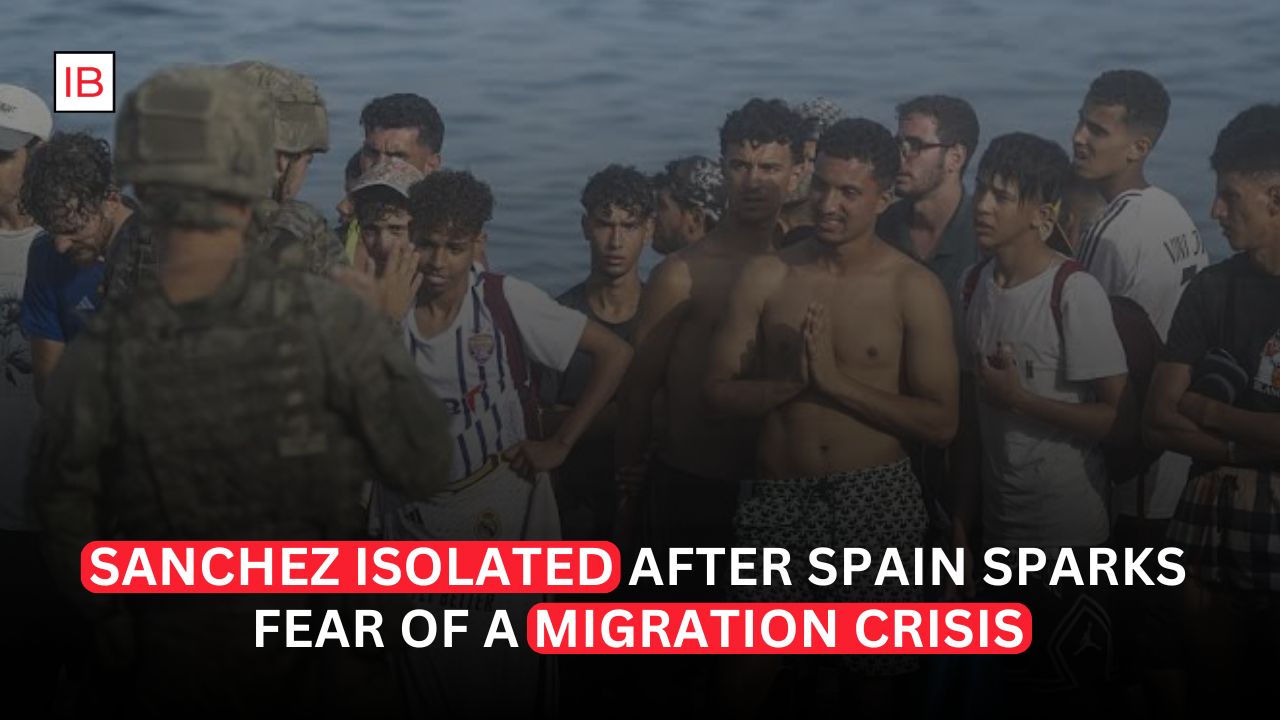
The crisis erupted on July 30, when between two and three thousand people initially crossed from Morocco into Ceuta, a Spanish territory on Africa’s northern coast, with the total swelling to roughly 50,000 undocumented arrivals as crowds streamed over the border by land and sea, overwhelming border guards. Authorities in Ceuta said some of those attempting the crossing drowned amid the chaos. Sánchez canceled a planned trip to Paris for a summit on aid to Africa and flew by helicopter directly to Ceuta, describing the crossing as a “violation of Spain’s territorial integrity” and blaming the influx on misinformation spread by human traffickers following a recent Spanish Supreme Court ruling.
One 16-year-old Moroccan migrant, Ayoub El Abyad, told Reuters he and his cousin decided to make the roughly 12-hour journey after watching videos on Instagram of other migrants successfully crossing, saying simply, “Migration is about improving our lives.” Spain’s Interior Ministry later said most of the roughly 50,000 people who crossed had since been returned to Morocco.
European Allies Turn Up the Pressure
The scale of the crossing prompted swift and pointed reactions from across Europe. Italy temporarily restored border controls on travel from Spain and suspended Schengen cooperation with Madrid, while France ordered additional checks along its border with Spain. Denmark, Finland, and Germany urged Spain to regain control of its border, and far-right leaders including Italy’s Giorgia Meloni and Matteo Salvini led calls to further isolate Spain within Europe, a push amplified by figures including Elon Musk.
The political fallout has been particularly sharp given Sánchez’s positioning within Europe. As one of the continent’s few remaining prominent progressive leaders on migration policy, bucking a broader rightward shift among his European counterparts, the Ceuta crisis has left him especially exposed to criticism that his approach to migration has proven unsustainable in practice.
Not Entirely Alone
Despite the wave of criticism, Sánchez has not been left completely without support. European Council President António Costa, a fellow socialist, delivered a notably different message on Friday evening, commending Spain for what he called a “firm” response to the crisis and sending an explicit message of solidarity to Sánchez. The European Commission has similarly stressed the importance of continued cooperation with Morocco and noted the legal impossibility of formally expelling Spain from the Schengen area, even as individual member states moved unilaterally to reinstate certain border checks.
Domestic Political Fallout
At home, the crisis has struck at what critics describe as the most politically vulnerable point of Sánchez’s migration agenda. Alberto Núñez Feijóo, leader of the opposition Popular Party, characterized the crisis as a direct consequence of what he called irresponsible government decisions, while the far-right Vox party has pointed to it as validation of its longstanding criticism of Sánchez’s approach.
Much of that domestic criticism has centered on a legalization program the government launched in the spring, opening a path to residence and work permits for undocumented immigrants who had lived in Spain through the end of 2025. More than 1.17 million people applied, roughly double the government’s original forecast. The government has pushed back on any direct link between that program and the Ceuta crossings, noting applications were only accepted starting in June and required proof of residence dating back to January 1, meaning those who crossed at Ceuta would not qualify. Even so, politically, the distinction has done little to blunt the perception that the government’s broader signals on migration contributed to the surge.
International Reaction Adds Further Pressure
The crisis has also drawn criticism from beyond Europe’s borders. The U.S. State Department criticized Spain’s immigration policies, characterizing the incident as a direct result of what it called the Spanish government’s “deliberate efforts to enable and facilitate mass illegal migration into Europe.” President Donald Trump separately suggested the migrant surge illustrated what could happen in the United States if Republicans are not elected in upcoming midterm elections, framing the episode as a cautionary example for American voters.
What Comes Next
With most of the roughly 50,000 migrants who crossed into Ceuta reportedly already returned to Morocco, the immediate crisis appears to be easing, though the political fallout shows little sign of fading quickly. How Sánchez navigates the coming weeks, balancing pressure from increasingly skeptical European allies against a domestic opposition eager to capitalize on the crisis, is likely to test both his standing within the European Union and the durability of his government’s broader migration strategy heading into the months ahead.