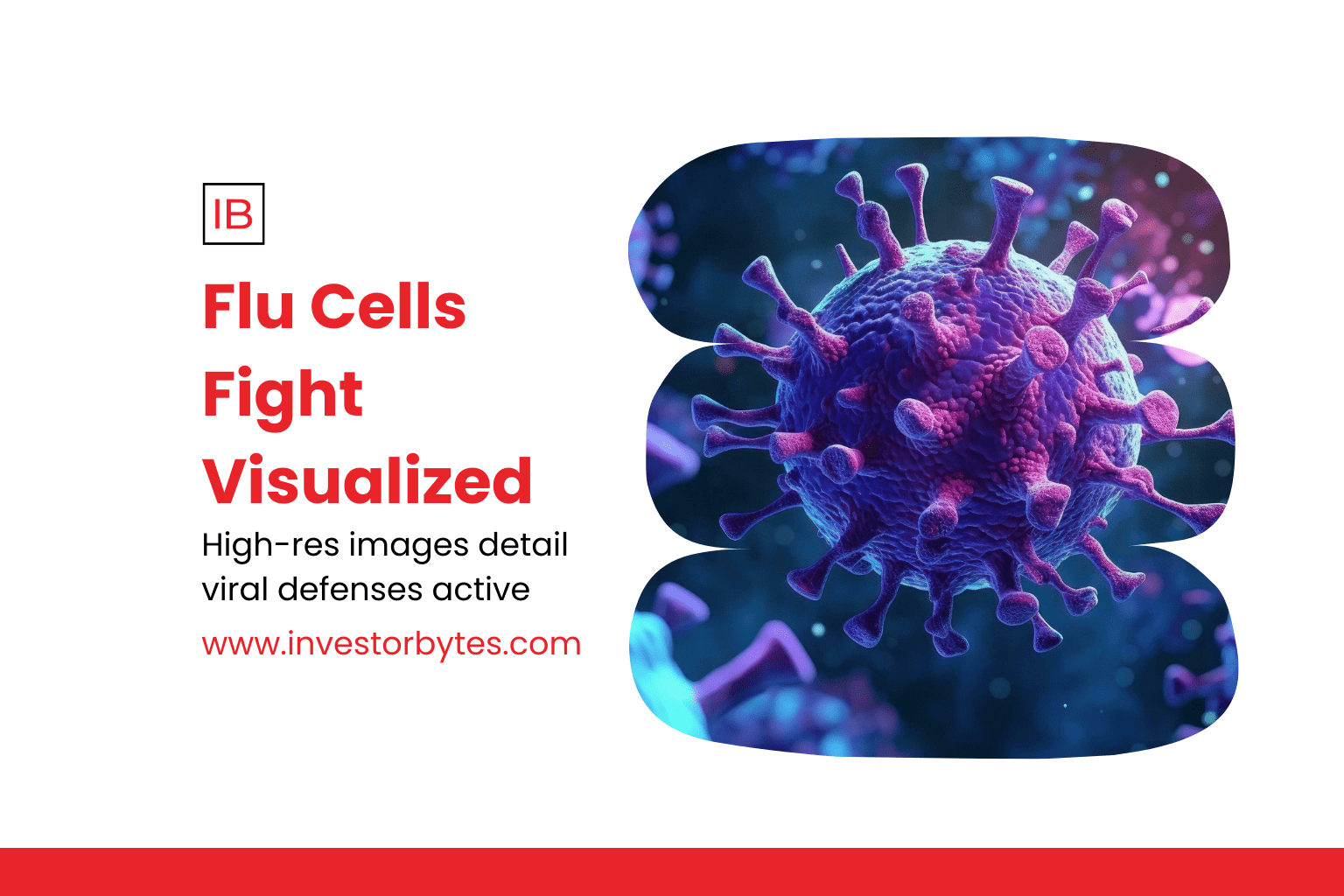
A pioneering hybrid microscopy, ViViD-AFM, has visualized influenza’s stealthy cell invasion in live high-resolution footage for the first time, as detailed in a December 4, 2025, Proceedings of the National Academy of Sciences study by ETH Zurich and Japan’s Yohei Yamauchi team. Fusing atomic force microscopy (AFM) for nanoscale topography with fluorescence for molecular tracking, the technique captures viruses “surfing” membranes at 10-nm resolution and 30 frames/second, revealing cells’ active role: filopodia snag invaders, clathrin clusters intensify, and undulations pull viruses inward.
Yamauchi’s team observed hemagglutinin binding and endocytosis in Petri-dish cells, showing viruses scanning for receptor clusters—efficient entry points—while cells reshape surfaces to capture or repel. Prior electron microscopy’s static snapshots missed dynamics; fluorescence’s low res obscured details—ViViD-AFM’s fusion slashes antiviral trial times 50%. “Cells aren’t victims; they’re vigilant,” Yamauchi noted, with applications for H3N2 strains and vaccine probes.
Wiley’s Analytical Science lauds its utility for viruses/vaccines, with News-Medical eyeing 97.9% NPV diagnostics. Challenges: in vivo scalability, yet 30x speed over cryo-EM promises pandemics’ preemption. The fight’s visualization—ViViD’s vigilant vista—unveils flu’s furtive foray, where microscopy’s might meets medicine’s march.