In mid-February 2026, United States Senator Dave McCormick (R-PA) reaffirmed Pennsylvania’s role as a cornerstone of the American space economy during a high-profile visit to Astrobotic’s headquarters in Pittsburgh.
Following the lessons learned from the Peregrine Mission One in 2024, McCormick pledged his full legislative support for the company’s upcoming Griffin Mission One, currently scheduled for a launch window as early as July 2026.
The Visit: Pennsylvania as a Space Tech Hub
During the tour of Astrobotic’s 47,000-square-foot facility in the North Side’s Chateau neighborhood, Senator McCormick met with engineers and leadership to review the final integration stages of the Griffin lander.
Federal Advocacy: McCormick emphasized that the Commercial Lunar Payload Services (CLPS) program is vital for national security and economic growth. He pledged to advocate for increased federal appropriations to ensure private firms like Astrobotic can compete with state-funded lunar programs from rival nations.
Economic Impact: The Senator noted that Astrobotic, which has grown to over 275 employees and secured more than $600 million in contracts, is a prime example of how Pennsylvania’s “AI Avenue” and manufacturing legacy are being repurposed for the final frontier.
The Global Race: McCormick framed the success of the 2026 mission as a matter of “technological sovereignty,” stating that America must lead in the development of lunar logistics to establish the first sustainable presence on the Moon.
Griffin Mission One: Technical Milestones
Astrobotic CEO John Thornton provided an update on the technical readiness of the Griffin lander, which is significantly larger and more advanced than its predecessor.
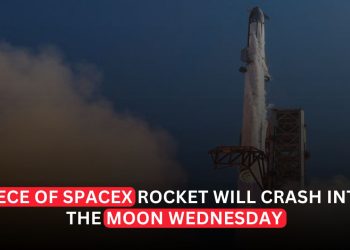
The Launch Vehicle: The mission is slated to launch aboard a SpaceX Falcon Heavy rocket from NASA’s Kennedy Space Center.
Key Payloads: While the NASA VIPER rover was famously removed from the manifest, Griffin will now carry the Venturi Astrolab FLIP rover, designed to demonstrate high-traction mobility in the harsh lunar south pole environment.
Operational Readiness: Thornton confirmed that the team has successfully performed “closed-loop simulations” of the descent and landing sequence, utilizing data gathered from the Peregrine mission to mitigate past flight anomalies.
| Feature | Peregrine (2024) | Griffin (2026) |
| Lander Class | Small | Medium |
| Primary Goal | Technology Demonstration | Resource Prospecting / Heavy Payload |
| Payload Capacity | 90 kg | 500+ kg |
| Launch Vehicle | Vulcan Centaur | Falcon Heavy |