Manufacturing Demand Rises as Energy Shock and Supply Disruptions Ease
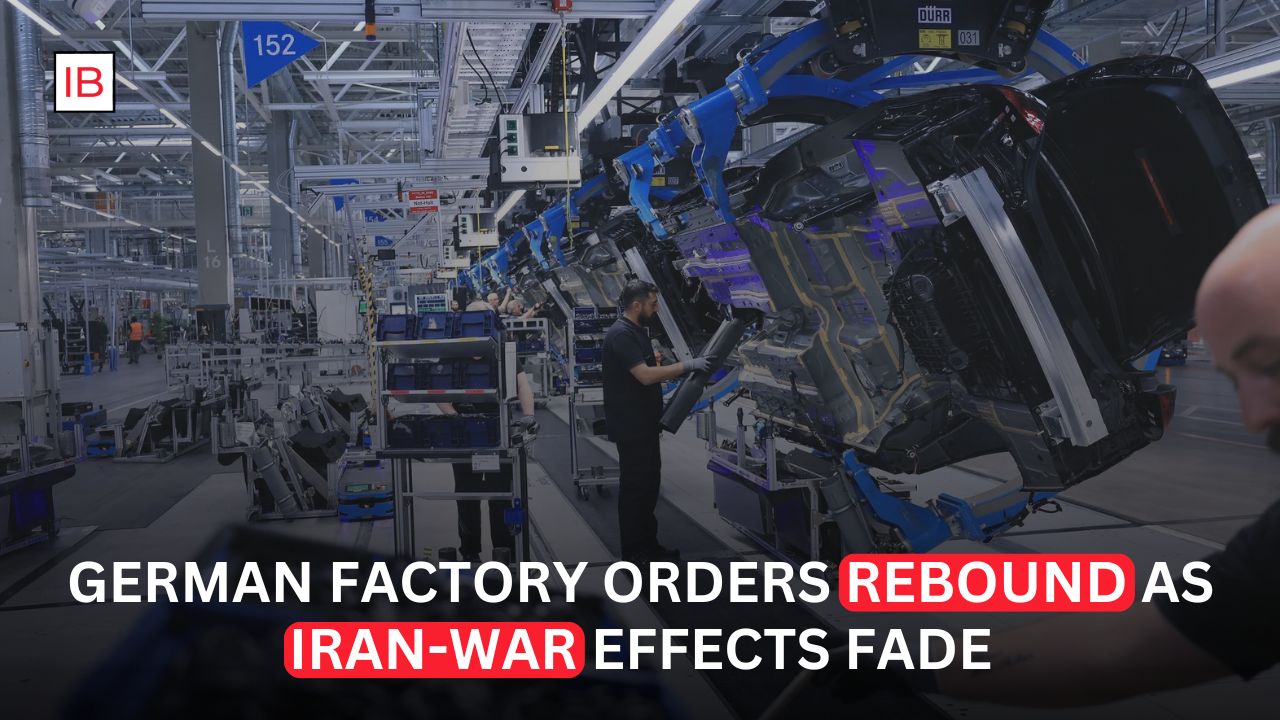
German factory orders have rebounded, signaling early signs of recovery in Europe’s largest economy as the economic effects of the Iran conflict begin to ease, according to data and economists cited in the latest report.
The recovery suggests that while geopolitical tensions and energy shocks have weighed heavily on industrial activity, some of those pressures are now starting to diminish, allowing demand in the manufacturing sector to stabilize.
Orders Return to Growth After April Decline
German industrial demand showed a clear turnaround after a weak prior month:
- Factory orders rose 1.9% month-on-month in May
- This followed a revised 3.2% decline in April
- The increase exceeded economists’ expectations of around 1.1%
The rebound indicates that the sharp volatility seen earlier in the year may be stabilizing, even if underlying momentum remains uneven.
Transport Equipment Drives the Recovery
A significant portion of the rebound came from large-scale and transport-related orders, including:
- Aircraft and aerospace equipment
- Ships and rail vehicles
- Military transport systems
Without these large orders, the underlying monthly increase would have been closer to 1%, suggesting that the recovery is still heavily dependent on volatile contract activity.
Iran Conflict Impact Gradually Easing
Economists say the easing of disruptions linked to the Iran conflict is beginning to support industrial recovery.
Earlier in the year, the conflict had:
- Increased global energy prices
- Disrupted shipping routes
- Raised supply chain uncertainty
- Weakened manufacturing sentiment
Now, improved energy flows and slightly lower volatility in input costs are helping manufacturers regain confidence, although risks remain.
Three-Month Trend Still Weak
Despite the monthly rebound, broader trends remain subdued:
- Orders over the March–May period are still down about 0.2%
- Volatility remains high due to large contract swings
- Underlying demand outside major orders is relatively weak
This suggests that the recovery is not yet broad-based across Germany’s industrial base.
Structural Challenges Still Weighing on Industry
Even with improving monthly figures, Germany’s manufacturing sector continues to face structural headwinds:
- Weak demand from China
- Ongoing trade frictions and tariffs
- High energy costs relative to historical norms
- Increased global competition
- Geopolitical uncertainty
These factors are expected to limit the pace of any sustained rebound.
Business Sentiment Improving, but Cautious
Surveys show some improvement in business expectations, with manufacturers reporting:
- Slightly better order inflows
- Reduced supply chain delays
- Stabilizing input costs
- Modest improvement in production expectations
However, sentiment remains cautious as firms await clearer signals on global demand and energy stability.
Outlook: Recovery Possible, but Fragile
Economists say Germany may be entering a tentative stabilization phase, but the recovery remains fragile.
Key uncertainties include:
- Future trajectory of global energy prices
- Resolution of geopolitical tensions
- Strength of global demand recovery
- Fiscal stimulus effectiveness in Europe
While the rebound in factory orders is a positive signal, analysts warn that sustained industrial growth will depend on whether geopolitical and energy-related risks continue to fade in the coming months.