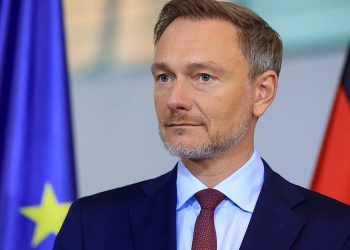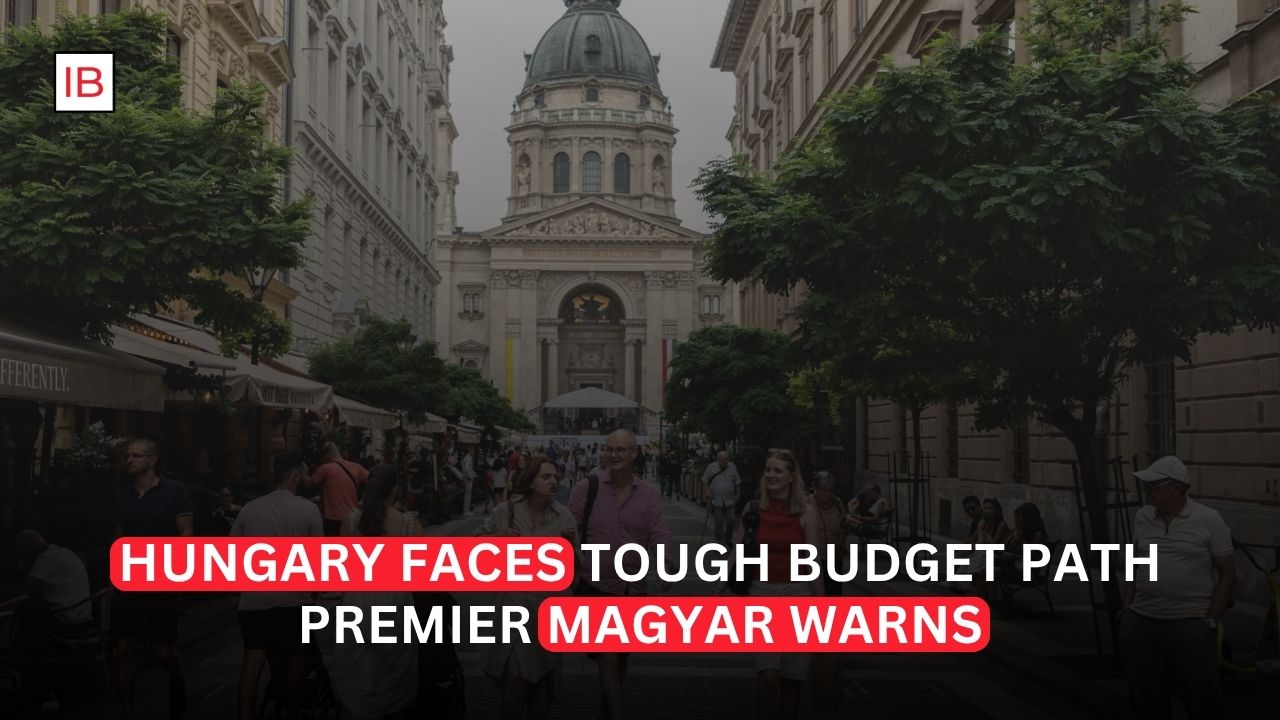
Hungarian Prime Minister Péter Magyar is facing an unexpectedly difficult fiscal challenge as his government confronts a budget deficit that has ballooned far beyond the target inherited from Viktor Orbán’s administration, forcing Budapest to weigh spending cuts, new revenues and economic reforms against promises made during this year’s election campaign.
Hungary’s revised 2026 budget puts the general-government deficit at 7.5% of gross domestic product, according to Fitch Ratings, compared with an original target of 3.7% and an earlier revised estimate of 5%. The deterioration reflects weaker economic growth, substantial pre-election fiscal measures, previously unrecognized spending commitments, as well as the effects of drought and the energy crisis.
Magyar, who defeated Orbán in April after 16 years of Fidesz rule, inherited an economy with limited fiscal room but also campaigned on an ambitious program of institutional reform and higher spending in areas such as healthcare and education. His government must now reconcile those commitments with the need to convince financial markets that Hungary can bring its deficit back under control.
The scale of the problem became increasingly clear during the months following the election. In June, Magyar warned that the 2026 deficit could exceed 7% of GDP even with the expected release of European Union funds. He said the shortfall could have exceeded 8% without an agreement over EU financing and accused the previous government of concealing the true condition of public finances.
The revised budget submitted at the end of August confirmed that the fiscal gap was considerably larger than the figures used by Orbán’s government when it originally prepared the 2026 plan. The previous budget had been based on expectations of more than 4% economic growth and a deficit below 3%, assumptions that subsequently proved unrealistic.
That leaves Magyar with a particularly difficult balancing act. Cutting expenditure rapidly could help restore fiscal credibility but would risk undermining his government’s economic and social priorities. Raising taxes or other revenues could improve the budget position but potentially weaken household consumption and business investment at a time when Hungary’s economy is already struggling to generate strong growth.
The government is also counting on European Union funding as part of its strategy. Years of disputes between Brussels and the Orbán administration left billions of euros in EU money frozen over concerns about corruption, rule-of-law standards and institutional safeguards. Magyar’s pro-European government has sought to repair those relations and secure the release of funds that could provide both direct budgetary relief and financing for investment. The OECD has also identified unlocking EU funds as important for easing Hungary’s budget pressures and supporting public investment.
But EU funding cannot solve the underlying fiscal imbalance by itself. The European Commission had already projected Hungary’s deficit at 6.2% of GDP for 2026, well above the EU’s fiscal threshold, before the government’s latest revision pushed the estimate substantially higher.
The fiscal problem is particularly important for Magyar because restoring investor confidence was one of the immediate economic benefits expected from his election victory. Hungarian assets initially rallied sharply after the April result, reflecting expectations of better relations with Brussels, economic reforms and eventual progress toward euro adoption. But a prolonged period of large deficits could test that optimism.
Hungary’s borrowing costs and currency will therefore remain important indicators of whether markets believe the government’s consolidation strategy is credible. Investors will be looking for evidence that Budapest can reduce the deficit without pushing the economy into a deeper downturn.
The government has also indicated that it wants to establish a medium-term fiscal framework capable of bringing the deficit toward the 3% level required under European rules for countries seeking to adopt the euro. That objective is ambitious given the starting position. Reuters previously described the budget overhaul as Magyar’s first major credibility test because he must simultaneously honor election promises and produce a credible deficit-reduction plan.
For Magyar, the political calculation is complicated by the legacy of Orbán’s economic model. The former government used large state interventions, subsidies and investment incentives to support growth and attract foreign manufacturers, particularly in the automotive and battery sectors. The new administration has signaled a different approach, emphasizing stronger institutions, closer EU ties and tighter oversight of major industrial projects. Recent environmental measures targeting battery manufacturers illustrate that shift.
The danger is that fiscal consolidation arrives before Hungary’s economy has regained strong momentum. Austerity could restrain demand, while insufficient consolidation could keep borrowing costs elevated and complicate efforts to stabilize debt.
Magyar therefore faces a narrow path between two risks. Moving too slowly could undermine his promise to repair Hungary’s public finances and expose the government to pressure from markets and European institutions. Moving too quickly could damage growth and force the new administration to break promises that helped propel it to power.
The budget crisis is consequently more than a technical accounting problem. It is an early test of whether Magyar can translate his electoral mandate into an economic model that is both fiscally credible and politically sustainable. After inheriting a deficit far larger than previously acknowledged, the new government has little room for error.