Atlas Robot Demonstrates AI Capabilities in Live Stadium Environment
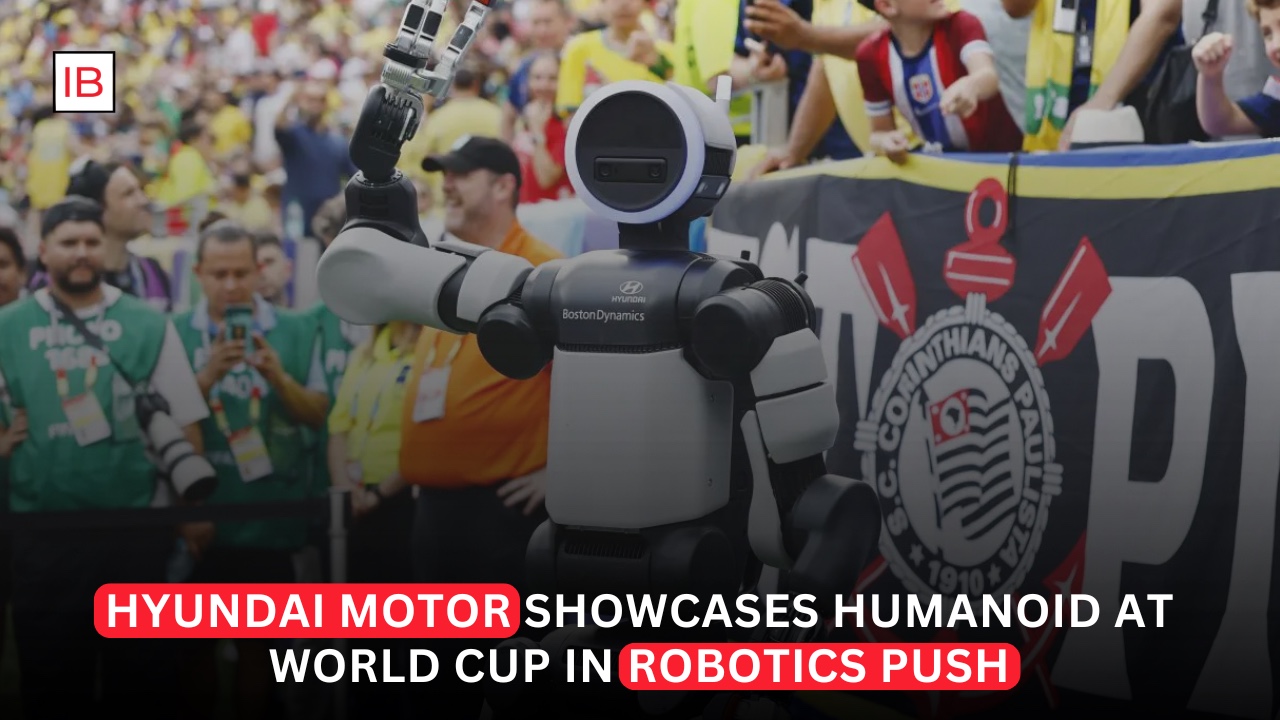
Hyundai Motor has unveiled its humanoid robot Atlas in a live demonstration at the FIFA World Cup 2026, marking a major public showcase of the company’s push into advanced robotics and “physical AI” systems.
The appearance highlights Hyundai’s strategy to integrate robotics into real-world, high-pressure environments while accelerating its long-term plan to deploy humanoid machines in industrial and manufacturing settings.
Atlas Takes the Field at a Global Sporting Event
During a Round of 16 match in the New York/New Jersey Stadium, Atlas walked through the player tunnel and performed a series of football-inspired gestures and celebrations before delivering the match ball to the referee.
The robot was seen:
- Walking independently through a live stadium environment
- Performing human-like football celebrations
- Executing culturally recognizable sports gestures
- Completing a precise ball delivery to match officials
The demonstration was designed to showcase mobility, balance, and real-time decision-making in a chaotic public setting.
Designed to Learn Human Movement
Atlas’ performance was powered by advanced robotics systems including:
- Reinforcement learning models trained on simulated motion data
- Retargeting technology that maps human movement onto robotic joints
- Whole-body control systems enabling balance and coordination
These capabilities allow the robot to replicate complex human actions such as sports celebrations and dynamic walking patterns under changing environmental conditions.
From Factory Floors to Stadiums
Hyundai has positioned Atlas as a key component of its long-term industrial automation strategy.
The robot is expected to initially be deployed in:
- Automotive manufacturing plants
- Repetitive assembly tasks
- Logistics and material handling
- Hazardous industrial environments
The company plans for broader deployment in factories by 2028, with expanded roles in complex assembly operations later in the decade. (Reuters)
Robotics as a Strategic Growth Area
The World Cup demonstration reflects Hyundai’s broader transformation from automaker to robotics and AI-driven mobility company.
Key goals include:
- Scaling humanoid robot production
- Integrating AI systems into industrial operations
- Expanding Boston Dynamics’ robotics platform globally
- Developing “human-centered robotics” for real-world environments
The company views robotics as a long-term growth engine alongside electric vehicles and smart mobility.
Testing Robots in Real-World Conditions
Hyundai says deploying Atlas in live stadium conditions provides valuable data for future industrial use.
Real-world environments help engineers evaluate:
- Navigation under unpredictable conditions
- Crowd interaction and safety constraints
- Movement stability on natural surfaces
- Real-time response to dynamic obstacles
Such testing is expected to accelerate refinement before large-scale factory deployment.
Part of a Broader Robotics Push
Atlas’ World Cup appearance is part of Hyundai’s broader robotics rollout strategy, which also includes:
- Autonomous patrol robots for venue security
- Mobile robotics platforms for logistics
- Industrial humanoid prototypes for manufacturing
- AI-driven robotics software ecosystems
The company is increasingly positioning itself as a global leader in both mobility and robotics technologies.
Looking Ahead
Hyundai’s humanoid showcase at the World Cup signals a shift toward embedding robotics into everyday human environments—from factories to sports and public events.
While full-scale industrial adoption is still years away, the demonstration underscores how rapidly humanoid robotics is moving from experimental labs into highly visible global platforms. As AI-driven physical systems mature, Hyundai is betting that robotics will become a central pillar of future manufacturing, logistics, and consumer-facing experiences.