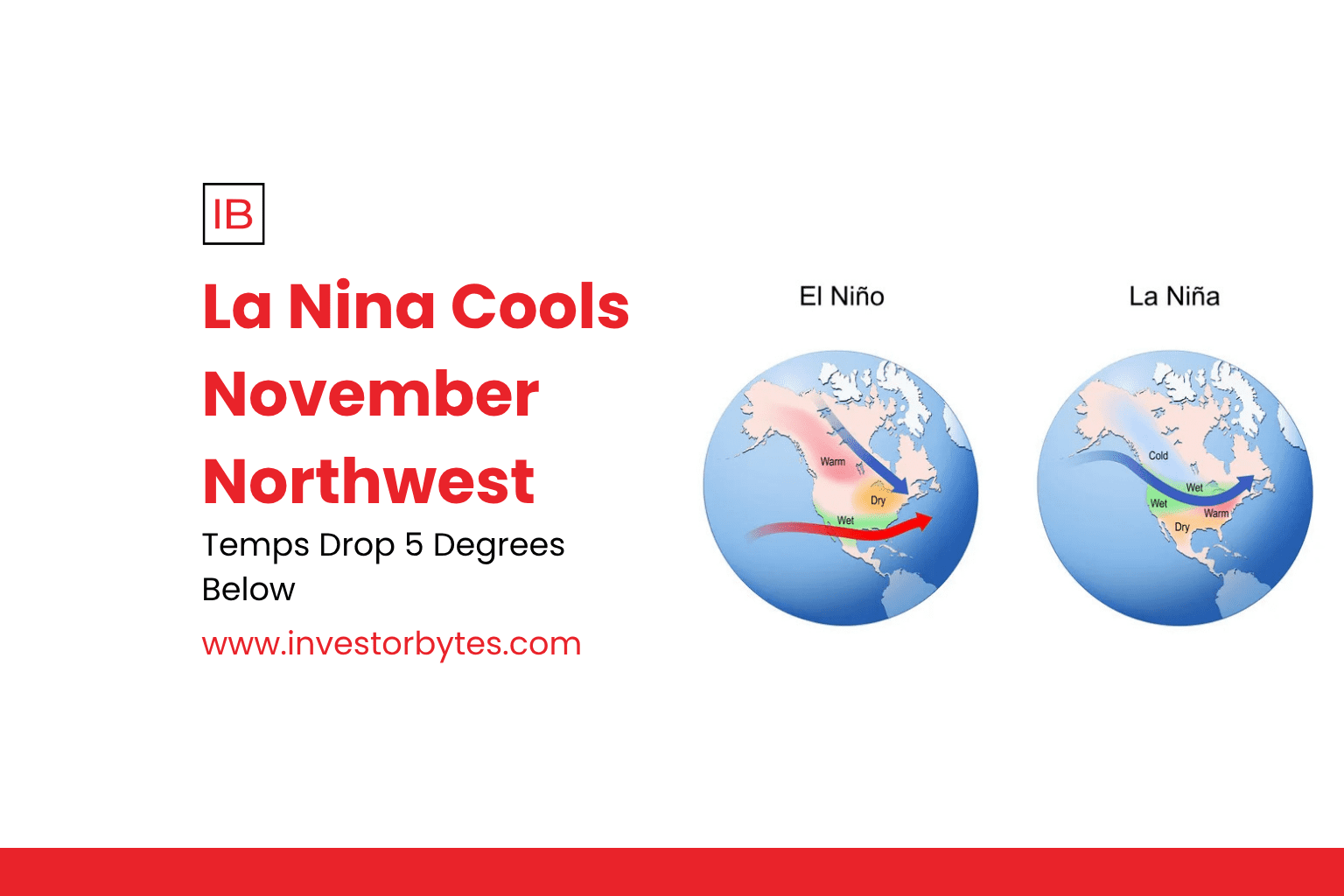
La Niña’s grip tightens on the Pacific Northwest, plunging temperatures 6–12°F below seasonal norms and unleashing a cascade of storms that will drench the region through winter’s core, according to NOAA’s latest probabilistic ensemble. The pattern, now at 78% confidence per the Climate Prediction Center, channels a reinforced Pacific jet stream directly into Washington, Oregon, and British Columbia, spawning serial Atmospheric Rivers that promise 150–200% of average November precipitation across the Cascades and Olympics.
Seattle and Portland face a relentless parade of systems, with AccuWeather modeling six to eight landfalling events by mid-December—each dumping 2–4 inches of rain in 24–48 hours while piling 18–36 inches of snow above 3,000 feet in the North Cascades. Fox Weather‘s extended range flags a blockbuster storm cluster November 18–22, when a 996 mb low stalls offshore, funneling subtropical moisture into a firehose that could eclipse 2021’s historic floods in Whatcom and Skagit counties. Snow levels crash to 1,500 feet during Arctic intrusions, with Stevens Pass and Mt. Baker poised for 400+ inch seasons—topping last year’s banner totals.
The jet’s southern dip starves California of moisture (40–60% of normal rainfall south of Eureka), but the Northwest absorbs the surplus: Portland’s Willamette Valley may see its wettest November since 1996, while Spokane shivers under sub-20°F highs as cold air funnels through the Columbia Basin. Berg Insight’s 4.3 billion connected devices will track real-time impacts—avalanche beacons in the backcountry, flood sensors along the Skokomish, and smart grids bracing for 80 mph gusts that could snap Douglas firs like matchsticks.
This isn’t weather—it’s choreography. La Niña’s equatorial chill rewrites the atmospheric score, trading California’s drought for Cascadian deluge, swapping Sierra dust for Olympic powder. Ski resorts from Whistler to Crystal Mountain prep for early openings; salmon runs surge in swollen rivers; hydropower dams at Grand Coulee and Bonneville hum at 110% capacity. Yet the dance demands respect—landslides menace Highway 101, and Puget Sound ferries may ground under gale warnings.
In season’s majestic march, La Niña unveils not temperature’s cadence, but pattern’s durable dance—veiled veils of 6–12°F plunges from jet-fueled rivers, where weather’s artistry yields reinvention’s radius across the sodden, silvered Northwest.