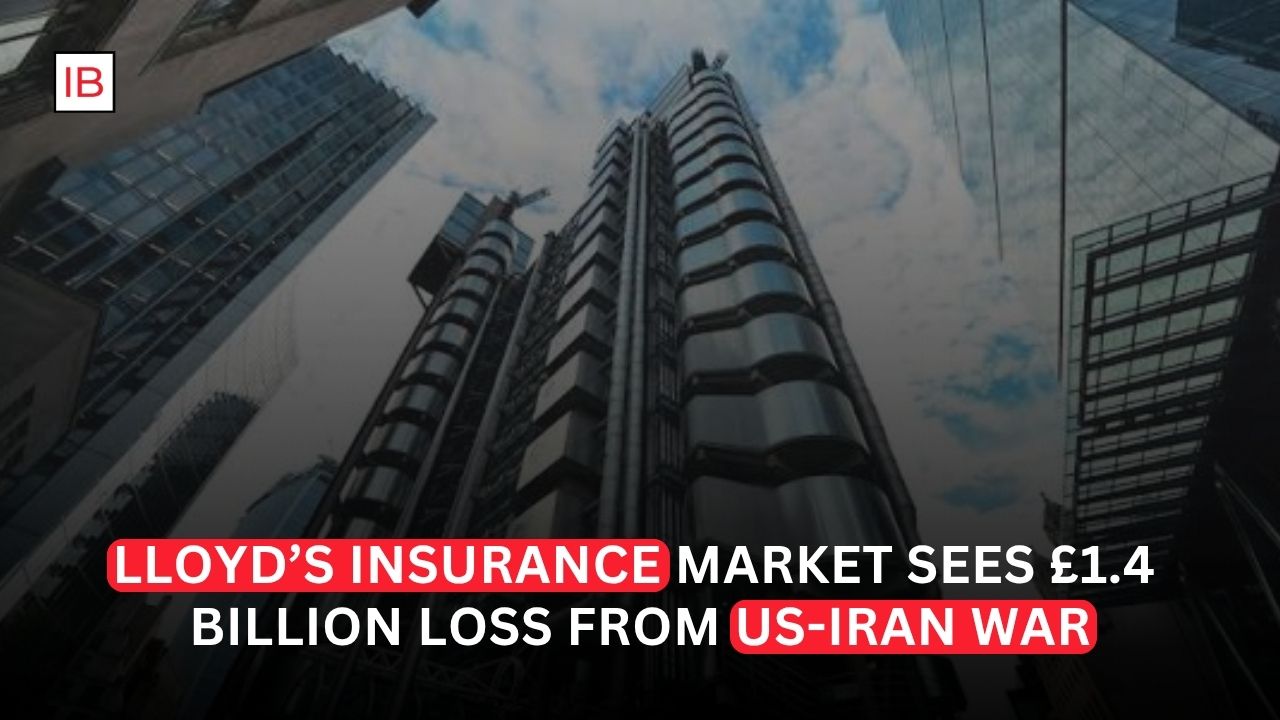
The US Iran conflict is creating a major financial burden for the global insurance industry, with Lloyd’s of London expecting about £1.4 billion in insurance losses linked to the war. The losses are largely connected to damage across Gulf infrastructure, highlighting how military conflict can quickly spread into global business and financial markets.
The scale of the losses shows that the economic impact of the conflict extends well beyond oil prices and shipping disruptions. Insurers are now facing claims related to damaged energy facilities, industrial sites, and other critical infrastructure across the region.
Gulf Infrastructure Drives Major Insurance Claims
According to Lloyd’s chief executive Patrick Tiernan, most of the expected losses are coming from land based infrastructure damage, rather than direct losses from attacks on ships in the Strait of Hormuz. Many of these claims fall under political violence and terrorism insurance policies.
One of the largest reported claims involves Saudi chemicals company SABIC. The company is expected to seek around $800 million under a political violence insurance policy after a missile strike damaged a petrochemical complex. The potential claim demonstrates how a single attack can create enormous financial exposure for insurers.
The development also shows why insurers carefully assess geopolitical risks when pricing coverage for companies operating in sensitive regions.
Why the £1.4 Billion Loss Matters
The expected loss is significant, but it does not appear large enough to threaten Lloyd’s overall financial strength. The market reported £3.5 billion in pretax profit during the first half of 2026, although that figure was lower than the previous year.
The insurance market also generated an underwriting profit of about £1.9 billion, compared with £1.5 billion during the same period a year earlier. This suggests that its core insurance operations remained profitable despite the broader pressure on earnings.
However, investors and insurance companies must still watch the situation closely. Continued attacks could increase claims, raise insurance prices, and make coverage harder to obtain for businesses operating in high risk areas.
Strait of Hormuz Adds More Pressure
The Strait of Hormuz remains one of the most important risks for the global insurance industry. The waterway is a major route for international energy shipments, making disruptions there important for oil markets, shipping companies, manufacturers, and insurers.
War risk insurance premiums have already risen sharply for vessels operating in the region. Market reports have indicated that premiums for short duration war risk coverage have increased many times from pre conflict levels.
At the same time, shipping activity through the strait has fallen sharply. Fewer vessels moving through the area can reduce trade flows and increase uncertainty for companies that depend on reliable energy and cargo deliveries.
For insurers, this creates a difficult balance. They must provide coverage where possible while protecting their capital from potentially extreme losses.
Lloyd’s Still Has Strong Underwriting Performance
Despite the geopolitical pressure, Lloyd’s insurance operations have shown resilience. Gross written premiums reached £34.7 billion in the first half of 2026, up from £32.5 billion a year earlier. Its combined ratio improved to 90.8% from 92.5%, indicating stronger underwriting performance.
The bigger pressure on overall profit came from investment performance. Lloyd’s experienced about £1.4 billion in unrealized losses on fixed income investments, which reduced its overall pretax profit.
This distinction matters because insurance companies earn money from both underwriting and investing the premiums they collect. A strong underwriting result can therefore be offset by weaker investment returns.
What the Losses Mean for Global Markets
The Lloyd’s losses offer a broader warning about the financial cost of geopolitical conflict. War can damage physical assets, interrupt transportation, increase insurance premiums, and raise costs for companies across multiple industries.
Energy companies may face higher coverage costs. Shipping companies may delay voyages or seek alternative routes. Manufacturers can experience higher input costs when energy supplies become less predictable.
Oil prices have also responded to renewed Middle East tensions. Brent crude recently moved above $97 a barrel, while US crude approached $93 as traders assessed the risk of further supply disruptions.
Higher energy prices can then feed into inflation, interest rate expectations, corporate earnings, and stock market valuations.
Insurance Risk Could Remain Elevated
The £1.4 billion estimate may not represent the final cost of the conflict for insurers. Claims can develop over time, particularly when damage involves complex industrial facilities and political violence policies.
For businesses, the conflict could also lead to higher insurance costs and tighter coverage conditions. Insurers may become more selective when covering assets located near military targets or critical transport routes.
For investors, the situation provides an important reminder that geopolitical risk can affect companies indirectly. The first visible impact may appear in oil prices or stock markets, but insurance costs can become another major channel through which conflict reaches the global economy.
The key question now is whether the conflict remains contained or produces further damage across the Gulf. A wider disruption could increase insurance claims, raise energy prices, and place additional pressure on businesses and financial markets.