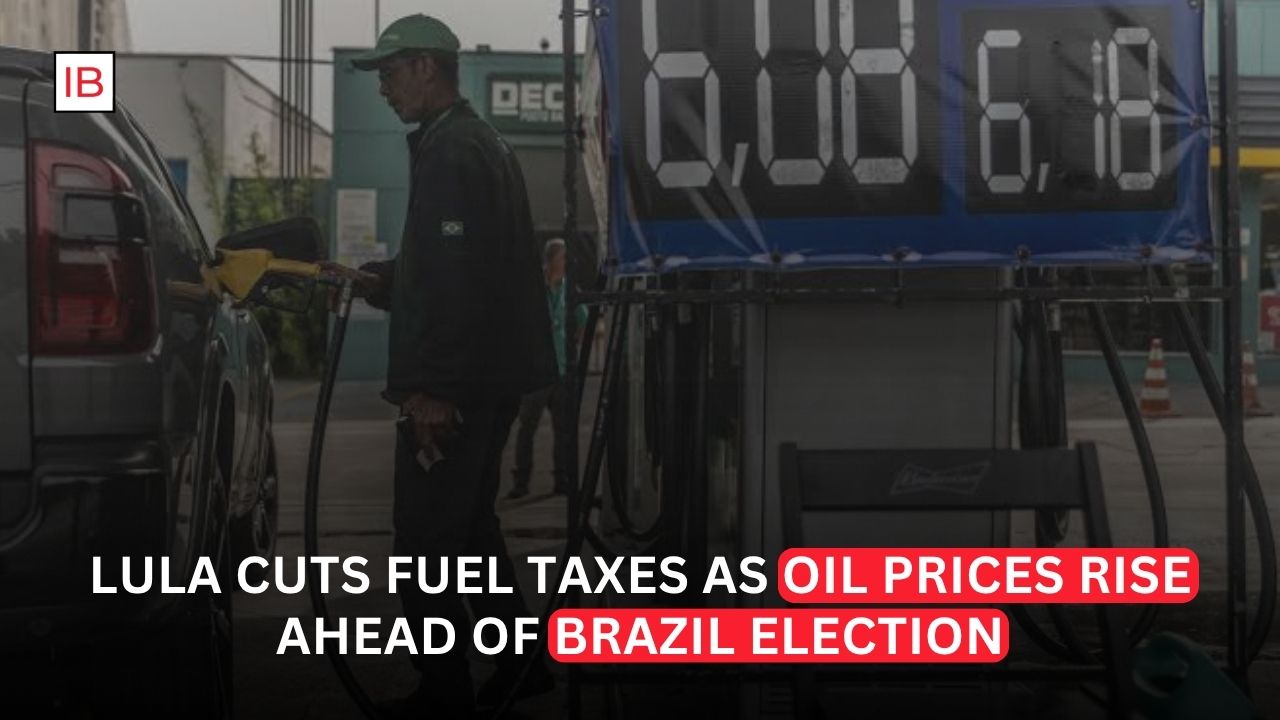
Brazilian President Luiz Inácio Lula da Silva is expanding government support for fuel prices as a renewed surge in global oil markets threatens to push up transportation costs just weeks before the country’s presidential election. The move gives Lula’s administration another tool to shield consumers from the international energy shock, but it also increases pressure on public finances and highlights the political sensitivity of fuel prices ahead of the October vote.
On Wednesday, Lula signed an executive measure releasing 6.6 billion reais, or about $1.3 billion, in additional fuel subsidies. Roughly 5.6 billion reais will be directed toward diesel used in road transportation, while about 998 million reais will support the production and importation of petroleum-derived fuels, including gasoline and other products.
The decision came as an existing gasoline subsidy was due to expire. The government had previously begun reducing some diesel support after international oil prices temporarily declined, but the strategy was reversed as the conflict involving the United States and Iran pushed crude prices sharply higher. Brent crude moved above $100 a barrel on Wednesday for the first time since July, intensifying concerns over another wave of fuel inflation.
Brazil is particularly exposed to higher diesel costs because of its dependence on road transportation. Trucks move a large share of the country’s agricultural and industrial output, meaning increases at the pump can quickly spread through freight costs and eventually into food and consumer prices. The government’s new allocation therefore targets diesel heavily, with more than 80% of the new funding earmarked for road fuel.
The subsidy also comes with a significant fiscal cost. Brazilian fuel-support programs have already required billions of reais this year, and the latest injection reverses an earlier effort to reduce government intervention as oil prices eased. According to Brazilian media reports, the gap between domestic diesel prices and international import-parity levels has widened considerably as crude prices have risen.
That gap creates a difficult problem for Petrobras, Brazil’s state-controlled oil company. If domestic prices remain below international market levels for an extended period, refiners and importers can face pressure when importing fuel becomes more expensive. Petrobras has not adjusted its diesel prices since June despite the latest international rally, according to Brazilian reporting.
Lula’s decision is also difficult to separate from the approaching presidential election. He is seeking another four-year term in October, and fuel prices have traditionally carried enormous political importance in Brazil. A sustained increase in gasoline or diesel can quickly become a broader cost-of-living issue, particularly for lower-income households and workers dependent on transportation.
The election is already unusually competitive. A Quaest poll conducted Sept. 3-6 showed Lula and right-wing Senator Flávio Bolsonaro tied at 41% in a hypothetical runoff. Another poll released Wednesday by Palver put Lula at 44% against Bolsonaro at 46% in a second-round scenario, within the survey’s margin of error.
That makes the government’s attempt to contain fuel prices politically significant even if officials frame the measures primarily as economic protection. Lula’s administration has adopted several policies this year aimed at cushioning consumers from international price volatility, including earlier fuel subsidies and measures supporting lower-cost imports.
The challenge is that Brazil cannot control the main driver behind the latest increase. The Middle East conflict has disrupted oil production and exports, with the Strait of Hormuz becoming a major bottleneck for global energy shipments. The US Energy Information Administration estimates that global oil inventories have fallen by about 400 million barrels this year and expects major production disruptions to persist into 2027.
Brazil is relatively well positioned compared with many oil-importing countries because it is itself a major crude producer. Yet producing crude does not completely insulate the country from international prices. Domestic refiners and fuel importers still operate within a global market, while Brazil’s fuel system has different balances for crude, refined products and regional demand.
The government’s latest measure therefore buys Lula time rather than eliminating the underlying problem. If global oil prices retreat, the subsidies could help keep Brazilian pump prices stable without becoming as expensive as feared. But if crude remains above $100 for months, maintaining the gap between domestic and international fuel prices could require substantially more public money.
That creates a tension between election-year affordability and fiscal discipline. Lula’s government wants to prevent an oil shock from undermining household purchasing power and transportation costs, but investors will also watch whether fuel intervention becomes a permanent burden on public finances.
For now, the political calculation appears clear. With the election approaching and the presidential race effectively tied, Lula is unwilling to allow an external oil shock to translate directly into higher prices for Brazilian consumers. The new 6.6 billion-real package provides immediate relief, but its longer-term cost will depend largely on how long the global oil crisis lasts.