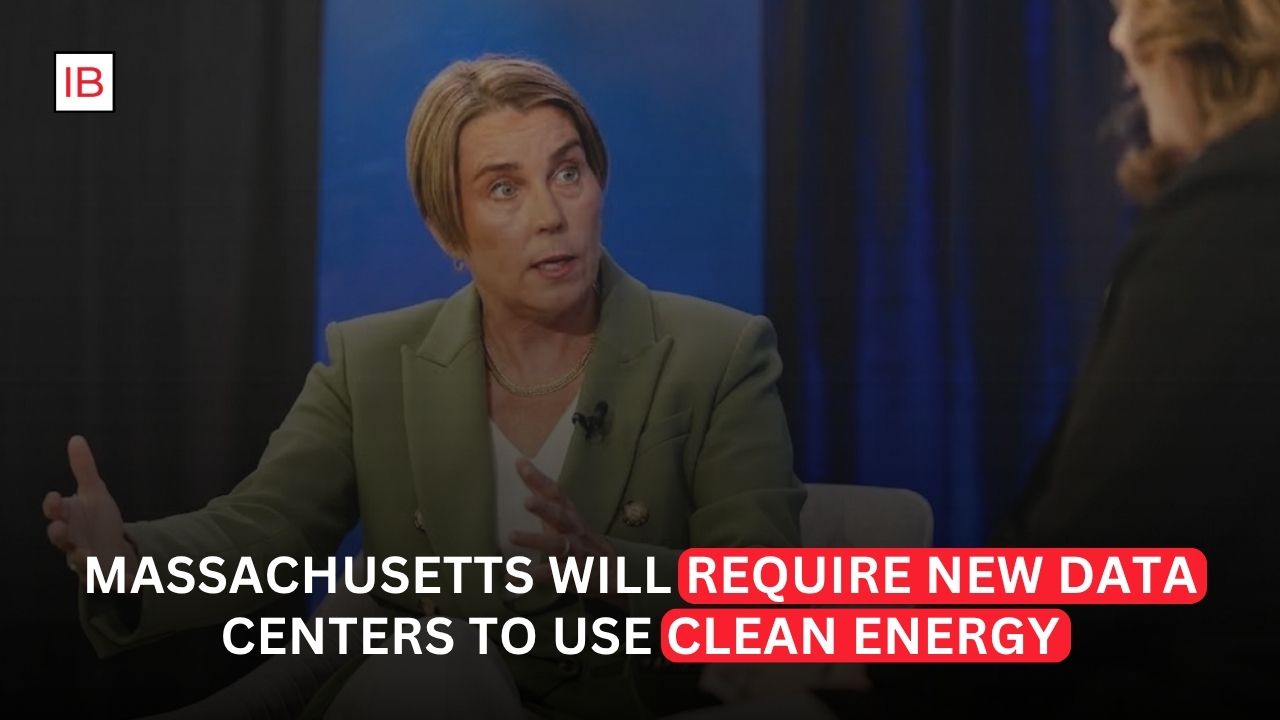
Massachusetts is imposing tougher requirements on new data centers as state officials try to balance the economic opportunities created by artificial intelligence with growing concerns over electricity demand, environmental impacts and the cost of expanding the power grid. Governor Maura Healey’s latest executive order requires proposed large data centers to meet state standards for energy efficiency and clean-energy supply while giving host communities a stronger role in approving projects.
The order, signed Sept. 8, applies to data-center projects with peak electricity demand above 25 megawatts. Before moving into state permitting, developers will need local approval and agreements with host communities that meet state standards. The administration has also prohibited state agencies from using nondisclosure agreements with data-center developers in the permitting process, arguing that communities deserve greater transparency over projects that could have significant effects on local infrastructure.
Energy supply is at the heart of the new policy. Healey said the administration wants data centers to provide their own clean energy from the beginning of their operations. If developers cannot do that immediately, they would have to compensate electricity customers for the power they consume until their own clean-energy supply is available. The order creates a Ratepayer Protection Fund intended to direct money back toward customers and prevent data-center growth from shifting infrastructure costs onto households and other businesses.
The move reflects a growing political backlash against the rapid expansion of AI infrastructure across the United States. Data centers require enormous quantities of electricity, and utilities in several states are confronting the challenge of connecting new facilities while simultaneously upgrading grids for broader electrification. Reuters reported this week that financing for AI infrastructure is also becoming more complicated as utility access, supply-chain constraints and permitting delays push expected revenues further into the future.
Massachusetts is not starting from scratch. The state has already established a regulatory framework requiring large clean-energy infrastructure projects to undergo consolidated permitting and environmental review. State law requires consideration of issues including climate impacts, land use, water resources, air quality, noise and cumulative environmental effects.
The administration’s data-center framework also requires developers seeking incentives to address water availability, wastewater capacity, infrastructure and air emissions. Projects are expected to be located where adequate resources exist and to minimize their burden on surrounding communities. Those requirements could become increasingly important as the cooling needs of high-density AI computing facilities grow.
The policy could nevertheless create a trade-off for Massachusetts. Data centers bring construction activity, technology investment and potentially long-term economic benefits. Companies developing AI systems and cloud infrastructure are competing to secure electricity and suitable sites, and states have been racing to attract those investments.
More restrictive permitting could make Massachusetts less attractive relative to states that offer faster approvals or cheaper power. At the same time, local resistance is increasing across the country as residents become more concerned about noise, water consumption, electricity prices and the amount of land required for large facilities. Recent political developments in several states show that data-center policy is increasingly becoming a local economic and electoral issue rather than simply a technology question.
The ratepayer issue may be the most politically important part of Massachusetts’ approach. Utilities normally recover the cost of major infrastructure investments through rates spread across customers. Rapid growth in electricity demand from data centers can therefore raise concerns that ordinary households and businesses could end up financing grid upgrades primarily needed to serve technology companies.
Healey’s administration is attempting to reverse that model by making developers responsible for more of the infrastructure and energy costs associated with their facilities. The goal is to allow data-center investment without forcing residents to subsidize the electricity requirements of large technology companies.
The approach also sends a message to developers that access to Massachusetts’ grid will come with conditions. A project may be economically attractive, but it will have to demonstrate that it can secure sufficient clean power, protect local infrastructure and provide measurable benefits to the community hosting it.
That could make Massachusetts an important test case for how governments manage the next phase of the AI infrastructure boom. Instead of simply competing to attract data centers, states are increasingly asking what developers should pay, what environmental standards they should meet and how much control local communities should have.
For Massachusetts, the policy represents an attempt to capture the benefits of AI investment while limiting its costs. The challenge will be ensuring that clean-energy requirements and ratepayer protections encourage responsible development without pushing investment elsewhere. As electricity becomes one of the most valuable constraints on AI expansion, the states that control access to power may increasingly have as much influence over the technology industry’s growth as those offering tax incentives.