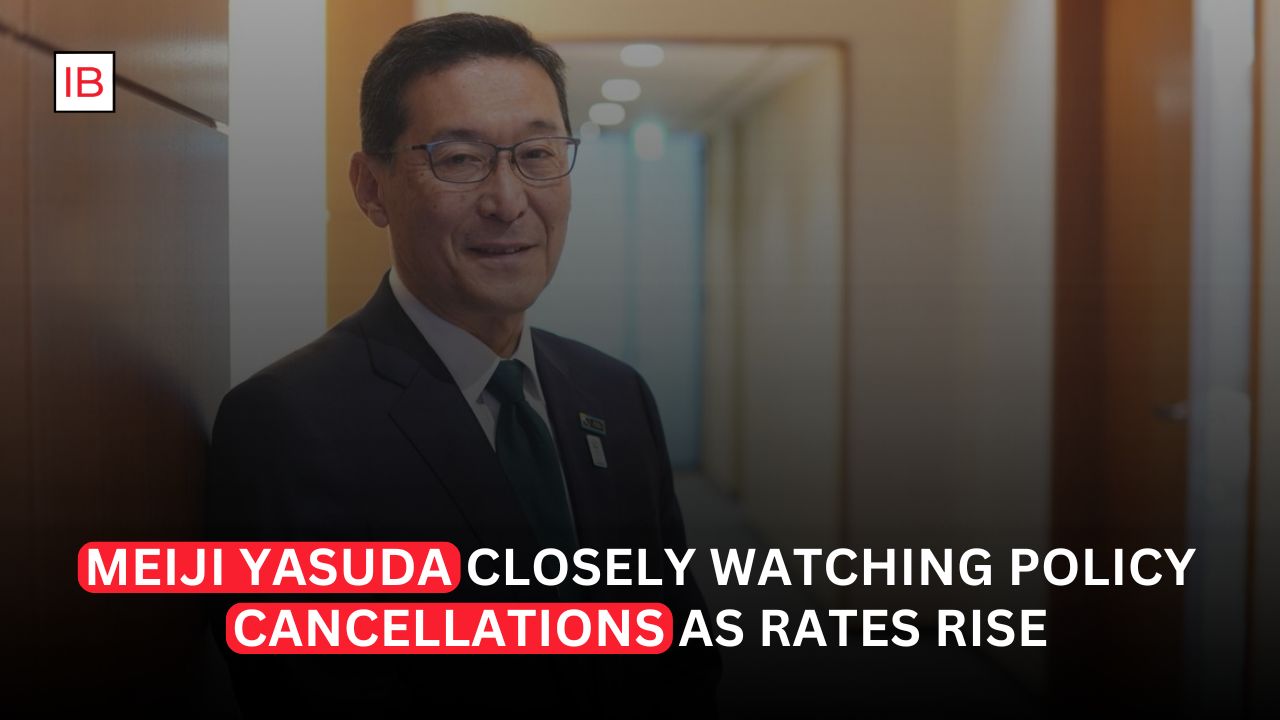
Meiji Yasuda Life Insurance is closely monitoring a growing wave of policy cancellations as Japan’s rising interest rate environment prompts policyholders to abandon older, lower-yield contracts in favor of newer products offering substantially better returns, a dynamic reshaping how the country’s major life insurers manage both their liabilities and investment strategies.
A Record Wave of Surrenders
The scale of the shift has been striking. Surrender benefits paid out by Japanese life insurers reached a record 6.02 trillion yen, or roughly $38.2 billion, between January and May, up 39.1% year-on-year, as policyholders increasingly moved to cash out older policies locked in at the low guaranteed rates that prevailed during Japan’s decades-long era of near-zero rates. That trend has accelerated as the Bank of Japan has continued its gradual tightening, most recently holding its policy rate at 1.0% following a 25-basis-point increase in June, its highest level since September 1995.
Insurers Racing to Raise Their Own Rates
In response to the wave of cancellations, Japan’s major life insurers have moved aggressively to raise the assumed interest rates they offer on new policies, hoping to retain existing customers and attract new business before losing more contracts to competitors or alternative investment products. Sumitomo Life Insurance set the industry’s highest rate at 2.25% for single-premium whole life insurance in July, a move quickly matched by rivals. Meiji Yasuda followed by raising the assumed interest rate on its level-premium savings insurance by 0.2 percentage points to 1.6% in August, part of a broader industry-wide scramble to keep pace with rapidly shifting market conditions.
Competition From New NISA Adds Pressure
The surge in policy cancellations has been compounded by a separate structural challenge: the continued popularity of Japan’s New NISA tax-advantaged investment accounts, which have drawn household savings away from traditional insurance products and toward direct stock and fund investments. That competitive pressure has heightened what industry observers describe as a growing sense of urgency among insurers, who face the dual challenge of rising rates making older policies less attractive at the same time that alternative investment vehicles are drawing away the household savings insurers have traditionally relied upon.
A Broader Rotation Toward Yen-Denominated Products
The rate environment has also driven a notable rotation in what Japanese insurers are selling. Four major life insurers, Nippon Life, Meiji Yasuda, Sumitomo Life, and Dai-ichi Frontier Life, reported higher revenues in fiscal 2025, driven by a shift out of foreign currency-denominated policies and into yen-denominated single-premium whole life products. Combined premium income from yen-denominated single-premium whole life policies at Nippon Life, Meiji Yasuda, and Sumitomo reached approximately 2.38 trillion yen in fiscal 2025, roughly 2.4 times the prior year’s level, as improving yen-based investment returns allowed insurers to offer higher guaranteed yields and larger death benefits than had been possible during the low-rate era.
Balancing Bond Losses Against New Opportunities
The rising-rate environment has cut in multiple directions for Meiji Yasuda and its peers. While higher rates have improved returns on new yen-denominated products, they have simultaneously driven up unrealized losses on existing bond holdings, with Nippon Life, Dai-ichi Life, Sumitomo Life, and Meiji Yasuda together reporting combined unrealized bond losses of roughly 15.13 trillion yen, or about $96 billion, as of their most recent quarterly results. Because insurers typically hold Japanese government bonds to maturity to match long-term liabilities, those losses do not necessarily translate into immediate financial harm, but a significant wave of withdrawals could force insurers to sell bonds earlier than planned, converting paper losses into real ones.
Meiji Yasuda’s Broader Investment Recalibration
Alongside monitoring cancellation trends, Meiji Yasuda has been actively adjusting its broader investment strategy to match the new rate environment. The insurer more than doubled its planned domestic bond purchases for the current fiscal year, from an original target of 1 trillion yen to over 2 trillion yen, following a sharp spike in long-term interest rates in May. The company also plans to resume new private credit investments in the second half of fiscal 2026 after temporarily pausing them earlier in the year amid concerns tied to certain U.S. funds, having since concluded through internal risk analysis that any impact would be limited.
What Comes Next
With the Bank of Japan expected to continue its gradual tightening path and insurers racing to keep pace with rising guaranteed yields on new products, the coming months will test whether higher rates on offer are enough to slow the pace of policy cancellations or whether the trend continues accelerating as policyholders chase better returns elsewhere. How Meiji Yasuda and its major competitors balance the competing pressures of retaining existing customers, managing bond portfolio losses, and adjusting to a fundamentally different rate environment than the one that shaped their business for decades will likely remain a defining theme for Japan’s life insurance industry through the remainder of 2026.