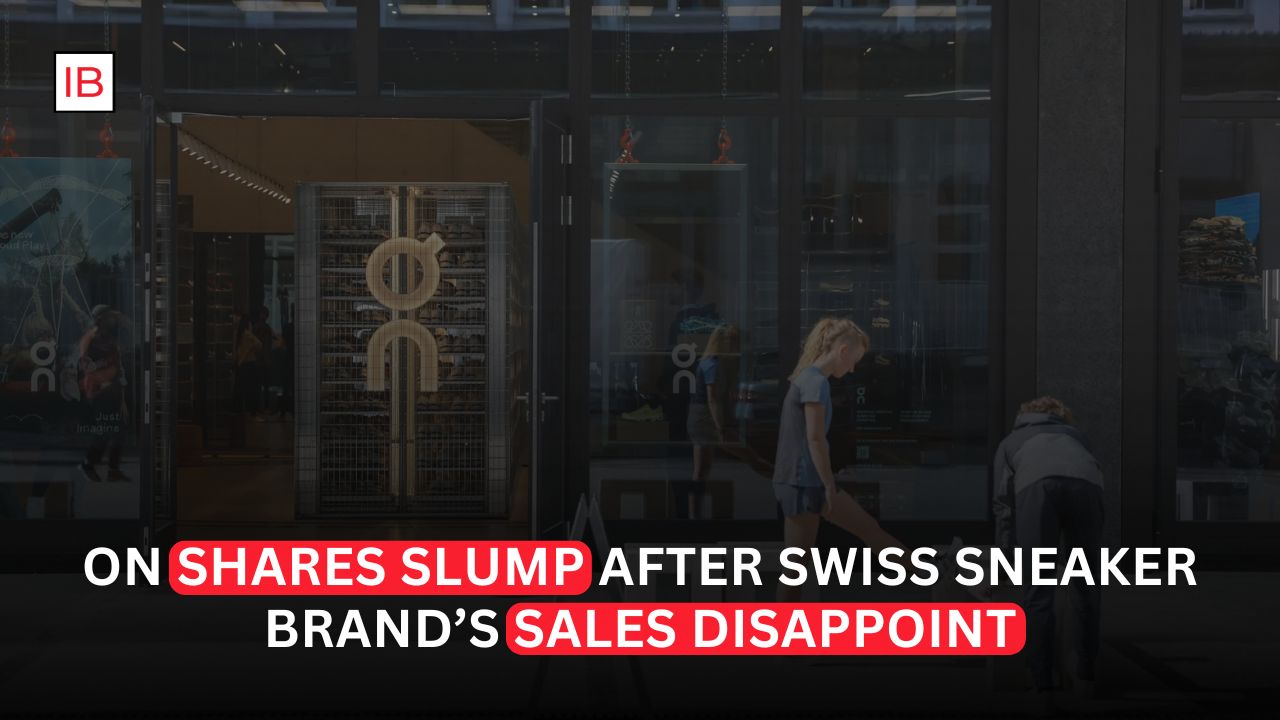
Swiss sportswear company On Holding is facing a more difficult US market after quarterly sales fell short of expectations, highlighting the risks of maintaining premium pricing while consumers become more selective about discretionary spending.
The company has built its reputation around high-performance running shoes and a premium brand image, allowing it to command prices above many traditional athletic competitors. But that strategy is being tested as demand becomes less predictable and retailers increasingly use promotions to attract cautious shoppers.
On’s decision to resist widespread markdowns in the US is central to the issue. While avoiding discounts can protect profitability and preserve the brand’s premium positioning, it can also make products harder to sell when consumers are looking for better value.
US Demand Becomes a Challenge
The US is one of On’s most important markets and has played a major role in the company’s rapid international expansion.
The brand has benefited from growing consumer interest in performance footwear, running and athleisure. Its distinctive shoe designs have also helped On move beyond specialist running customers and into the broader lifestyle market.
But the latest sales performance suggests that growth is becoming harder to maintain.
Consumers have become increasingly sensitive to prices, particularly in categories where they have numerous alternatives. Athletic footwear is crowded with established brands and newer challengers, giving shoppers plenty of opportunities to switch between products.
For On, that creates a difficult choice.
It can protect prices and preserve the exclusivity of the brand, or it can offer deeper promotions to generate additional volume.
The company has largely chosen the first option.
Why Avoiding Discounts Matters
Discounting may appear to be an easy way to increase sales, but it can create problems for premium brands.
Once consumers become accustomed to lower prices, they may become less willing to pay full price.
Frequent promotions can also change how shoppers perceive a brand.
For a company such as On, which has invested heavily in building a premium image, maintaining pricing discipline can therefore be strategically important.
The problem is that refusing to discount can make quarterly sales numbers look weaker when competitors are using promotions to stimulate demand.
This creates a tension between short-term sales growth and long-term brand positioning.
On appears willing to accept some short-term pressure rather than undermine the pricing power it has built.
Retailers Face Their Own Pressure
The issue is not limited to On.
US retailers are also dealing with consumers who are increasingly selective about discretionary purchases.
When shoppers become cautious, retailers may respond by increasing promotions or giving more shelf space to brands offering attractive prices.
That puts premium brands under pressure.
If a retailer has two similar products available, one selling at a substantial discount and another at full price, the discounted product can become more attractive even if the premium brand has stronger recognition.
On’s challenge is therefore not simply generating demand.
It is convincing consumers that its products justify the higher price.
The Premium Sportswear Market Is Crowded
Competition has intensified across athletic footwear.
Established companies such as Nike and Adidas continue to have enormous global distribution networks, while brands including Hoka and New Balance have strengthened their positions in running and lifestyle footwear.
On has managed to carve out a distinctive position, particularly among consumers interested in running technology and premium design.
But maintaining that position requires continuous innovation.
Consumers can quickly move between brands when new designs, technologies or styles become popular.
The company’s ability to keep its products desirable without relying on discounts will therefore be important.
Growth Outside the US Could Become More Important
If US growth remains under pressure, On may increasingly rely on international markets to maintain momentum.
The company has expanded aggressively across Europe and Asia, giving it opportunities to diversify its revenue base.
International expansion, however, comes with its own challenges.
Consumer preferences vary between countries, while currency movements, import costs and economic conditions can affect sales and profitability.
Building awareness in new markets also requires significant investment in stores, marketing and distribution.
That means international growth cannot instantly compensate for weaker US demand.
Protecting the Brand Comes at a Cost
On’s pricing strategy illustrates a broader problem facing premium consumer brands.
A company can protect its brand by refusing to participate fully in promotional activity, but doing so may result in slower unit sales.
Alternatively, it can chase volume through discounts but risk weakening its premium positioning.
There is no easy solution.
The correct strategy depends on how much pricing power a company actually has.
If consumers continue to believe that On shoes offer something meaningfully different, the company can potentially maintain higher prices.
If customers increasingly view athletic footwear as interchangeable, resisting discounts could become more difficult.
Investors Are Watching Margins
For investors, the sales miss is important not only because of revenue growth but because of what it says about future margins.
Heavy discounting can hurt margins directly.
But refusing to discount can also create pressure if slower sales result in excess inventory.
That is particularly important for a footwear company because unsold inventory eventually has to be cleared.
The challenge is finding the right balance between inventory levels, pricing and demand.
A premium brand does not necessarily benefit from selling every product at any price.
What matters is generating sustainable growth while maintaining healthy profitability.
On’s Brand Remains Its Biggest Asset
Despite the current pressure, On still has an important advantage: brand momentum.
The company has managed to establish itself as a recognizable premium sportswear name relatively quickly.
Its Cloud-branded footwear has become particularly visible, while the company’s association with performance running has helped establish credibility beyond fashion.
That gives On a foundation that many smaller athletic brands do not have.
The question is whether it can maintain that momentum as the market becomes more competitive.
A More Difficult Growth Environment
The latest results point toward a broader change in the sportswear industry.
The post-pandemic boom in athletic and casual clothing created unusually strong demand for many brands.
That environment encouraged companies to expand rapidly and invest heavily in new products and distribution.
Now consumers are becoming more selective.
That does not necessarily mean they have stopped spending.
Instead, they may be concentrating spending on brands, products and experiences they consider worth the money.
For premium companies, that distinction is critical.
A consumer may still be willing to spend $150 or more on running shoes—but only if the product offers a compelling reason to justify the price.
The Bigger Question for On
The key question is whether On can continue growing while maintaining its premium pricing strategy.
The company’s refusal to aggressively mark down products suggests management remains confident in the strength of its brand.
But the weaker-than-expected sales performance shows that consumers ultimately have the final say.
If demand recovers, maintaining prices could prove to be the right strategy.
If demand continues weakening, however, On may eventually have to choose between protecting prices and protecting sales volumes.
That decision could shape the company’s next stage of growth.
For now, the sales disappointment is less a sign that On’s business model has failed than a warning that the company’s exceptional growth period is becoming harder to sustain.
The Swiss sportswear brand has built its success on premium products, strong branding and pricing power.
Its challenge now is proving that those advantages remain strong enough to withstand a more cautious US consumer without resorting to the discounts it has worked hard to avoid.