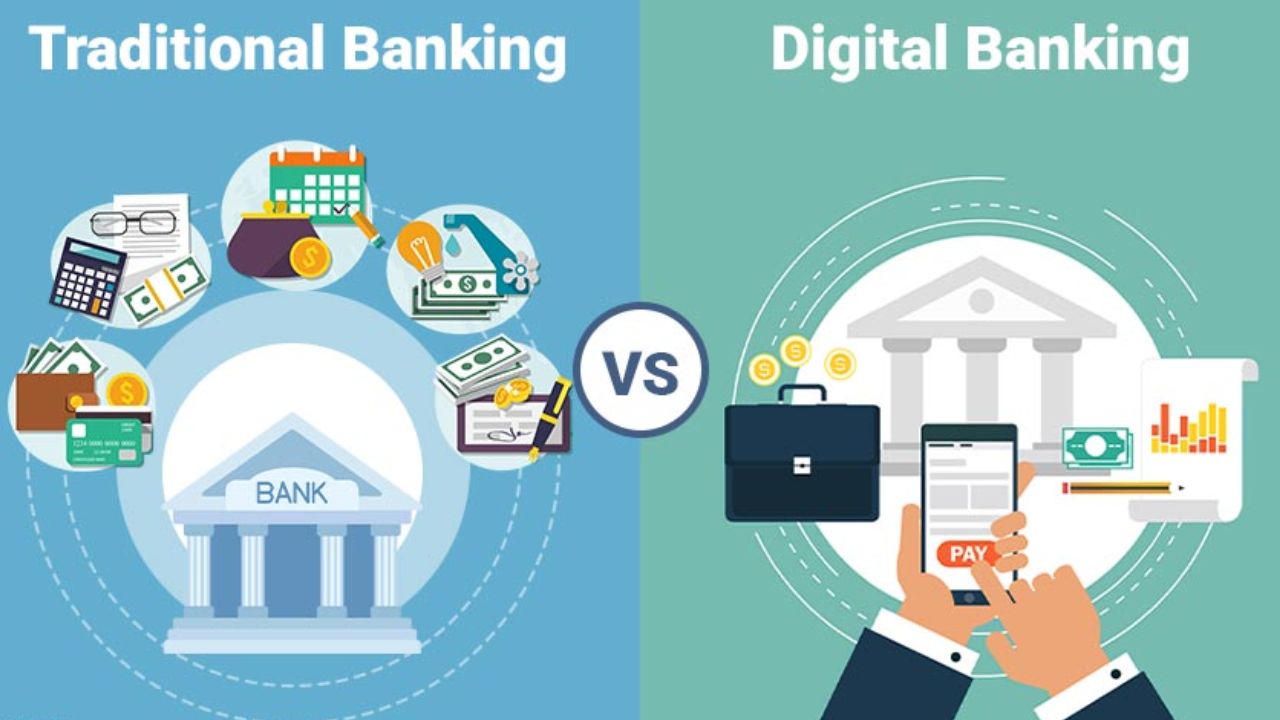
Ask ten people where they bank, and you’ll get two very different kinds of answers. Half will name an app on their phone. The other half will name a building on Main Street they’ve walked into for years. That split captures the heart of the online banking vs traditional banking conversation happening across the financial industry right now. It isn’t really a story about one side winning — it’s a story about two very different models finally being forced to compete for the same customer, and both getting better because of it.
Two Different Starting Points
The online banking vs traditional banking divide starts with something almost embarrassingly simple: whether or not the institution has a building you can walk into. Traditional banking was built around physical branches — tellers, vaults, drive-through windows, the whole in-person experience. Online banking was built around the opposite assumption: that everything a customer needs can happen through a screen, with no branch required at all. Every other difference in the online banking vs traditional banking comparison — fees, speed, service style — traces back to that one structural choice.
The Money Question: Why Online Banking Usually Costs Less
If you line up the numbers, the online banking vs traditional banking comparison tends to tilt sharply in one direction on cost. Traditional banking has to fund an expensive physical footprint — leases, security systems, in-branch staff — and those costs typically show up as monthly maintenance fees, minimum balance requirements, and modest savings rates. Online banking skips almost all of that overhead, and the savings usually flow back to the customer in the form of higher interest rates and fewer fees. It’s not unusual in 2026 to see online banking savings accounts paying several times the national average, while many traditional banking accounts still sit closer to a fraction of a percent. For anyone focused purely on maximizing what their money earns, online banking tends to win this part of the online banking vs traditional banking debate outright.
The Convenience Question: Where Online Banking Pulls Ahead
Convenience is the second major front in the online banking vs traditional banking comparison, and it’s arguably where the gap has widened the most over the past few years. Online banking offers 24/7 account access, instant transaction alerts, mobile check deposits, and account opening that takes minutes rather than a scheduled branch visit. Traditional banking, tied to business hours and in-person processes, simply can’t match that pace for most routine tasks. If your life runs on an unpredictable schedule — freelance work, shift work, frequent travel — online banking tends to bend around your life more easily than traditional banking’s fixed branch hours ever could.
The Service Question: Where Traditional Banking Still Has an Edge
None of this means traditional banking has lost its purpose. Cash-heavy routines are one clear spot where the online banking vs traditional banking scale tips back toward branches — depositing physical cash through an app is still clumsy or outright impossible at most online banking providers, while a traditional banking branch handles it in seconds. Complex financial needs also favor traditional banking: mortgage underwriting, small business lending relationships, and sitting across from an actual advisor when a decision is genuinely complicated. There’s a quieter emotional factor here too — plenty of people simply feel steadier knowing a real building and a real person are available if something goes wrong, and that reassurance is a legitimate part of the online banking vs traditional banking decision, even if it doesn’t show up on a rate sheet.
The Safety Question People Actually Worry About
A lot of hesitation around online banking vs traditional banking comes down to a single nagging question: is my money actually as safe without a branch? In most developed markets, the honest answer is yes — deposit insurance like FDIC coverage in the US applies equally to qualifying online banking and traditional banking accounts, with no difference based on whether the institution has a physical location. Where the two genuinely diverge isn’t the safety of your deposits, but what happens operationally when something goes wrong. A traditional banking branch might replace a compromised debit card on the spot; online banking usually means a mailed replacement and a few uncomfortable days relying on ATMs. It’s a real friction point, but it isn’t evidence that online banking is fundamentally less secure than traditional banking.
Technology Is Blurring the Line Fast
One of the more interesting shifts in the online banking vs traditional banking landscape is how quickly the technology gap is closing. Traditional banking institutions have poured money into their own mobile apps, real-time alerts, and even AI-driven budgeting tools, chasing the same digital convenience online banking made standard. Meanwhile, online banking providers are pushing further still, experimenting with agentic AI systems that anticipate a customer’s needs rather than simply reacting to a tap on the screen. The result is that the online banking vs traditional banking distinction is becoming less about who has better technology and more about who has a branch at all — a much narrower, more specific difference than it used to be.
Why Most People Don’t Actually Have to Choose
The most practical resolution to the online banking vs traditional banking question, for most people, is to stop treating it as a binary choice altogether. A growing number of financially organized households now run a hybrid setup: a traditional banking relationship kept open for cash deposits, in-person needs, or complex lending, paired with an online banking account doing the heavy lifting for everyday spending and savings growth. Instead of picking a winner in the online banking vs traditional banking matchup, they assign each institution the job it’s actually best suited for.
The Bottom Line
The online banking vs traditional banking comparison isn’t really a debate with a single correct answer — it’s a set of trade-offs that land differently depending on how you actually live and spend. Online banking wins clearly on fees, rates, and day-to-day convenience. Traditional banking still earns its place for cash needs, complex financial products, and the reassurance of a physical presence. Rather than picking a side permanently, the smartest move in 2026 is treating online banking vs traditional banking as a question of division of labor — using each one for exactly what it does best.