Record AI-Era Bonus Agreement Sparks Internal Divisions Among Workers
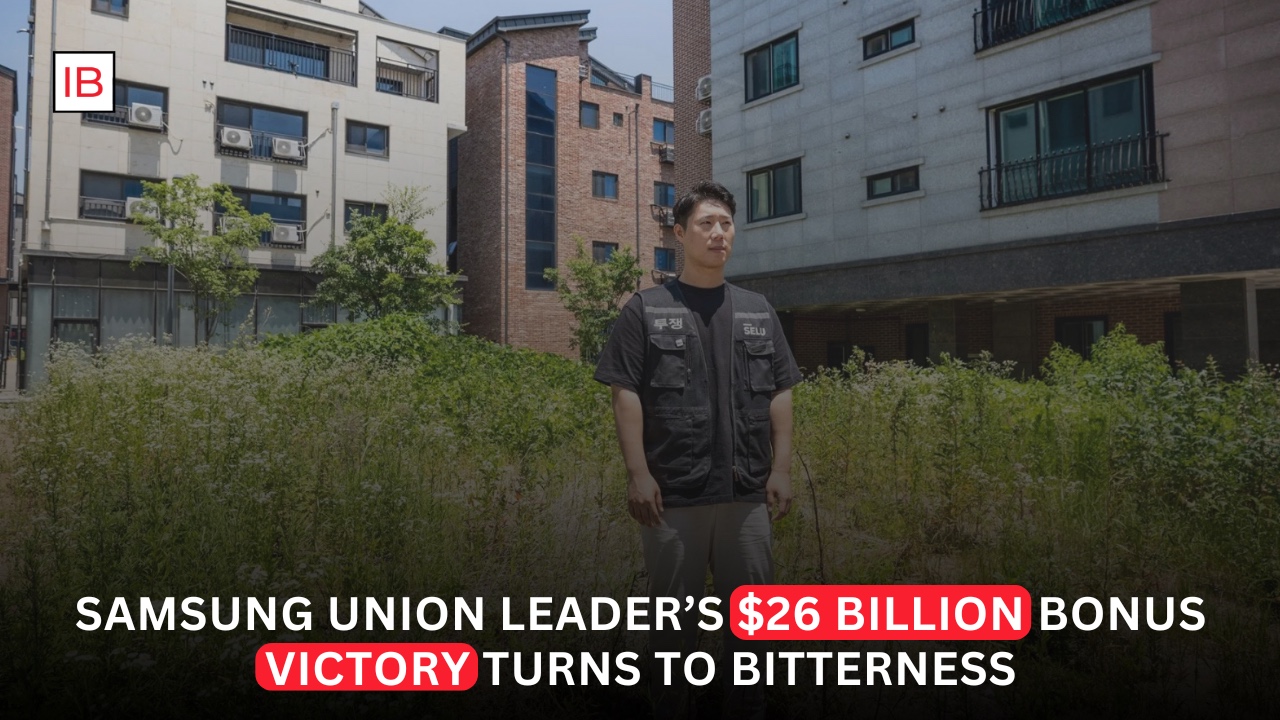
What initially appeared to be a historic victory for Samsung Electronics employees has quickly turned into a challenging test of leadership for Choi Seung-ho, the 35-year-old millennial union leader who secured one of South Korea’s largest employee bonus agreements during the country’s artificial intelligence boom.
While the landmark deal delivered an estimated US$26 billion in bonuses to semiconductor workers, it also exposed deep divisions within Samsung’s workforce, leaving Choi facing criticism from employees who received significantly smaller payouts.
AI Boom Fueled Historic Bonus Agreement
As demand for AI chips surged, Samsung’s semiconductor business generated record profits, giving employees greater leverage during annual wage negotiations.
After months of negotiations, the union reached an agreement that included:
- Higher wages
- Enhanced employee benefits
- A new profit-sharing bonus structure
- Stock-based compensation tied to company performance
Some workers in Samsung’s highly profitable memory-chip division were promised bonus packages worth approximately US$400,000, reflecting the enormous profits generated by AI-related semiconductor demand.
Uneven Payouts Trigger Worker Backlash
The celebration proved short-lived.
Employees working in Samsung’s less profitable businesses—including mobile devices, consumer electronics, and home appliances—received dramatically smaller bonuses, with some payouts amounting to only about 1% of what memory-chip employees earned.
The disparity sparked widespread frustration, with dissatisfied workers reportedly wearing black clothing and masks as a symbol of protest. Thousands of employees also left the union following the agreement, weakening its influence.
A New Generation of Union Leadership
Choi represents a different type of labor leader compared with previous generations in South Korea.
Rather than emphasizing traditional labor activism, younger workers have focused on:
- Fair profit sharing
- Performance-based compensation
- Transparency in bonus calculations
- Financial rewards tied to company success
Many millennial and Gen Z employees view AI-driven corporate profits as something they helped create and therefore expect to share more directly in the financial gains.
AI Creates Winners and Losers
The dispute highlights how the artificial intelligence boom is reshaping corporate workforces.
Within Samsung, divisions benefiting directly from AI memory-chip demand generated exceptional profits, while businesses producing smartphones, televisions, and household appliances experienced slower growth.
As a result, AI has created significant differences in employee compensation despite workers belonging to the same company.
Union Influence Weakens
Although Choi retained his leadership position after receiving strong support in a confidence vote, the union has lost considerable bargaining power.
Membership has fallen below 55,000 employees, leaving it with less than half of Samsung’s domestic workforce and costing it its status as the company’s primary negotiating representative.
The decline illustrates how difficult it can be to maintain unity when workers’ financial interests diverge sharply.
Broader Shift in South Korea’s Workforce
Labor experts say the events at Samsung reflect broader changes across South Korea’s corporate culture.
Unlike previous generations that often prioritized long-term job security and company loyalty, younger employees increasingly emphasize:
- Merit-based compensation
- Financial fairness
- Profit participation
- Career mobility
This shift is reshaping labor relations at many of the country’s largest technology companies.
Looking Ahead
Choi Seung-ho’s landmark AI bonus agreement demonstrated the growing influence of younger workers in South Korea’s technology industry, but it also revealed the challenges of representing employees whose interests increasingly differ.
As artificial intelligence continues transforming corporate profits, companies like Samsung may face more difficult negotiations over how AI-generated wealth should be distributed across different business divisions. The episode serves as an early example of how the AI economy is reshaping not only technology companies but also modern labor relations.