Siemens AG lifted its full-year earnings outlook Thursday as it reported third-quarter results for fiscal 2026, extending a pattern of upgraded guidance that has defined the German industrial technology group’s year, powered by surging demand for its software and data center-related products tied to the global AI infrastructure buildout.
A Year Defined by AI-Driven Upgrades
Thursday’s announcement builds on a trajectory Siemens set early in its fiscal year. Back in February, following stronger-than-expected first-quarter results, the company raised its guidance for full-year comparable revenue growth to the upper half of its 6% to 8% range and lifted its basic earnings-per-share outlook by 20 euro cents, to a range of 10.70 to 11.10 euros. That earlier upgrade came after first-quarter orders climbed 10% on a comparable basis to 21.4 billion euros, with U.S. orders alone surging 54% year-on-year on the back of robust data center and building software demand, and profit in the industrial business jumping 15% to 2.9 billion euros, comfortably beating analyst expectations.
Software and Data Centers Driving Momentum
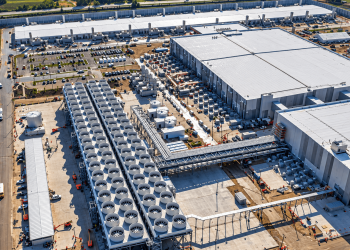
Much of Siemens’ strength this year has been concentrated in its smart infrastructure division, which delivered record order growth earlier in the fiscal year as data center construction accelerated across the United States to meet surging AI computing demand. CEO Roland Busch has described the company’s strategy as building an “industrial AI operating system” spanning the entire value chain, from design and engineering through manufacturing operations and into supply chain management, with customers including Boeing, General Motors, Microsoft, and Apple relying on Siemens’ software and technology platforms for industrial applications.
Busch has previously highlighted that demand for data centers has “considerably exceeded” the company’s own expectations, with the data center business alone pushing divisional revenue up by more than a third earlier in the fiscal year. That momentum has continued feeding into Siemens’ broader digital industries unit, which has posted double-digit growth in both orders and revenue even as some traditional industrial automation markets have shown signs of softness.
Part of a Broader Siemens Group Story
The strength at Siemens AG mirrors a similar pattern playing out at Siemens Energy, a separately listed company that shares the Siemens name but operates independently, which reported its own third-quarter fiscal 2026 results this week showing profit before special items more than tripling to 1.62 billion euros on record orders of 17.9 billion euros, driven substantially by AI data center demand and Middle East power infrastructure investment. While Siemens AG and Siemens Energy are distinct entities, both companies’ results this earnings season underscore just how broadly the AI infrastructure boom has lifted demand across the German industrial and energy technology sector.
Analyst Reaction Has Been Positive
Siemens shares jumped more than 6% following the company’s February earnings update, making it one of the biggest gainers on the Stoxx Europe 600 Industrials index at the time. Deutsche Bank analyst Gael de-Bray described the results as “robust,” pointing specifically to strong performance from the company’s digital industries factory automation unit, while JPMorgan raised its price target on Siemens shares from 325 to a higher level, maintaining an “overweight” rating as it grew more confident in the company’s AI-driven growth trajectory.
Why the Upgrade Matters
For a company of Siemens’ scale and diversification, spanning industrial automation, smart infrastructure, healthcare technology, and mobility, a sustained pattern of raised guidance signals broad-based strength rather than momentum concentrated in a single business line. That breadth has helped reinforce investor confidence that the AI infrastructure boom is translating into durable, measurable financial results across multiple segments of Siemens’ business, rather than representing a narrow or temporary bump tied to one-off contracts.
What Comes Next
With Siemens’ fiscal year running through the end of September, the company’s third-quarter update and raised guidance offer investors a clearer picture of how the final stretch of fiscal 2026 is likely to unfold. Given the consistency of upgraded targets throughout the year, attention will now turn to whether Siemens can sustain this pace of growth into fiscal 2027, particularly as the broader AI infrastructure spending cycle faces increased scrutiny from investors questioning how long the current wave of data center construction and related capital expenditure can continue at its present intensity.