South Korea is tightening the rules around single-stock leveraged exchange-traded funds, requiring retail investors to complete simulated trading before they can invest in these high-risk products. The new measure is part of a broader regulatory push to curb speculative activity and reduce the extreme volatility that has recently affected the country’s stock market.
Starting August 19, investors will have to complete five days of mock trading before being allowed to trade single-stock leveraged or inverse ETFs and exchange-traded notes. The requirement is aimed at making investors experience the risks of leveraged products before committing real money.
The move comes only months after South Korea opened its domestic market to single-stock leveraged ETFs tied to major companies such as Samsung Electronics and SK Hynix. Their rapid popularity among retail investors has since become a major concern for regulators.
Why Korea Is Tightening the Rules
Single-stock leveraged ETFs are fundamentally different from conventional diversified ETFs.
A traditional ETF may track an index containing dozens or hundreds of companies. A single-stock leveraged ETF concentrates exposure on one company and attempts to deliver a multiple of that stock’s daily performance.
For example, a 2x leveraged product theoretically aims to rise 2% when the underlying stock rises 1% in a day — but it can also fall 2% when the stock falls 1%.
That makes these products considerably more volatile than ordinary ETFs.
The problem became particularly visible in South Korea after products linked to Samsung Electronics and SK Hynix attracted huge amounts of retail money following their launch in May. By June 19, cumulative net purchases of leveraged ETFs had reached about 8.2 trillion won, according to the Korea Capital Market Institute.
Retail Investors Became a Major Force
The rapid inflow of retail money was not necessarily surprising.
South Korean individual investors have historically been highly active in the domestic stock market, and technology shares have been particularly popular.
Samsung Electronics and SK Hynix are two of the country’s most important companies, benefiting from strong demand for semiconductors and artificial intelligence infrastructure.
Leveraged ETFs offered investors a way to amplify those bets without directly borrowing money through a conventional margin account.
But leverage cuts both ways.
A correct directional call can produce large gains, while a sudden reversal can destroy capital quickly.
That risk became especially serious during the sharp swings in Korea’s stock market earlier this year.
The New Requirement Is More Than Education
South Korean regulators had already introduced investor education requirements for these products.
The latest rule goes further by requiring actual simulated trading.
The distinction matters.
Reading an explanation about leverage is very different from watching a simulated position lose money during a sharp market move.
The five-day practice period is intended to force investors to interact with the product mechanics before putting real capital at risk.
It also gives investors an opportunity to understand how leveraged products behave when markets move rapidly in both directions.
Regulators Have Already Introduced Other Restrictions
The mock-trading requirement is not an isolated measure.
South Korea has been building a much broader framework to restrict excessive speculation in single-stock leveraged products.
Authorities have already increased the minimum cash deposit required to trade these products to 30 million won, up from 10 million won. The government has also moved to limit an individual’s exposure to single-stock leveraged ETFs to 20% of total investment assets.
New listings of single-stock leveraged ETFs have also been suspended, while advertising for the products has been restricted.
The package shows that regulators are not simply trying to educate investors.
They are trying to reduce the size of the market itself.
Why Leverage Can Amplify Market Volatility
The concern goes beyond individual investors losing money.
Leveraged ETFs typically need to rebalance their portfolios regularly to maintain their targeted exposure.
When a large number of investors hold leveraged products linked to the same stock, these rebalancing trades can create additional buying or selling pressure.
That can become particularly problematic during sharp market moves.
If the underlying stock falls substantially, leveraged products may need to adjust their positions in a way that adds to selling pressure.
This can create feedback loops between the ETF and the underlying stock.
Some researchers have argued that such mechanisms contributed significantly to the extraordinary volatility seen in Korea’s market this year.
Samsung and SK Hynix Are Especially Important
The issue is amplified by the structure of South Korea’s stock market.
Samsung Electronics and SK Hynix are enormous companies with significant influence over the KOSPI.
Both are also closely tied to the global semiconductor and AI boom.
That means a leveraged bet on either company is not simply a narrow stock-market trade.
Large moves in these shares can influence broader Korean equity indexes and investor sentiment.
When leveraged products are simultaneously concentrated in those same companies, the potential impact becomes larger.
The Timing Is Important
The restrictions come after a dramatic reversal in Korean equities.
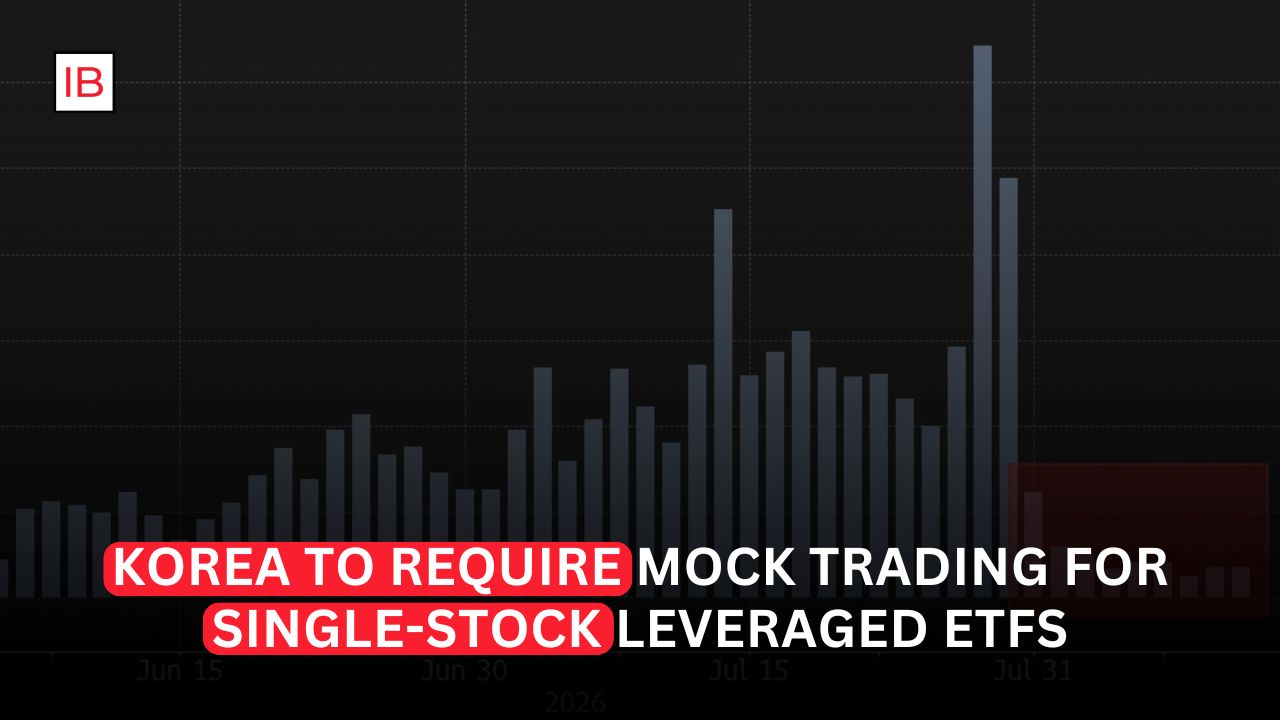
The KOSPI experienced severe declines during July, including consecutive daily losses of nearly 6% and more than 10% during one particularly volatile period. Regulators attributed part of the instability to concentrated activity in single-stock leveraged products.
The market has since recovered strongly, but policymakers clearly do not want another episode in which leveraged retail positions amplify a sudden selloff.
That explains the increasingly aggressive regulatory approach.
The Weak Point in the Strategy
There is a potential limitation to the government’s approach.
Education and mock trading may reduce the number of inexperienced investors entering leveraged products, but they do not eliminate the underlying market mechanics that create volatility.
An investor can complete five days of simulated trading and still make highly speculative bets afterward.
Likewise, restricting single-stock leveraged ETFs could simply push some investors toward other leveraged instruments.
That substitution effect is already something regulators need to watch.
If investors shift from single-stock leverage into inverse index ETFs, futures or other derivatives, the overall speculative pressure may not disappear.
It could simply move somewhere else.
Regulators Are Trying to Change Investor Behavior
The 20% exposure limit and 30 million-won deposit requirement are therefore arguably more important than the education component.
The government is attempting to make excessive concentration financially harder.
An investor who previously could devote a large portion of their portfolio to a leveraged Samsung or SK Hynix position now faces much stronger restrictions.
That should reduce the probability that a single leveraged trade can cause catastrophic losses for an individual investor.
It could also reduce the amount of forced trading generated by highly concentrated positions.
There Is a Trade-Off
The rules may improve market stability, but they also restrict investor choice.
Single-stock leveraged ETFs were introduced partly to provide Korean investors with products comparable to those already available in overseas markets.
The government had previously allowed these products as part of efforts to strengthen the domestic capital market and provide investors with more options.
The rapid regulatory reversal therefore illustrates the difficulty of balancing financial innovation with investor protection.
If the rules become too restrictive, investors may simply move their money to foreign markets.
That could undermine one of the original reasons for allowing the products in the first place.
What Investors Should Watch
The next important question is whether the new restrictions actually reduce volatility.
If trading volumes in single-stock leveraged ETFs decline sharply while ordinary equity and index ETFs absorb the displaced capital, regulators could argue that the measures are working.
But if speculative activity migrates into other leveraged products, the effect could be much smaller.
The five-day mock-trading requirement will also provide an interesting test.
If participation drops significantly after the rule takes effect, it would suggest that a meaningful portion of demand was coming from investors who were attracted by leverage without fully understanding its risks.
The Bigger Picture
South Korea’s decision reflects a broader global debate about retail access to complex financial products.
Technology has made leveraged instruments easier than ever to trade.
At the same time, social-media-driven investing can encourage investors to focus on short-term gains while underestimating the risks of leverage and daily compounding.
Regulators therefore face a difficult question: how much freedom should investors have to make high-risk trades with their own money?
South Korea is clearly moving toward greater protection.
The government is not banning single-stock leveraged ETFs outright. Instead, it is creating increasingly high barriers around them — education, simulated trading, minimum deposits, exposure limits and restrictions on new products.
The objective is to make leveraged trading less accessible to inexperienced investors while preserving some access for those who understand the risks.
Whether that works will depend on investor behavior after the rules take effect.
The immediate result is likely to be lower participation and reduced trading activity in single-stock leveraged products.
But the longer-term test is much harder: can Korea reduce excessive leverage without simply pushing speculative trading into another corner of its financial system?
That is the question investors and regulators will be watching after August 19.