Trump Pressure on a Once-Influential US Oil Investor Highlights the Changing Rules of Venezuela’s Energy Sector
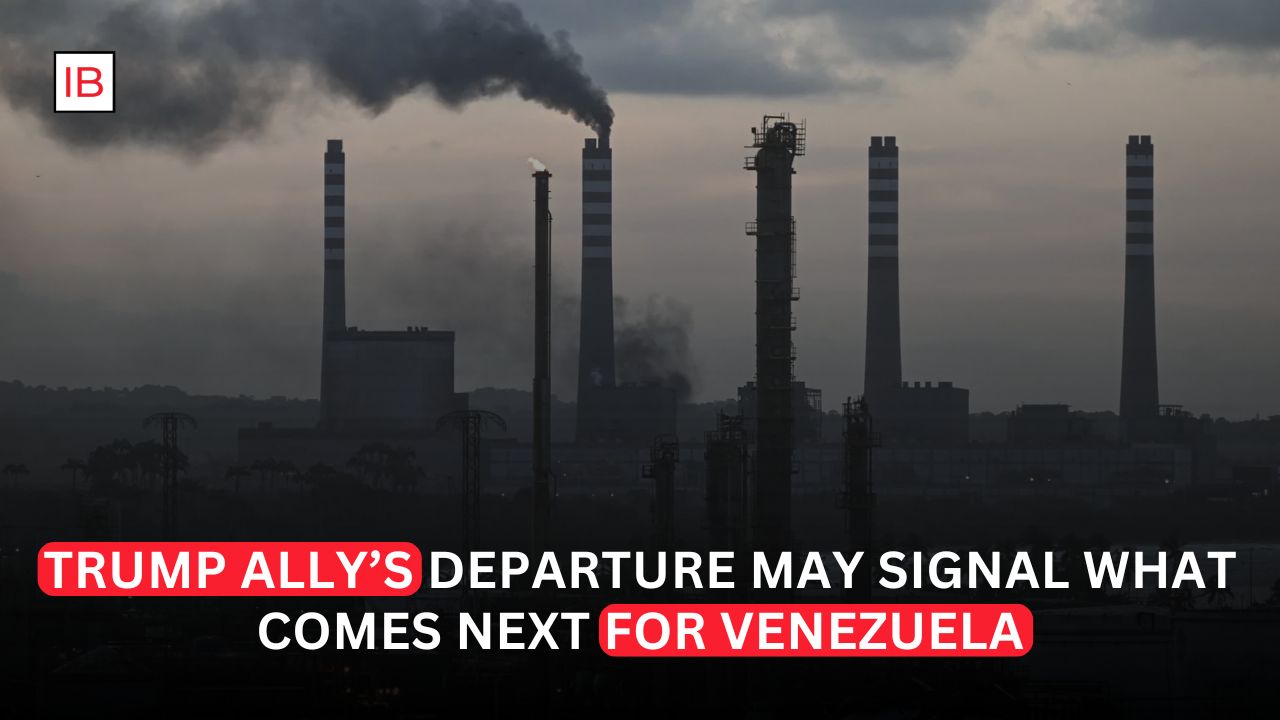
Harry Sargeant III’s decision to exit his Venezuelan oil investment offers an important glimpse into the changing political and economic landscape of Venezuela, where control over the country’s enormous petroleum resources is increasingly being reshaped by Washington.
Sargeant, a Florida energy investor and Republican donor, agreed to sell his interests in North American Blue Energy Partners, known as NABEP, which has been described as Venezuela’s second-largest private oil producer after Chevron. His exit follows pressure from the Trump administration to unwind his involvement in the country’s oil industry.
The development is significant because Sargeant was not simply another foreign investor.
For years, he had cultivated relationships in both Washington and Caracas and was regarded as a useful intermediary between US political circles and Venezuelan officials.
His departure now suggests that the emerging Venezuelan oil sector may operate under a very different set of political rules.
From Back Channel to Exit
Sargeant had spent years building a presence in Venezuela’s energy industry.
His companies became involved in the country’s oil and asphalt businesses, while he developed relationships that allowed him to operate between Venezuelan officials and US political circles.
That position became particularly important as Washington sought to influence the future of Venezuela’s energy industry.
But after the dramatic political changes of 2026, his relationship with the administration appears to have deteriorated.
The Trump administration moved to pressure Sargeant to divest from his Venezuelan interests, including action by the US Treasury involving an offshore company connected to his investment.
The result was an agreement to sell his stake.
A $300 Million Deal
Sargeant reportedly agreed to sell Bluewave Properties, the British Virgin Islands company through which he held a minority interest in NABEP, in a transaction valued at about $300 million.
The buyer is linked to Alejandro Betancourt, NABEP’s controlling shareholder.
The transaction effectively removes Sargeant from an oil venture that had positioned him to benefit from Venezuela’s potentially enormous energy revival.
For an investor who had spent years establishing a foothold in the country, the decision represents a major strategic reversal.
But it also tells investors something about how Washington wants Venezuela’s oil sector to develop.
Venezuela Is Entering a New Oil Era
Venezuela possesses the world’s largest proven crude-oil reserves, but decades of political turmoil, underinvestment and sanctions have left its production far below historical levels.
The country’s oil infrastructure requires enormous investment.
The Trump administration has been pushing for foreign companies to return to Venezuela, while Caracas has introduced reforms designed to make private and international investment easier.
Recent developments suggest that major international energy companies are beginning to test the opportunity.
BP, Shell and Abu Dhabi’s XRG have recently moved into Venezuelan gas projects, signaling growing interest in the country’s post-Maduro energy sector.
That makes Sargeant’s exit particularly revealing.
The United States appears to want Venezuela’s next energy boom to be driven by companies and investors that Washington considers strategically acceptable.
Big Oil Is Moving In Carefully
The return of major international companies is still cautious.
BP recently secured a license to develop the Loran Phase 2 offshore gasfield, alongside XRG and Qatar-based UCC Oil and Gas.
The project could provide access to roughly 4 trillion cubic feet of recoverable gas, while Shell has separately obtained rights involving another portion of the Loran field.
These investments are notable because they indicate that international energy companies see opportunities under Venezuela’s new regulatory framework.
But they are also carefully structured.
Offshore gas projects can offer international companies a more controlled entry point than taking on the country’s aging onshore oil infrastructure.
Why Sargeant’s Exit Matters
Sargeant’s case highlights a tension between political connections and institutional investment.
He had built a business around relationships and access.
But Venezuela’s next phase may require something different: large amounts of capital, advanced technology and long-term corporate commitments.
Major energy companies are likely to demand stronger guarantees over contracts, property rights and the ability to repatriate profits.
The Venezuelan government has responded with legislation designed to give private and foreign companies greater control over production and sales.
That represents a major shift from the model established under Hugo Chávez, when state oil company PDVSA became the dominant force in the sector.
The New Rules Favor Larger Players
Venezuela’s revised hydrocarbons framework has reduced PDVSA’s control and opened more space for private and foreign investment.
That could dramatically change the country’s energy industry.
For decades, Venezuela’s oil sector was heavily politicized.
The new model attempts to make foreign investment more attractive by giving companies greater operational freedom.
However, investors still face substantial political and legal risks.
The history of nationalizations and contract disputes remains a powerful warning.
ExxonMobil and ConocoPhillips, for example, left Venezuela after the Chávez government nationalized their assets in the late 2000s. Other companies continue to claim they are owed billions of dollars.
Chevron Is Already Expanding
Among major Western companies, Chevron has taken the most significant position.
The company has continued operating in Venezuela and has increased production substantially since the political changes earlier this year.
According to the Wall Street Journal, Chevron’s Venezuelan production has reached nearly 300,000 barrels a day, although the company has not yet committed to the kind of massive new capital expenditure that would be required to rebuild the country’s broader oil industry.
Chevron’s cautious approach illustrates the challenge facing Venezuela.
The country has enormous resources, but turning those resources into sustained production will require billions of dollars and years of work.
The Infrastructure Problem
Venezuela’s biggest advantage is also its biggest challenge.
The country’s oil reserves are enormous, but much of the crude is extremely heavy and requires specialized infrastructure and refining capacity.
Years of underinvestment have damaged pipelines, wells, refineries and other parts of the production system.
Returning production to historical levels will therefore be far more difficult than simply opening the country to foreign investors.
Companies will need confidence that infrastructure can be repaired and maintained.
They will also need predictable regulations.
Politics Remains the Biggest Risk
Even after the political changes of 2026, uncertainty remains.
International investors are likely to ask whether today’s legal reforms will survive future political transitions.
Oil projects operate over decades.
Companies cannot make multibillion-dollar investments based solely on the policies of a government that might not remain in power.
That is one reason why the cautious return of major energy companies is important.
If large international firms begin committing substantial capital, it could signal that they believe Venezuela’s political framework has become more durable.
A Changing Relationship With Washington
Sargeant’s departure also demonstrates the increasing influence Washington has over Venezuela’s energy sector.
The United States is not simply encouraging investment.
It is increasingly determining which investors are allowed to participate and under what conditions.
That gives Washington substantial influence over Venezuela’s economic recovery.
The strategy appears to combine political pressure with economic opening.
The US wants Venezuela to increase oil production, attract Western investment and reduce the influence of strategic rivals.
China and Other Rivals
Venezuela’s oil industry has historically maintained strong relationships with China and other countries willing to operate despite US sanctions.
That dynamic could change as American and European companies return.
The Trump administration has a clear interest in making Venezuela’s oil sector more integrated with Western markets.
But completely displacing Chinese interests may prove difficult.
China has invested heavily in Venezuela over many years and remains an important economic partner.
The competition over Venezuela’s oil could therefore become part of a broader geopolitical struggle for influence in Latin America.
The Next Phase Will Be Different
Sargeant’s exit may ultimately prove to be less important for the value of his particular investment than for what it says about Venezuela’s broader economic transition.
The country’s next oil boom is unlikely to resemble the old system.
The government is attempting to attract international companies under a new regulatory framework.
Washington is exerting significant influence over who participates.
Major oil companies are returning cautiously.
And investors are demanding stronger protections before committing large amounts of capital.
Looking Ahead
Harry Sargeant’s departure from Venezuela’s oil sector provides a revealing snapshot of the country’s rapidly changing energy landscape.
The Florida investor had spent years building relationships in Venezuela and Washington and became an important intermediary between the two countries.
His decision to sell his interest in NABEP after pressure from the Trump administration shows that those relationships are no longer enough to guarantee a place in Venezuela’s emerging oil industry.
The new Venezuela is being built around a different model.
Foreign investment is being encouraged, private companies are receiving greater control and PDVSA’s traditional dominance is being reduced.
At the same time, Washington is exercising considerable influence over the direction of the sector.
The arrival of companies such as BP, Shell and XRG suggests that major international investors see genuine opportunities.
But their cautious approach also demonstrates how much uncertainty remains.
Venezuela’s oil reserves are enormous, but rebuilding the industry will require much more than political change.
Production infrastructure must be repaired.
Billions of dollars will need to be invested.
Contracts must be protected.
And investors must believe that Venezuela will respect their property rights over the decades required to develop major oil and gas projects.
That is why Sargeant’s exit is symbolically important.
A businessman who once operated through personal relationships and political connections is giving way to a more institutional model dominated by major international energy companies and a Washington-backed investment framework.
The transition could eventually unlock enormous economic potential.
Venezuela has the resources to become one of the world’s most important oil suppliers again if production can be sustainably rebuilt.
But the country’s history means investors are unlikely to take that opportunity for granted.
The coming years will determine whether Venezuela can transform its enormous reserves into a stable, internationally integrated energy industry—or whether political uncertainty once again prevents the country from realizing its oil potential.
For now, the movement of capital and companies into Venezuela suggests that the country’s oil story is entering a new chapter.
And Harry Sargeant’s exit may be one of the clearest early signs of who will control that chapter.