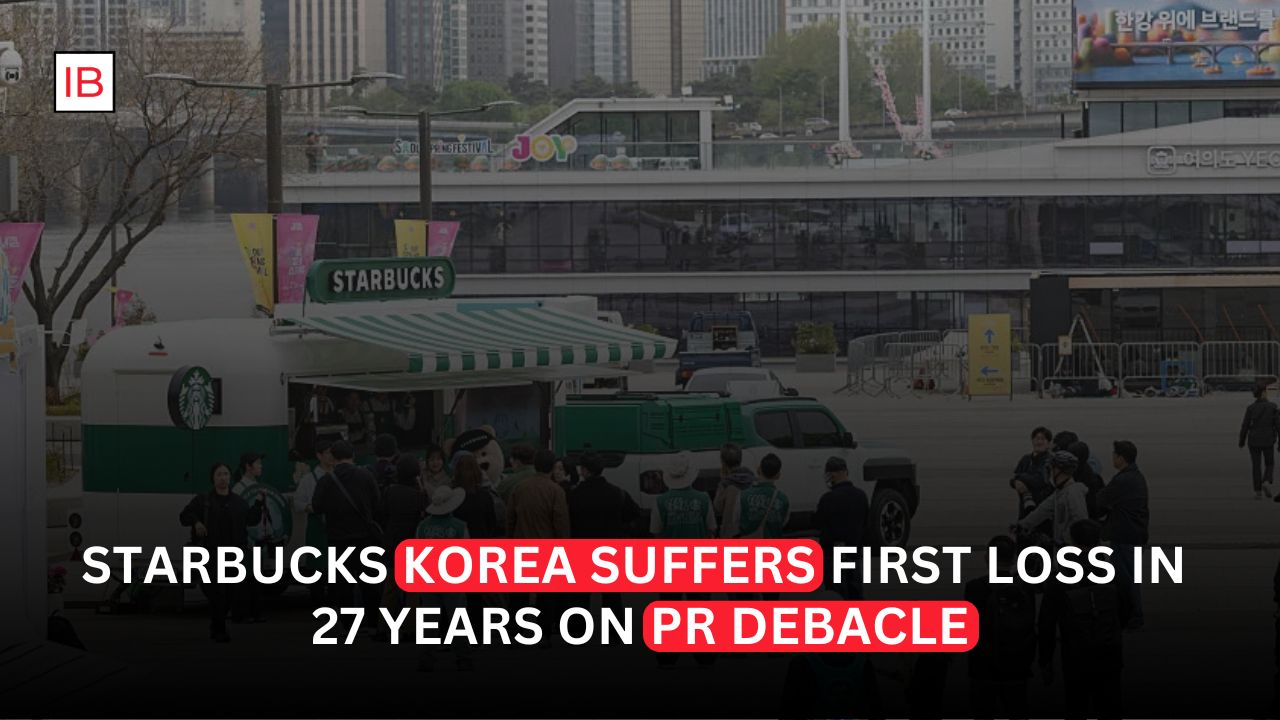
Starbucks Korea has suffered its first operating loss in 27 years, after a controversial marketing campaign triggered a major public backlash and contributed to weaker sales. The episode shows how quickly a brand’s reputation can translate into a financial problem when marketing collides with sensitive political and historical issues.
The loss is particularly significant because Starbucks has built a strong presence in South Korea over decades. A company that had managed to maintain profitability through changing consumer trends, economic cycles and intense competition has now been hit by a crisis that originated not from its core products, but from its marketing strategy.
A Marketing Campaign Triggered the Crisis
The immediate problem was a promotional campaign that generated intense criticism in South Korea.
The campaign was accused of evoking imagery associated with the 1980 military crackdown on pro-democracy protesters, a deeply sensitive chapter in South Korean history. Public criticism escalated quickly, putting the company under pressure to respond.
The controversy was not simply a disagreement over advertising aesthetics.
For many South Koreans, references to the events of 1980 carry substantial historical and emotional significance. The campaign therefore created a reputational problem that Starbucks Korea could not treat as an ordinary advertising mistake.
The Summer Promotion Was Suspended
One of the most damaging consequences was the suspension of Starbucks Korea’s prominent summer promotion.
Seasonal campaigns are important for coffee chains because they can encourage customers to visit stores more frequently and purchase additional products.
Ending a major promotion therefore creates a direct commercial cost.
The company not only had to deal with negative publicity but also lost the sales opportunity associated with one of its important promotional periods.
That combination helps explain why a marketing controversy was able to spill over into operating performance.
Sales Weakness Hit the Business
The controversy came at a particularly difficult time because Starbucks Korea is already operating in a highly competitive coffee market.
South Korea has one of the world’s strongest coffee cultures, with consumers having an enormous range of choices.
Customers can choose from global chains, domestic franchises, independent cafés and convenience-store coffee.
That means consumers have relatively low switching costs.
If a customer becomes unhappy with one brand, it is easy to buy coffee somewhere else.
This makes reputation particularly important.
Why the Loss Matters
The most striking element of the story is the historical context.
Starbucks Korea has been operating for decades, and the second-quarter loss represents its first operating loss in 27 years.
That does not mean the entire Korean business has suddenly become structurally unprofitable.
A single quarter can be heavily affected by exceptional events.
But the result demonstrates that a major reputational crisis can have measurable financial consequences.
It also gives management a warning about the importance of local cultural understanding.
Global Brands Face a Localization Problem
Starbucks is a global brand, but its marketing cannot always be treated as globally interchangeable.
South Korea has its own historical context, political sensitivities and cultural references.
A campaign that might appear harmless in another market can carry completely different meaning in Korea.
That creates a difficult challenge for multinational companies.
They need consistent global branding while simultaneously adapting campaigns to local audiences.
The Starbucks Korea controversy shows what can happen when that balance fails.
Social Media Amplified the Backlash
Modern marketing controversies move much faster than they did in the past.
A campaign can be criticized online within hours.
Images can be shared widely, interpretations can spread rapidly and calls for boycotts can reach millions of people before a company has time to formulate a detailed response.
That makes crisis management extremely difficult.
Companies increasingly have to evaluate not just whether an advertisement is legally acceptable or commercially attractive, but also whether it could be interpreted negatively within a specific historical and cultural context.
Reputation Is a Financial Asset
The Starbucks Korea episode illustrates a broader business principle: brand reputation has economic value.
A strong brand allows companies to charge premium prices, attract loyal customers and generate repeat purchases.
But the reverse is also true.
When customers lose trust in a brand, that intangible asset can quickly become a liability.
The financial impact may appear through weaker sales, canceled promotions, additional marketing expenses and lower customer engagement.
In extreme cases, a reputational crisis can affect the company’s ability to maintain pricing power.
The Coffee Market Is Already Competitive
Starbucks Korea also cannot operate in isolation from broader industry conditions.
South Korean consumers have many alternatives.
Domestic coffee chains have expanded aggressively, while independent cafés continue to compete for customers.
Consumers are also increasingly sensitive to price.
That means Starbucks has to justify its premium positioning through product quality, store experience, convenience and brand identity.
A controversy that damages the brand can therefore have a larger impact than it would in a market with fewer alternatives.
The Problem Goes Beyond One Advertisement
The bigger lesson for Starbucks is that the controversy cannot simply be treated as an advertising mistake.
Management needs to determine why the campaign passed through its internal review process in the first place.
That means asking difficult questions:
- Were local historical sensitivities properly considered?
- Was the campaign reviewed by Korean marketing specialists?
- Were potential political interpretations identified?
- How quickly did management respond once criticism began?
- Did the company underestimate the importance of the imagery?
- What safeguards will prevent a similar incident?
The answers matter because the long-term cost could depend on whether customers view the episode as an isolated mistake or evidence of a broader problem with the brand.
The Financial Damage Could Be Temporary
There is an important counterargument to the pessimistic interpretation.
Starbucks remains a powerful global brand.
A single controversy does not automatically destroy decades of customer loyalty.
If the company handles the situation effectively, acknowledges the problem and rebuilds trust, sales could recover.
The operating loss should therefore not be interpreted as proof that Starbucks Korea’s business model has collapsed.
Instead, it is a warning about the financial consequences of poor crisis management.
But Recovery Is Not Guaranteed
The opposite assumption would also be a mistake.
It is tempting to argue that consumers will simply forget the controversy.
That may happen.
But reputational damage can last longer when an issue involves historical trauma or political symbolism.
In those situations, consumers may judge the company’s response as carefully as the original campaign.
A weak apology, slow response or defensive communication could prolong the backlash.
The recovery therefore depends heavily on how Starbucks Korea handles the aftermath.
What Investors Should Watch
Investors should focus on several indicators over the next few quarters.
Sales recovery: Are customers returning to Starbucks stores?
Same-store sales: This will show whether the problem is localized or broader.
Customer traffic: A decline could indicate lasting damage to brand loyalty.
Promotional activity: The company may need to increase discounts or promotions to rebuild traffic.
Marketing strategy: Future campaigns will likely face greater scrutiny.
Operating margins: Higher promotional and crisis-management costs could pressure profitability.
Brand sentiment: Online discussion and consumer reaction will provide an early indication of whether the controversy is fading.
The Broader Lesson for Multinational Companies
The Starbucks Korea situation is a useful case study for multinational businesses operating in culturally complex markets.
Global companies often spend enormous amounts of money building standardized brands.
But the more recognizable the brand becomes, the more carefully it has to manage local meaning.
Marketing is not just about selling products.
It is also about symbols, history and identity.
When those elements are misunderstood, a campaign can quickly become a liability.
The Bottom Line
Starbucks Korea’s first operating loss in 27 years is a significant warning, but it should not yet be interpreted as evidence of a permanent deterioration in the business.
The immediate cause was a controversial marketing campaign, the resulting public backlash and the suspension of a major summer promotion, all of which contributed to weaker sales.
The deeper issue is more important.
For global brands, cultural mistakes can become financial mistakes very quickly.
Starbucks Korea now has to rebuild consumer confidence while competing in one of the world’s most crowded coffee markets.
If customers return and the controversy fades, the loss could ultimately prove to be a temporary setback.
If the company fails to repair the damage, however, the quarter could become the beginning of a much more serious problem.
For Starbucks, the lesson is straightforward: a global brand may be standardized, but its reputation is always local.