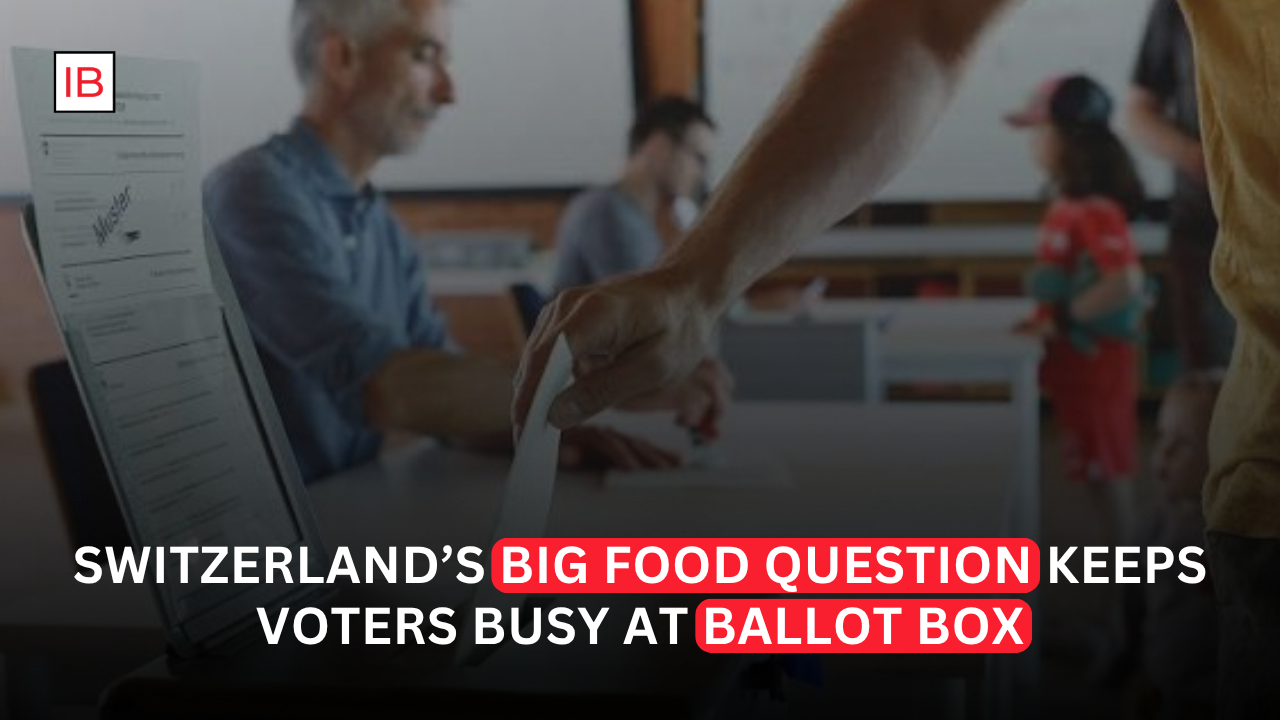
Switzerland is preparing for another politically unusual referendum, this time putting food, agriculture and the country’s relationship with nature at the center of a national debate.
The proposal, known as the “For Secure Food” initiative, asks voters to support a significant transformation of Switzerland’s agricultural system. It seeks to encourage more plant-based food production and consumption, strengthen domestic food security and place greater emphasis on environmentally sustainable farming.
At first glance, the proposal may sound like a relatively narrow agricultural question.
It is not.
The vote touches several of Switzerland’s biggest political tensions: food security, climate policy, farming, consumer choice, land use and the country’s long-standing preference for direct democracy. Swiss voters are scheduled to consider the food initiative on September 27, 2026, alongside another major proposal concerning Swiss neutrality.
A Referendum About What Switzerland Should Eat
The central idea behind the food initiative is simple but politically disruptive.
Supporters want Switzerland to consume and produce food in a way that places greater emphasis on plant-based products and environmental sustainability.
The initiative would encourage a shift away from animal-based agriculture while seeking to increase domestic food self-sufficiency.
That immediately creates a conflict.
Switzerland has a strong agricultural tradition, but much of its farming system is heavily associated with livestock, dairy products and animal husbandry.
Changing that structure would affect farmers, consumers, food producers and the wider rural economy.
The proposal therefore asks voters to make a decision about much more than individual diets.
It asks them to decide what kind of agricultural system Switzerland should have in the future.
The 70% Food Self-Sufficiency Target
One of the most ambitious elements of the proposal is its demand that Switzerland raise its food self-sufficiency rate from around 46% to at least 70%.
That is a major increase.
Supporters argue that greater domestic production would make Switzerland less vulnerable to disruptions in international food markets.
The logic is straightforward.
If a country produces more of its own food, it becomes less dependent on imports.
That could become particularly valuable during wars, trade disputes, supply-chain disruptions or major climate events.
But the target creates an obvious problem.
Switzerland has limited agricultural land, and much of its terrain is mountainous.
Producing substantially more food domestically therefore requires difficult choices about what is grown, how land is used and what types of agriculture are economically viable.
Why Livestock Is at the Center of the Debate
The initiative’s supporters believe Switzerland cannot dramatically increase food self-sufficiency without changing the country’s dependence on livestock.
Animal agriculture requires substantial land and resources.
Cattle need pasture or feed.
Feed production itself requires agricultural land.
That means a food system dominated by livestock can produce less food for human consumption per unit of available land than one that relies more heavily on crops intended directly for people.
The proposal therefore links food security with a shift toward plant-based agriculture.
That is where the initiative becomes controversial.
For Swiss farmers whose businesses depend on cattle, dairy or other animal products, the proposal could represent a fundamental change to their economic model.
Farmers Have a Lot at Stake
Swiss agriculture is not simply an economic sector.
It is closely connected to the country’s national identity.
Rural landscapes, Alpine farms, dairy production and traditional agricultural practices are part of Switzerland’s international image.
Any policy that reduces the role of livestock therefore risks becoming culturally sensitive.
Farmers may reasonably ask what happens to their incomes if consumer demand shifts toward plant-based products.
They may also question whether government support would compensate them for changing production methods.
A transition on this scale cannot happen simply because voters approve a constitutional objective.
It would require years of policy changes, investment and adaptation.
Environmental Protection Is Another Major Argument
Supporters also point to environmental concerns.
Agriculture affects:
- Water consumption
- Soil quality
- Greenhouse-gas emissions
- Biodiversity
- Land use
- Groundwater quality
The initiative specifically seeks greater protection of groundwater and more sustainable farming practices.
That gives the proposal an environmental dimension beyond food security.
Its supporters are effectively arguing that Switzerland should not measure agricultural success only by how much food it produces.
It should also consider the environmental cost of producing that food.
Why Critics Call the Proposal Unrealistic
The initiative faces strong political opposition.
No major political party in Switzerland’s parliament has backed it, according to reporting on the September vote. Critics argue that the targets are unrealistic and that the proposed transformation could interfere with the economics of Swiss agriculture.
The biggest criticism is that government cannot simply legislate its way to a 70% self-sufficiency rate.
Switzerland has geographical limitations.
It cannot suddenly create large quantities of additional farmland.
Increasing domestic food production may therefore require reducing some activities while expanding others.
That creates trade-offs.
Food Security Does Not Necessarily Mean Producing Everything at Home
There is another weakness in the food-security argument.
A country can become more resilient without trying to produce every type of food domestically.
Imports can provide diversification.
If Switzerland relies on multiple international suppliers, it may be able to withstand disruptions in any single producing region.
Domestic production is valuable, but complete self-sufficiency is not automatically the safest strategy.
International trade can also improve food variety and reduce costs.
That is why the 70% target is likely to generate substantial debate.
The question is not simply whether Switzerland should produce more food.
It is how much additional domestic production is economically and environmentally rational.
Swiss Consumers Could Face Higher Costs
Changing the agricultural system could also affect food prices.
Swiss agriculture is already expensive compared with production in many other countries.
Higher domestic production does not automatically mean cheaper food.
In fact, producing more food domestically under strict environmental standards could increase costs.
Consumers could ultimately have to pay more for locally produced products.
That creates a political contradiction.
The initiative is designed partly around food security and sustainability.
But voters may also care about affordability.
If sustainable food becomes significantly more expensive, support could weaken among households already dealing with high living costs.
Consumer Choice Is Another Issue
There is also a philosophical question.
Should the government encourage people to eat more plant-based food?
Supporters would argue that public policy already influences consumption through taxes, subsidies and regulation.
If certain foods create greater environmental costs, governments have a legitimate reason to encourage alternatives.
Opponents may see this differently.
They could argue that dietary choices should remain primarily individual decisions.
This distinction matters because the referendum is not simply about farming.
It is partly about how much influence the state should have over food production and consumption.
Switzerland’s Direct Democracy Makes This Possible
The debate itself reflects Switzerland’s unusual political system.
Swiss citizens regularly vote on major policy questions through referendums and popular initiatives.
That means issues that might be decided by governments or parliaments elsewhere can be put directly before voters.
The food initiative is a particularly clear example.
Instead of leaving agricultural policy entirely to experts, ministries and lawmakers, the proposal asks the public to decide the broad direction.
That can make policy more democratic.
But it can also produce extremely complicated questions that are reduced to a simple yes-or-no vote.
The Neutrality Vote Adds Another Layer
The food initiative will not be the only major issue on the ballot.
Swiss voters are also scheduled to consider a proposal concerning the country’s neutrality.
That initiative seeks to define Swiss neutrality as permanent and armed while restricting participation in military alliances and certain sanctions. Parliament has rejected the proposal.
The combination is striking.
One vote concerns Switzerland’s food system.
The other concerns its position in the international security system.
Both reflect broader questions about Swiss identity.
Food Security and National Sovereignty
There is actually a connection between the two debates.
Both proposals ask how independent Switzerland should be.
The neutrality initiative focuses on geopolitical independence.
The food initiative focuses partly on economic and agricultural resilience.
The underlying political instinct is similar:
Switzerland should have greater control over its own affairs.
But the practical question is whether complete independence is possible or even desirable.
Switzerland is deeply integrated into European trade.
Its economy depends heavily on international commerce.
Its food supply is also connected to global markets.
Reducing those dependencies has benefits, but it can also increase costs.
The Immigration Debate Shows the Same Tension
Switzerland has already been debating another version of the same issue: how much growth the country can absorb without damaging its quality of life.
A June 2026 referendum involved a proposal to cap Switzerland’s population at 10 million, with supporters arguing that rapid population growth was putting pressure on housing, transport, schools and public services. The government and business groups opposed the measure, warning about economic consequences.
The food debate fits into this larger political conversation.
Swiss voters are increasingly being asked to balance prosperity against limits.
How much immigration?
How much development?
How much agriculture?
How much environmental protection?
How much international integration?
Those are difficult questions because every answer involves trade-offs.
The Agriculture Industry Needs Workers and Markets
There is also an economic dimension that supporters of agricultural protection need to consider.
Swiss farming does not exist in isolation.
Farmers depend on workers, suppliers, consumers and export markets.
A major restructuring of agriculture could affect food processors, retailers and related businesses.
If livestock production declines sharply, businesses built around dairy and meat could face disruption.
At the same time, new opportunities could emerge in plant-based food production, food technology and sustainable agriculture.
The transition could therefore create winners as well as losers.
Could Switzerland Become a Model for Sustainable Agriculture?
Supporters of the initiative see an opportunity.
Switzerland could potentially become a leading example of how a wealthy country combines food security with environmental sustainability.
A shift toward plant-based production could reduce some environmental pressures.
Greater domestic production could improve resilience.
Stronger groundwater protection could provide long-term environmental benefits.
And changes in agricultural policy could encourage innovation.
But becoming a model would require more than setting ambitious targets.
Switzerland would need practical implementation.
The Implementation Problem
This is perhaps the biggest weakness in the proposal.
A constitutional or political commitment does not automatically tell farmers what to do.
Suppose Switzerland approves a 70% self-sufficiency target.
What happens next?
Would the government subsidize farmers who switch from livestock to crops?
Would meat and dairy products face higher taxes?
Would imports become more expensive?
Would consumers receive incentives to buy plant-based products?
Would farmland be redistributed?
Would environmental restrictions become stricter?
Each of these choices creates another political fight.
The referendum may therefore be only the beginning.
The Vote Could Reshape Swiss Agricultural Policy
If voters approve the initiative, the government would face pressure to redesign agricultural policy around its objectives.
That could eventually influence subsidies, land use, farming practices and consumer incentives.
It could also change the relationship between the government and agricultural producers.
If voters reject it, supporters may argue that Switzerland has chosen economic practicality over a more ambitious environmental transformation.
Either outcome would reveal something about Swiss public opinion.
What Voters Are Really Deciding
The ballot question may appear to concern food.
But underneath it are several competing priorities.
Food security
Should Switzerland rely more heavily on domestic production?
Environmental protection
How much should agriculture change to protect water, soil and biodiversity?
Consumer freedom
Should government encourage people to change their diets?
Farmers’ livelihoods
How much disruption can the agricultural sector absorb?
Food prices
Are consumers willing to pay more for domestic and sustainable production?
National independence
Should Switzerland reduce its dependence on international food markets?
These questions do not have simple answers.
The Economic Trade-Off
The most important thing voters should recognize is that there is no free solution.
Greater self-sufficiency can increase resilience.
But it can also increase production costs.
More sustainable agriculture can protect the environment.
But it may require higher subsidies or consumer prices.
Less livestock production can reduce environmental pressure.
But it can threaten traditional farming businesses.
More plant-based production can improve land efficiency.
But changing consumer preferences takes time.
Every advantage carries a cost.
Why the Referendum Matters Beyond Switzerland
The debate is relevant beyond the country’s borders.
European governments are increasingly dealing with questions about food security, climate change, agricultural subsidies and dependence on foreign suppliers.
The war in Ukraine demonstrated how geopolitical shocks can affect food and commodity markets.
Climate change is increasing uncertainty around agricultural production.
Trade disputes can disrupt supply chains.
That makes food security a more important political issue than it was a decade ago.
Switzerland’s vote therefore provides a useful test of how voters in a wealthy European country respond to these pressures.
The Bigger Question: Security or Efficiency?
At its core, the referendum presents a conflict between two economic philosophies.
One prioritizes efficiency.
Under this model, Switzerland should buy food from wherever it can be produced most efficiently and maintain access to international markets.
The other prioritizes resilience.
Under that model, Switzerland should accept higher costs in exchange for greater control over its own food supply.
Neither approach is universally correct.
Efficiency can leave countries vulnerable to external shocks.
Resilience can become expensive if pursued without limits.
The challenge is finding the right balance.
Conclusion
Switzerland’s food referendum is much bigger than a debate about whether people should eat more vegetables or less meat.
It is a debate about the country’s agricultural future, environmental priorities and economic independence.
The “For Secure Food” initiative seeks to raise Switzerland’s food self-sufficiency rate from about 46% to at least 70%, encourage more plant-based production and consumption, and strengthen environmental protections including groundwater conservation.
Those objectives are ambitious.
They also create serious questions.
Can Switzerland produce significantly more food without dramatically increasing costs?
Can farmers shift away from livestock without damaging rural communities?
Will consumers accept potentially higher prices?
And can greater domestic production actually make the country more resilient without sacrificing the advantages of international trade?
Those questions will matter as much as the referendum’s headline result.
The most important point is that food security is not the same thing as food self-sufficiency.
Switzerland can become more resilient without trying to produce everything at home.
Likewise, environmental sustainability does not automatically require abandoning traditional agriculture.
The difficult task is finding a combination that protects farmers, consumers and the environment simultaneously.
That is why this referendum is likely to become one of Switzerland’s more consequential agricultural debates.
The country has long used direct democracy to decide questions that other governments might leave to policymakers.
Now voters are being asked to make a choice that reaches into their farms, supermarkets, diets and environment.
Switzerland’s big food question is ultimately a question about what kind of country it wants to be: highly integrated and efficient, more self-sufficient and resilient, or some difficult combination of the two.