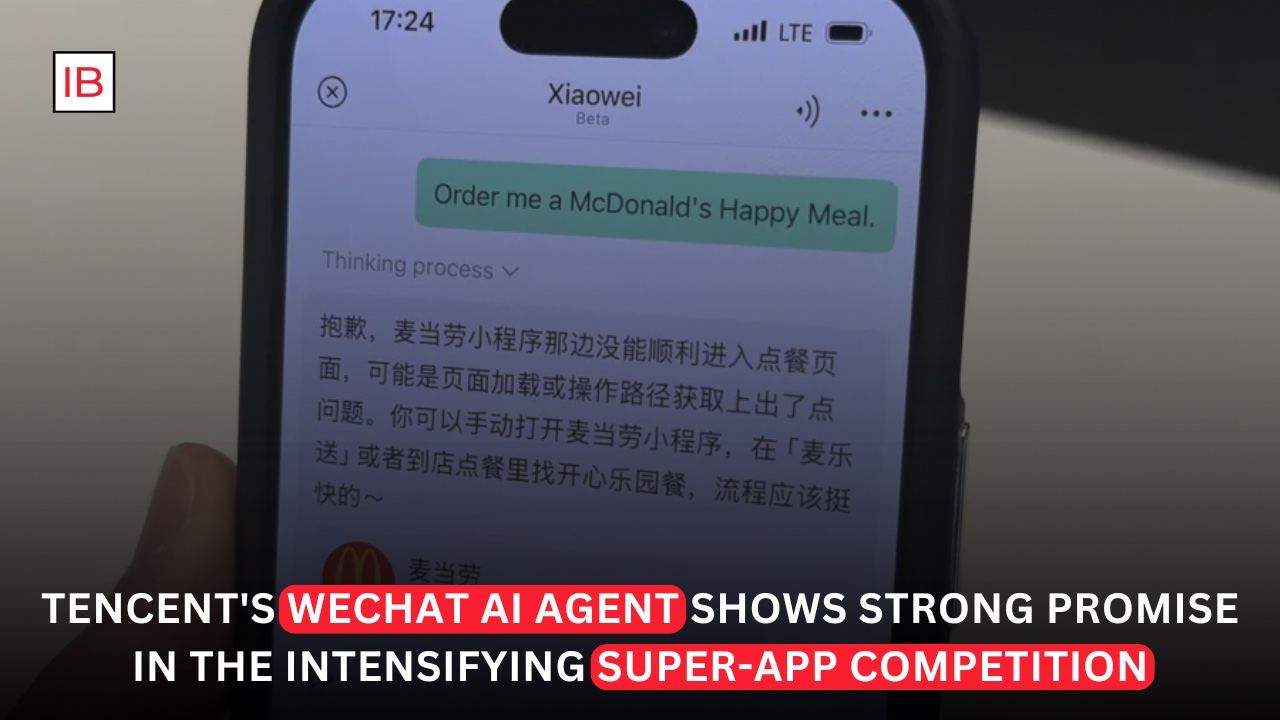
Early Tests Suggest AI Assistant Could Transform How Users Interact With WeChat
Tencent is testing an AI-powered assistant for WeChat, marking its latest effort to strengthen the world’s largest super app as competition intensifies among China’s technology giants in artificial intelligence.
Early demonstrations suggest the AI agent can perform complex tasks directly within WeChat, potentially allowing users to complete activities such as booking services, shopping, making payments, and managing conversations using natural language commands.
AI Agent Moves Beyond Traditional Chatbots
Unlike conventional chatbots that primarily answer questions, Tencent’s AI agent is designed to carry out tasks on behalf of users.
Potential capabilities include:
- Booking travel and restaurants
- Ordering products through Mini Programs
- Sending messages
- Managing schedules
- Completing digital payments
- Accessing multiple WeChat services through a single command
The goal is to reduce the number of manual steps users must perform inside the app.
WeChat’s Super App Advantage
WeChat already serves as one of the world’s most comprehensive digital ecosystems.
The platform combines:
- Messaging
- Social networking
- Mobile payments
- Shopping
- Food delivery
- Ride-hailing
- Government services
- Millions of Mini Programs
Because so many daily activities already occur within WeChat, integrating an intelligent AI agent could significantly expand the platform’s usefulness.
Tencent Joins China’s AI Agent Race
Tencent’s project comes as Chinese technology companies race to build increasingly capable AI assistants.
The competition now extends beyond large language models to “AI agents” that can:
- Understand user intentions
- Plan multiple actions
- Complete tasks autonomously
- Interact with external services
Industry observers view AI agents as the next major phase of consumer artificial intelligence after chat-based assistants.
Early Results Appear Encouraging
According to reports, Tencent’s prototype has demonstrated promising performance during internal testing.
The system appears capable of coordinating actions across different parts of the WeChat ecosystem while maintaining the app’s familiar user experience.
However, the company is still refining:
- Safety controls
- User permissions
- Compliance requirements
- Reliability across complex tasks
A public launch timeline has not yet been confirmed.
Safety and Privacy Remain Key Challenges
Because WeChat handles sensitive information—including financial transactions, personal conversations, and identity services—AI integration requires stronger safeguards than a typical chatbot.
Important considerations include:
- User approval before sensitive actions
- Protection of payment information
- Secure handling of personal data
- Clear activity logs
- Limits on autonomous decision-making
Analysts believe these protections will be essential before Tencent expands public access.
AI Could Reshape China’s Digital Economy
If successful, Tencent’s AI agent could change how users interact with China’s digital services.
Instead of navigating multiple menus, users could simply describe what they want, allowing the AI to coordinate the necessary steps across WeChat’s ecosystem.
This approach could influence industries including:
- E-commerce
- Financial services
- Transportation
- Healthcare
- Customer support
The development also reflects a broader shift toward AI-powered digital assistants capable of completing real-world tasks rather than simply generating text.
Looking Ahead
Tencent’s AI agent represents an important step in the evolution of the super app model.
While the technology remains under testing, early demonstrations suggest it has the potential to make WeChat significantly more intelligent by combining conversational AI with real-world digital services.
As competition among Chinese technology companies accelerates, AI agents may become the next major battleground in defining how hundreds of millions of users interact with online platforms in everyday life.