Safety Concerns Put Tesla’s Signature Door Design Under Renewed Pressure
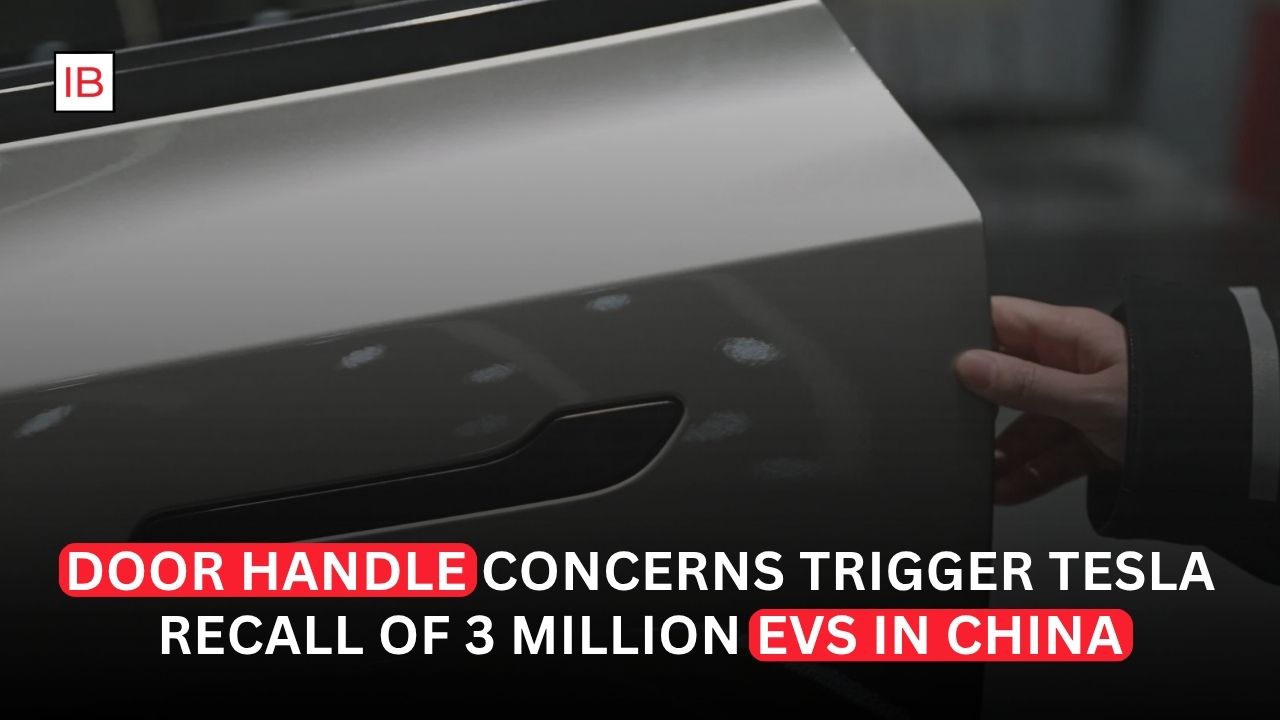
Tesla is facing another major safety challenge in China after regulators ordered the recall of nearly 3 million electric vehicles over concerns surrounding emergency door releases. The action represents Tesla’s largest recall in the Chinese market and highlights growing regulatory scrutiny of a design feature that has become closely associated with the company’s vehicles.
Starting Sept. 25, Tesla will recall approximately 2.98 million China-made and imported Model 3, Model Y, Model S and Model X vehicles because emergency door-release handles may be difficult to identify in a serious crash or electrical failure. Tesla will address the issue through warning labels and an over-the-air software update designed to lower vehicle windows after a collision.
The development comes at an important moment for Tesla in China, where regulators are becoming increasingly strict about vehicle safety and emergency access.
China Targets a Controversial EV Design
Tesla popularized flush-fitting door handles with the Model S, turning them into a recognizable feature of the company’s vehicle design.
The handles help create a cleaner appearance and can reduce aerodynamic drag. However, their electronic operation has also raised safety concerns.
In an emergency, passengers or rescuers may need to locate and operate mechanical releases quickly. If the release is difficult to identify, the situation can become more dangerous, particularly after an accident involving a loss of electrical power.
China has already taken a broader step against the design.
New rules scheduled to take effect in 2027 require vehicle doors to be mechanically operable from both inside and outside. The regulations specifically address concerns about doors becoming difficult to open after accidents or other emergencies.
The latest Tesla recall therefore fits into a much larger regulatory shift.
Nearly 3 Million Vehicles Are Affected
The scale of the recall is significant.
The affected vehicles include locally manufactured and imported versions of Tesla’s Model 3 and Model Y, along with imported Model S and Model X vehicles.
Tesla will use software to automatically lower windows following a collision, making it easier for occupants or rescuers to access the vehicle.
Warning labels will also be added to make emergency release mechanisms easier to identify.
Unlike some traditional recalls, the remedy does not necessarily require owners to take their vehicles to a service center.
Tesla’s ability to distribute software updates remotely allows the company to address certain safety issues without physically replacing components.
That can reduce repair costs and inconvenience for customers.
However, the fact that millions of vehicles require corrective action still highlights the importance of the underlying safety concern.
A Separate Recall Adds to the Pressure
The door-handle issue is not the only safety-related action Tesla is taking in China.
The company is also recalling approximately 2.74 million China-made Model 3 and Model Y vehicles for another software update.
That update is designed to improve driver-attention monitoring while assisted steering and other driver-assistance functions are being used.
The objective is to reduce the risk of collisions if drivers fail to respond appropriately while using Tesla’s assistance technology.
Together, the two actions affect millions of vehicles and demonstrate the growing importance of software-based safety systems in modern electric vehicles.
They also show how regulators are increasingly examining not just the hardware inside cars but the software controlling their operation.
Tesla Faces Increasing Regulatory Scrutiny
The latest recall comes after years of regulatory attention surrounding Tesla’s vehicle safety and driver-assistance systems.
Tesla’s approach to vehicle design often relies heavily on software.
That strategy has helped the company introduce new features through remote updates, but it also means regulators can become involved when software or electronically controlled systems create potential safety risks.
China is particularly important because it represents one of Tesla’s largest manufacturing and sales markets.
The company operates its Shanghai factory as a major production hub, supplying vehicles to Chinese customers and exporting cars to other markets.
Any significant regulatory change in China can therefore have consequences beyond the country’s borders.
China Is Taking a Broader Look at Door Handles
Tesla is not the only automaker affected by China’s new approach.
Chinese regulators announced recall plans involving multiple automakers, with more than 7 million vehicles affected in total by problems involving emergency mechanical door releases that can be difficult to identify. Companies involved include Tesla, Xiaomi, Leapmotor, Xpeng, Zeekr, Chery, Geely and several other manufacturers.
This is important because the issue is not exclusively a Tesla problem.
The automotive industry has increasingly adopted hidden or flush-fitting handles as manufacturers seek more aerodynamic and futuristic vehicle designs.
China’s regulatory response could therefore force a major redesign across the EV industry.
Tesla simply happens to be one of the most visible companies affected.
Tesla’s Design Philosophy Faces a Reality Check
Tesla has long differentiated its vehicles through minimalist design.
The company has removed or reduced conventional controls in favor of touchscreen interfaces, electronic systems and software-driven features.
That approach has helped establish Tesla’s identity.
But regulators are now asking whether certain design choices create unnecessary safety risks.
Door handles are a good example.
A conventional mechanical handle is immediately recognizable and can continue functioning even if a vehicle loses electrical power.
An electronic system can offer convenience and aerodynamic benefits but may require additional procedures during an emergency.
The new Chinese regulations indicate that safety is taking priority over design minimalism in this area.
Software Is Becoming Part of Vehicle Safety
The recall also demonstrates how software is changing the automobile industry.
Tesla can distribute the window-lowering solution through an over-the-air update rather than requiring every vehicle to receive a traditional mechanical repair.
That capability gives manufacturers a powerful way to correct certain problems quickly.
However, it also creates new regulatory questions.
If a vehicle’s safety depends partly on software, regulators must evaluate software behavior just as they would examine a mechanical component.
Driver-monitoring systems are a clear example.
Tesla’s second recall involves improving how the vehicle monitors driver attention while assistance systems are operating.
As vehicles become increasingly automated, these systems will become even more important.
China Is Becoming More Important to Tesla’s Regulatory Strategy
China’s importance to Tesla extends beyond sales.
The country is one of the world’s most competitive EV markets and home to some of the industry’s most aggressive domestic manufacturers.
Tesla therefore faces pressure from both regulators and competitors.
Chinese EV companies have increasingly introduced advanced driver-assistance features, sophisticated interiors and innovative vehicle designs.
Regulatory requirements can affect all manufacturers, but they may also influence competitive positioning.
If China requires more traditional mechanical systems, manufacturers will need to adapt their designs regardless of whether those features were originally developed for Tesla-style vehicles.
The Recall Comes During a Difficult Period for Tesla
The safety action adds another challenge for Tesla as the company attempts to navigate an increasingly competitive global EV market.
Chinese automakers have expanded rapidly, offering consumers a wide range of electric vehicles across different price categories.
Tesla must compete not only on technology but also on pricing, product design, quality and customer experience.
Large recalls can create additional costs and potentially affect consumer confidence.
Even when a problem can be corrected through software, customers may become more cautious about vehicle designs that depend heavily on electronic systems.
For Tesla, maintaining its reputation for technological innovation while meeting increasingly strict safety requirements will be a delicate balance.
The New Rules Could Influence Global EV Design
China’s regulations could have consequences well beyond the domestic market.
Automakers generally prefer to develop common vehicle platforms that can be sold across multiple countries.
If a manufacturer must redesign a door system to comply with Chinese requirements, it may eventually use the same design in other markets rather than developing separate versions.
That could accelerate the decline of fully electronic flush door handles globally.
Other regulators may also examine whether similar requirements are necessary.
The issue has already attracted attention outside China, with safety authorities in other countries examining reports involving Tesla’s electronically operated doors.
Traditional Mechanical Systems May Make a Comeback
The most interesting consequence could be a return to simpler mechanical designs.
For years, automakers have competed to make vehicles look more futuristic.
Flush handles, touchscreens and electronic controls became symbols of modern automotive design.
But safety regulators are increasingly emphasizing functionality during emergencies.
That could mean future EVs combine modern styling with mechanical backup systems.
Manufacturers may retain flush handles while adding more visible emergency mechanisms or stronger mechanical connections.
The result could be a compromise between aesthetics, efficiency and safety.
Recalls Can Be Expensive Even When Repairs Are Simple
The financial cost of a software-based recall can be lower than a traditional mechanical recall, but large-scale corrective actions still create expenses.
Tesla must develop and validate the software, communicate with customers, coordinate with regulators and monitor whether the fix works as intended.
The company may also face additional regulatory requirements in other countries if similar concerns emerge.
The reputational cost can be harder to measure.
Consumers purchasing expensive vehicles expect basic safety systems to work reliably under emergency conditions.
Any perception that a vehicle’s doors may be difficult to open after an accident could influence purchasing decisions.
Competition Could Benefit From the Regulatory Shift
Tesla’s competitors may also benefit from the situation.
Chinese EV manufacturers have been rapidly expanding their presence both domestically and internationally.
If Tesla needs to redesign certain features to meet new regulations, competitors that already use more conventional mechanical systems could gain an advantage.
At the same time, the regulations apply broadly to the industry, meaning Chinese manufacturers will also need to ensure their vehicles comply.
The result could be a more standardized approach to emergency door access across China’s rapidly expanding EV market.
Looking Ahead
Tesla’s recall of nearly 3 million vehicles in China represents a major regulatory challenge for the company, but it is also part of a broader transformation in the automotive industry.
The immediate issue involves emergency door-release handles that can be difficult to identify after a serious accident or electrical failure. Tesla’s solution combines warning labels with an over-the-air update designed to lower windows after a collision.
The larger story, however, is China’s decision to place greater emphasis on mechanical emergency access.
Beginning in 2027, new Chinese vehicle rules will require doors to be mechanically operable from both sides, putting pressure on a design trend that Tesla helped popularize.
The recall also comes alongside a separate action involving 2.74 million China-made Model 3 and Model Y vehicles, which will receive software improvements to driver-attention monitoring during assisted driving.
For Tesla, the challenge is now to maintain its reputation for innovative, software-driven vehicle design while adapting to a regulatory environment that increasingly prioritizes straightforward emergency operation.
The impact could extend across the entire EV industry.
The futuristic door handle that once symbolized Tesla’s approach to automotive design may now become an example of how regulators are forcing automakers to place safety ahead of minimalism.
As China tightens its requirements and other countries examine similar concerns, manufacturers may have to rethink how electronic convenience and emergency reliability coexist.
For Tesla, the immediate recall is a major undertaking. For the wider EV industry, it could mark the beginning of a fundamental change in how vehicles are designed to protect passengers when technology fails.