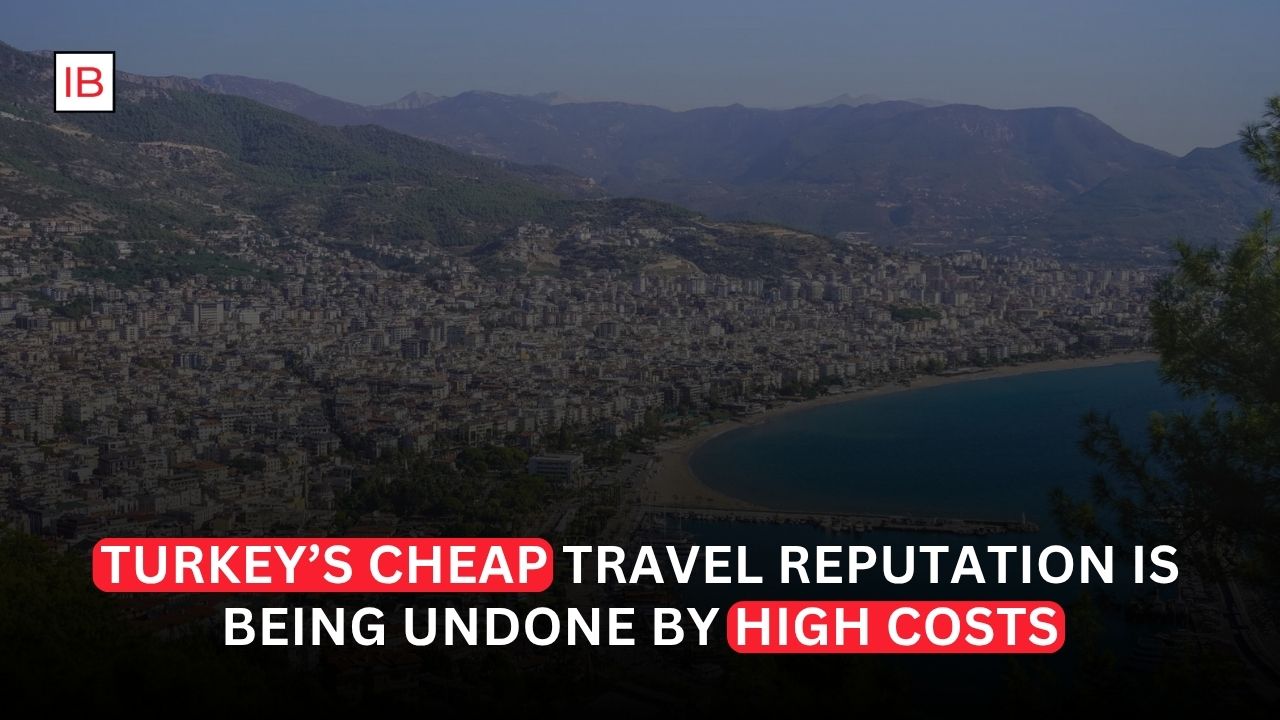
Turkey’s reputation as one of Europe’s most affordable holiday destinations is coming under pressure as inflation, higher operating costs and a stronger currency make hotels, restaurants and other tourist services increasingly expensive.
For years, Turkey attracted millions of visitors with a combination of beaches, historic cities, strong food culture and prices that were often significantly lower than those in Western Europe. That advantage is now weakening, forcing the tourism industry to confront a difficult question: can Turkey remain competitive if it is no longer perceived as a bargain?
The Price Advantage Is Fading
Turkey’s tourism boom was partly built on value.
Foreign visitors could often stay in high-quality hotels, eat at restaurants and enjoy entertainment for less than they would pay in destinations such as Spain, France or Italy.
But persistent inflation has changed the calculation.
Hotels and restaurants face higher wages, energy bills, food costs and transportation expenses. Those increases eventually have to be passed on to customers.
For tourists arriving with dollars, euros or pounds, Turkey can still be cheaper than many Western destinations. But the gap is becoming smaller.
Inflation Is the Main Problem
Turkey has experienced exceptionally high inflation for years, making tourism businesses significantly more expensive to operate.
The government has been pursuing tighter economic policies designed to bring inflation under control, but the adjustment has created a different problem for tourism: costs are rising faster than many visitors expect.
The central bank has maintained a restrictive monetary stance as policymakers attempt to stabilize prices and inflation expectations. That approach may eventually improve economic stability, but it can also increase financing costs for tourism companies.
The Lira Is No Longer the Only Story
Turkey’s currency used to be a major advantage for international visitors.
A weak lira could make everything from hotel rooms to taxis appear extraordinarily cheap to foreigners.
But the tourism industry cannot rely indefinitely on currency depreciation.
If domestic prices rise rapidly, a weaker currency does not necessarily preserve the country’s real cost advantage.
That is increasingly visible in popular destinations such as Istanbul, Antalya and Bodrum, where international visitors are comparing prices with alternatives across the Mediterranean.
Hotels Are Raising Prices
Accommodation has become one of the clearest examples.
Hotels are dealing with higher labor costs, utilities, food and maintenance expenses.
Luxury resorts can often pass those costs directly to customers because affluent travelers are less price-sensitive.
Budget and mid-market hotels have less flexibility.
If they raise prices too much, tourists may choose Greece, Spain, Portugal or other destinations instead.
That creates a difficult balancing act between protecting margins and preserving demand.
European Competition Is Strong
Turkey is not competing only against other emerging-market destinations.
It competes directly with Greece, Spain, Italy and Portugal for European tourists.
Those countries have also experienced inflation, but Turkey’s traditional advantage was that it offered a substantially lower-cost alternative.
If the price gap narrows, tourists may decide that paying more for a European destination is worthwhile.
This is especially relevant for travelers who value convenience, infrastructure and predictable service standards.
Tourism Remains Vital
The stakes are high because tourism is a major source of foreign currency for Turkey.
Millions of visitors contribute directly through hotels, restaurants, transport, entertainment and retail spending.
Tourism also supports a much larger network of indirect jobs.
A weaker tourism season would therefore affect more than resorts.
It could reduce foreign-exchange earnings, hurt small businesses and weaken employment in regions that depend heavily on visitors.
The Industry Wants Higher-Value Tourists
One potential response is to stop competing primarily on price.
Turkey has increasingly sought to attract tourists who spend more rather than simply increasing visitor numbers.
Luxury hotels, medical tourism, gastronomy, cultural tourism and high-end shopping all offer opportunities to increase revenue per visitor.
That strategy could make the country less vulnerable to price competition.
But it requires investment in service quality and infrastructure.
Istanbul Has a Different Challenge
Istanbul is one of Turkey’s strongest tourism assets.
The city combines history, architecture, shopping, food and a major international airport.
But rising prices can affect its competitive position.
Visitors comparing a city break in Istanbul with Athens, Rome or Barcelona may now find smaller differences in total travel costs.
That means Turkey cannot assume that its cultural attractions alone will guarantee continued growth.
Domestic Tourists Are Feeling the Pressure
Foreign visitors are not the only ones affected.
Turkish households have also faced higher holiday costs.
Inflation has reduced purchasing power, making domestic tourism more difficult for middle-income families.
That matters because domestic travelers can provide an important buffer when international demand weakens.
If both foreign and domestic tourists become more price-sensitive, tourism businesses face greater pressure.
Service Quality Becomes More Important
As Turkey becomes more expensive, expectations rise.
Tourists may tolerate basic accommodation and service when prices are extremely low.
They become less forgiving when prices approach those of Western European destinations.
That means businesses need to improve service quality, reliability and customer experience.
A hotel cannot simply charge more because its costs have increased.
It needs to convince visitors that the higher price delivers sufficient value.
The Currency Policy Matters
Turkey’s economic stabilization program is another important factor.
A more stable currency and lower inflation could eventually create a healthier environment for businesses.
But if domestic prices continue rising while the lira strengthens in real terms, Turkey’s tourism competitiveness could deteriorate further.
Policymakers therefore face a delicate balance between stabilizing the economy and preserving export competitiveness.
Tourism is effectively an export industry because foreign visitors bring spending into the country.
Cheap Is Not a Sustainable Strategy
Turkey’s biggest strategic problem is that affordability was never enough to guarantee long-term tourism success.
A destination built around cheap prices is vulnerable whenever costs rise.
The stronger strategy is to combine competitive pricing with distinctive experiences.
Turkey has plenty of assets that cannot easily be copied: its location between Europe and Asia, historical heritage, cuisine, beaches and diverse landscapes.
The challenge is turning those advantages into a premium proposition.
Airlines and Accessibility Matter
Air connectivity will also influence Turkey’s competitiveness.
Istanbul’s role as a major aviation hub gives the country an advantage over many destinations.
Cheap and frequent flights can offset higher hotel prices.
But if the overall cost of a trip continues increasing, transportation savings may no longer be enough.
Tourists increasingly evaluate the entire holiday rather than individual expenses.
Businesses Need to Adapt
Tourism companies have several options.
They can focus on longer stays, higher-spending customers, premium experiences or more efficient operations.
They can also use technology to improve booking, staffing and pricing.
Dynamic pricing can help businesses maximize revenue during peak periods while offering discounts when demand is weaker.
But aggressive pricing can also create customer frustration if visitors feel they are being charged substantially more than expected.
Conclusion
Turkey’s tourism industry is confronting a structural challenge: the country is becoming more expensive at precisely the moment when its long-standing reputation depends on affordability.
Inflation has increased costs across the tourism sector, from hotels and restaurants to transportation and wages. As those costs are passed to consumers, the price advantage that helped Turkey compete with Mediterranean rivals is becoming less pronounced.
That does not mean Turkey is suddenly an expensive destination.
For many international visitors, it remains cheaper than major Western European markets.
But tourism decisions are based on relative value, not absolute prices.
If a holiday in Turkey costs only slightly less than one in Greece, Spain or Italy, tourists may increasingly ask whether the savings justify choosing the cheaper destination.
That puts pressure on Turkish businesses to offer more than low prices.
Luxury tourism, gastronomy, medical travel, cultural experiences and higher-quality accommodation could help Turkey shift toward a higher-value model. The country’s strong infrastructure, historical attractions and geographical position give it the raw ingredients for such a strategy.
But the transition will not be painless.
Businesses must control costs without sacrificing service, while policymakers must bring inflation down without allowing the tourism industry to lose too much international competitiveness.
The old formula—weak currency plus low prices—cannot be relied upon forever.
Turkey’s next stage of tourism growth will depend less on being the cheapest destination and more on proving that what visitors receive is worth the price they pay.