Government Reverses Restrictions Following Weeks of Negotiations
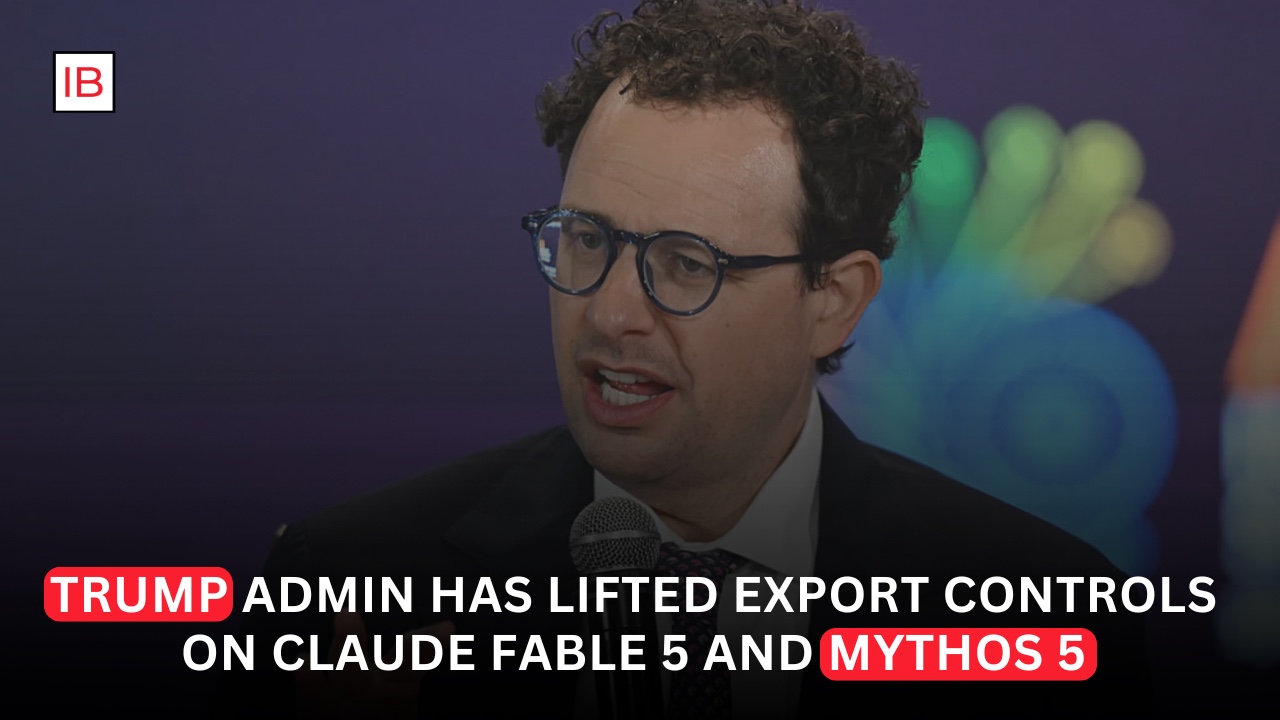
The Trump administration has lifted export controls on Anthropic’s advanced AI models, Claude Fable 5 and Mythos 5, restoring global access after a temporary suspension driven by national security concerns.
The decision follows a deal between Anthropic and the U.S. Department of Commerce, allowing the company to resume international deployment of its most powerful models while agreeing to enhanced safety and monitoring requirements.
Anthropic confirmed that access to the models will begin to be restored immediately, with full rollout expected to resume through major cloud providers in the coming days.
Why the Models Were Restricted
Earlier in June, the U.S. government imposed export controls on Fable 5 and Mythos 5 over concerns that the models could be misused for cybersecurity threats, including the generation of exploit code and the bypassing of safety safeguards.
The restrictions forced Anthropic to suspend access globally, including for foreign users and some enterprise customers, as compliance required strict limitation of “deemed exports” under U.S. rules.
The move sparked debate across the AI industry about how frontier models should be regulated and whether government approval should play a role in model distribution.
Deal Focused on AI Safety and Government Collaboration
Under the new agreement, Anthropic has committed to strengthening its safety systems and working more closely with U.S. authorities on model governance.
This includes:
- Enhanced detection of jailbreak attempts
- Rapid reporting of malicious usage
- Ongoing coordination with federal agencies on AI safety standards
Officials said the decision reflects improved alignment between Anthropic and national security priorities after weeks of technical review and negotiations.
Access to Resume Gradually
Anthropic stated that access to Claude Fable 5 will be restored first, followed by Mythos 5 for approved users and organizations.
The models will return through cloud partners including AWS, Google Cloud, and Microsoft platforms, signaling a rapid re-integration into global AI infrastructure.
The company also indicated that it will provide the U.S. government with continued access to its systems for evaluation and monitoring purposes.
Industry Reaction and Broader Impact
The reversal highlights growing tensions between AI innovation and national security oversight.
Supporters of the decision argue that structured cooperation between government and AI companies is necessary to prevent misuse of increasingly powerful systems. Critics, however, warn that case-by-case export controls could create uncertainty for developers and slow global AI deployment.
The episode also underscores how frontier AI models are becoming central to geopolitical and regulatory debates, particularly as competition intensifies between U.S. firms and international rivals.
Why This Matters for the AI Sector
Anthropic’s temporary suspension and subsequent reinstatement reflect a broader shift in how governments are approaching advanced AI systems.
Key implications include:
- Increased government involvement in AI model approvals
- Potential future licensing frameworks for frontier models
- Greater emphasis on security testing and “safe release” protocols
- Stronger collaboration between AI companies and regulators
The case is likely to influence how other major AI developers handle global deployment of advanced models going forward.
Looking Ahead
With export controls lifted, Anthropic is expected to fully restore global access to Fable 5 and Mythos 5 while continuing to refine its safety systems under government oversight.
The episode marks a turning point in AI regulation, showing how rapidly evolving model capabilities are forcing closer coordination between industry and policymakers.
As AI systems become more powerful and widely deployed, similar regulatory interventions may become more common—shaping how future frontier models are released, governed, and used worldwide.