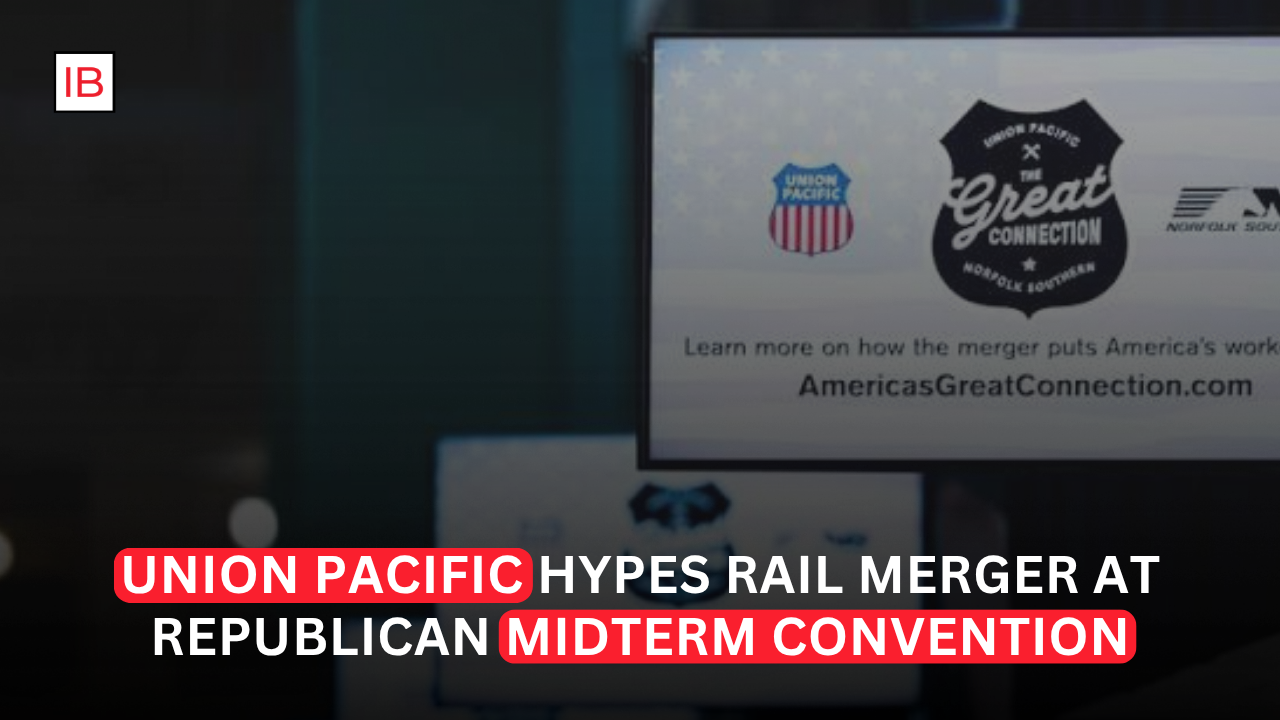
Union Pacific is using the Republican Party’s first midterm convention in Dallas to promote its proposed takeover of Norfolk Southern, presenting the deal as a major investment in America’s transportation infrastructure and a way to strengthen domestic supply chains.
The railroad is seeking political support for a merger that would create the first US transcontinental railroad, linking Union Pacific’s western network with Norfolk Southern’s eastern system. The companies argue that a combined railroad would provide shippers with coast-to-coast service through a single network and make freight transportation more competitive with trucking.
The timing of Union Pacific’s campaign is significant. The Dallas convention has brought together Republican lawmakers, candidates and political leaders ahead of the November midterm elections, with President Donald Trump putting his administration and the Republican Party at the center of the event. The gathering is designed to energize the GOP base and promote policies that Republicans say will strengthen the US economy and domestic industry.
Union Pacific and Norfolk Southern are portraying their merger as part of that broader economic agenda. The companies say the combination would create a more efficient national freight network, reduce dependence on trucks for long-distance transportation and potentially lower costs for businesses.
The proposal has already moved through several stages of federal review. The Surface Transportation Board accepted the revised merger application for consideration in May after rejecting an earlier version as incomplete. In August, the board established a procedural schedule and removed the case from abeyance, moving the regulatory process forward. The board is also conducting an environmental review of the transaction.
Union Pacific and Norfolk Southern have promised additional protections in an effort to persuade regulators and customers that the merger would not reduce competition. In July, the companies offered expanded competitive pricing opportunities, protections for certain shippers that could lose access to alternative railroads, temporary alternative service if merger integration causes performance problems and a new process for rate relief if promised benefits are not delivered.
The companies argue that those commitments go beyond protections offered in previous railroad mergers. They also say the combination could generate substantial economic benefits by allowing freight to move more efficiently across the country.
One of their central arguments is that a single transcontinental network could shift some long-haul freight from highways onto railways. Union Pacific and Norfolk Southern estimate that such a shift could save shippers about $3.5 billion a year while reducing pressure on roads and potentially lowering transportation emissions.
That argument is particularly attractive to policymakers focused on infrastructure and American competitiveness. Railroads remain critical to the movement of agricultural commodities, industrial materials, energy products and manufactured goods. A stronger east-west network could theoretically reduce the number of times freight must be transferred between competing railroads before reaching its destination.
But the merger faces significant opposition. Rival railroads, labor groups and some shippers have questioned whether combining two of the country’s largest freight rail systems would ultimately improve competition or instead increase the market power of the merged company.
Several Republican state attorneys general have also argued that the deal should be rejected, demonstrating that opposition is not confined to Democrats or traditional railroad critics.
Consumer and shipper concerns are another potential obstacle. Critics warn that a more concentrated railroad industry could eventually result in higher prices or fewer transportation choices for businesses that depend on freight rail. A national survey of likely 2026 midterm voters found majority opposition to the proposed merger, with opposition increasing after respondents were given additional information about the transaction.
Those concerns put pressure on Union Pacific to demonstrate that the merger’s promised benefits would reach customers rather than primarily shareholders.
The political environment adds another layer to the battle. Union Pacific’s decision to promote the transaction at a Republican gathering suggests the company wants the merger to be viewed not simply as a corporate combination but as part of a broader national strategy involving infrastructure, manufacturing and supply-chain resilience.
That message could resonate with Republicans who favor expanding domestic industrial capacity and reducing dependence on foreign supply chains. The merger could also fit into the administration’s emphasis on private-sector investment and American infrastructure.
However, political support cannot substitute for the regulatory process. The Surface Transportation Board will ultimately have to determine whether the transaction meets the legal standards governing major railroad mergers. The agency has already required extensive additional information from the companies and scheduled opportunities for public participation and environmental review.
Union Pacific has said it is working toward a potential mid-2027 completion if regulators approve the transaction. That means the company has considerable time to build its case with regulators, customers, workers and politicians.
The Dallas convention therefore represents one piece of a much larger campaign. Union Pacific is attempting to frame the Norfolk Southern deal as a transformation of America’s freight network rather than simply a corporate acquisition.
Whether that argument succeeds will depend on a central question: can a railroad with unprecedented national reach deliver better service and lower costs without reducing competition? Union Pacific says the answer is yes. Its opponents remain unconvinced.
As the regulatory review continues, the political campaign around the merger is likely to intensify. By taking its case directly to Republican leaders and the party’s national convention, Union Pacific is making clear that it sees the proposed transcontinental railroad as both a business opportunity and a test of America’s future transportation strategy.