Personalized Cancer Vaccines Move Closer to a Major Breakthrough
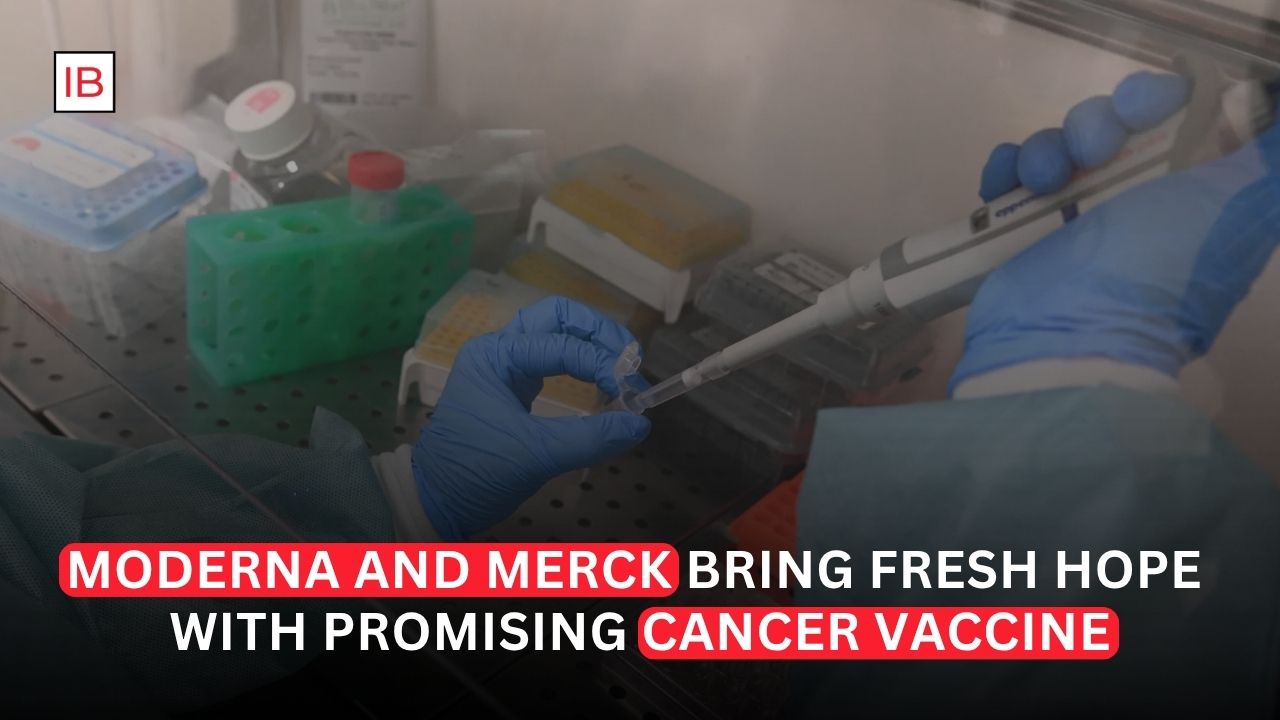
A promising personalized cancer vaccine being developed by Moderna and Merck is generating renewed optimism about the future of cancer treatment. The experimental therapy is designed to help the immune system recognize and attack melanoma cells, potentially reducing the risk that the deadly skin cancer returns after surgery.
The development is particularly significant because cancer vaccines have been studied for decades, yet turning the concept into an effective treatment has proved extremely difficult. The Moderna-Merck approach uses mRNA technology to create a treatment tailored to the genetic characteristics of an individual patient’s tumor.
A Personalized Approach Could Change Cancer Treatment
The Moderna-Merck therapy, called intismeran autogene, previously known as mRNA-4157 or V940, is not a traditional vaccine designed to prevent a healthy person from developing cancer.
Instead, it is a personalized treatment created after a patient’s tumor has been analyzed.
Scientists examine the genetic mutations found in the tumor and identify substances known as neoantigens that can help distinguish cancer cells from healthy cells. The treatment can encode up to 34 of these personalized neoantigens, with the goal of training the patient’s immune system to recognize and attack cells carrying those cancer-specific features.
The therapy is being tested alongside Keytruda, Merck’s widely used immunotherapy treatment.
The combination is designed to create a stronger immune response: the personalized mRNA treatment helps direct the immune system toward specific cancer targets, while Keytruda helps prevent cancer from suppressing the body’s immune response.
Phase 3 Results Mark an Important Milestone
The latest excitement follows positive results from a late-stage Phase 3 trial involving more than 1,100 patients with high-risk melanoma.
Moderna and Merck said the combination of intismeran autogene and Keytruda produced statistically significant improvements in recurrence-free survival and distant metastasis-free survival compared with Keytruda alone. However, the companies have not yet released the complete dataset, including detailed overall-survival results.
That distinction is important.
The results are highly encouraging, but the treatment is still investigational and has not yet become an approved standard therapy. Full clinical details will be essential for doctors, regulators and researchers to assess exactly how large the benefit is and which patients are most likely to benefit.
Still, reaching a positive Phase 3 result represents a major achievement for personalized mRNA cancer treatment.
Earlier Results Provided Strong Reasons for Optimism
The late-stage trial did not emerge without supporting evidence.
Earlier five-year follow-up data from the Phase 2b KEYNOTE-942 study showed that the combination reduced the risk of recurrence or death by 49% compared with Keytruda alone. It also reduced the risk of distant metastasis or death by 59% in patients with high-risk stage III or IV melanoma following complete surgical removal of their tumors.
Those results helped convince Moderna and Merck to move the treatment into larger Phase 3 studies.
The earlier trial involved 157 patients, while the pivotal Phase 3 melanoma program was designed to enroll approximately 1,089 patients across more than 165 sites in over 25 countries.
The larger study therefore provides a much more important test of whether the earlier success can be repeated.
The companies’ announcement that the Phase 3 trial met key goals is one of the strongest signs yet that personalized mRNA technology may have a meaningful role in cancer treatment.
Why Melanoma Is an Important Starting Point
Melanoma is the most dangerous form of skin cancer because it can spread aggressively to other parts of the body.
Even after surgery successfully removes a tumor, some patients remain at a significant risk of recurrence.
That makes treatments designed to prevent cancer from returning particularly valuable.
The Moderna-Merck approach focuses on patients with high-risk melanoma after complete surgical removal of their cancer.
The goal is not simply to shrink an existing tumor. Instead, the treatment aims to help the immune system detect and destroy remaining cancer cells that may be too small to detect through conventional scans.
This could potentially reduce the chances of:
- Cancer recurrence
- Distant metastasis
- Further disease progression
- Additional aggressive treatment
For patients who have already undergone surgery, preventing cancer from returning could be one of the most valuable outcomes possible.
mRNA Technology Moves Beyond COVID-19
The development is also important for Moderna because it demonstrates that mRNA technology may have applications far beyond infectious diseases.
Moderna became one of the most prominent biotechnology companies during the COVID-19 pandemic because of its mRNA vaccine.
However, the company’s revenue fell sharply after global demand for COVID vaccines declined.
A successful cancer treatment could therefore provide Moderna with an important new long-term business.
The positive trial results triggered an enormous reaction in financial markets, with Moderna shares surging dramatically after the announcement. Merck’s stock also gained as investors recognized the potential importance of the treatment.
The market reaction reflects more than enthusiasm about a single drug.
Investors are also betting that the success could validate a broader platform for developing personalized mRNA treatments.
Cancer Vaccines Have Had a Difficult History
The idea of teaching the immune system to fight cancer is not new.
Researchers have spent decades trying to develop therapeutic cancer vaccines, but many earlier efforts produced disappointing results.
Cancer is particularly difficult to target because tumors develop from the patient’s own cells. Unlike viruses or bacteria, cancer cells can be harder for the immune system to identify as dangerous.
They can also evolve and develop mechanisms that help them avoid immune detection.
Personalized neoantigen therapy attempts to solve part of this problem.
Instead of creating one vaccine for every patient, scientists analyze the genetic makeup of each individual’s tumor and develop a treatment designed specifically for that cancer.
This makes the process more complicated, but potentially more precise.
The technology also represents a different approach from traditional chemotherapy, which can affect both cancerous and healthy cells.
A successful personalized immune treatment could provide a more targeted strategy, although its long-term safety and effectiveness will need continued evaluation.
Manufacturing Personalized Treatments Is a Major Challenge
One of the biggest questions surrounding personalized cancer vaccines is whether they can be produced efficiently at a large scale.
Each patient’s treatment requires an individual process.
The tumor must be analyzed, relevant mutations must be identified and the personalized mRNA therapy must then be designed and manufactured.
This raises important questions about:
- Manufacturing costs
- Production speed
- Access for patients
- Health insurance coverage
- Global distribution
- Treatment capacity
A treatment can be scientifically successful but still face major commercial challenges if it is difficult or expensive to manufacture.
The companies will therefore need to demonstrate that the personalized approach can work not only in clinical trials but also in real-world healthcare systems.
The Potential Could Extend Beyond Melanoma
Melanoma is only the beginning of the companies’ broader ambitions.
Moderna and Merck already have multiple clinical programs examining the same individualized neoantigen approach in other cancers, including non-small cell lung cancer, bladder cancer and renal cell carcinoma.
This is where the long-term potential becomes particularly significant.
If the technology can successfully be applied across several types of cancer, personalized mRNA treatments could become a new category of oncology medicine.
However, success in melanoma does not automatically guarantee success elsewhere.
Melanoma has biological characteristics that can make it particularly responsive to immunotherapy. Other cancers may present different challenges, meaning the results cannot simply be assumed to transfer across all tumor types.
Each cancer will need to be tested individually.
Regulators and Scientists Will Want More Data
The positive Phase 3 announcement is an important milestone, but it is not the final step.
The companies still need to present the detailed results to the scientific community and submit the relevant information to regulators.
Important questions include:
- How large is the improvement in recurrence-free survival?
- What are the long-term overall-survival results?
- Which patients benefit the most?
- What side effects occur?
- How quickly can each personalized treatment be manufactured?
- How much will treatment cost?
- Can the approach succeed against other cancers?
Earlier studies found that the treatment combination had an overall safety profile consistent with the existing analysis, although patients experienced side effects including fatigue, injection-site pain and chills.
The larger Phase 3 dataset will provide a clearer picture of the treatment’s benefits and risks.
A Major Test for Personalized Medicine
The Moderna-Merck program represents a broader shift toward personalized medicine.
Traditional drug development generally focuses on creating one treatment for a large population of patients.
Personalized cancer vaccines take a different approach.
The treatment itself can be designed around the individual biology of a patient’s tumor.
This could eventually transform how some cancers are treated.
Future cancer care may increasingly involve a combination of:
- Genetic tumor sequencing
- Artificial intelligence and advanced algorithms
- Personalized mRNA treatments
- Immunotherapy
- Earlier disease detection
- More targeted therapies
The goal would be to make cancer treatment increasingly specific rather than relying entirely on broadly acting drugs.
Moderna Gains a Potential New Future
For Moderna, the melanoma results could represent the company’s most important development since the COVID-19 pandemic.
The company has been working to prove that mRNA technology can become a broader medical platform rather than remaining primarily associated with infectious-disease vaccines.
A successful cancer product could help achieve that transformation.
However, the enormous rise in Moderna’s share price also shows how quickly expectations can become elevated.
Analysts have warned that investors still need to see the full Phase 3 results before making assumptions about the treatment’s commercial potential or its ability to work against other cancers.
The science may be highly promising, but significant questions remain.
A Broader Boost for mRNA Research
The implications extend beyond Moderna and Merck.
A successful personalized cancer treatment could increase confidence across the biotechnology industry that mRNA can be used for more complex medical applications.
Other companies working on mRNA technologies, cancer vaccines and personalized treatments could also benefit from increased investment and research interest.
The technology offers a powerful advantage: once a target is identified, mRNA can potentially be designed to instruct cells to produce a specific protein or antigen.
That flexibility could make it useful in areas beyond cancer.
The Moderna-Merck trial is therefore being watched as a test of an entire medical platform, not just a single treatment.
Looking Ahead
The positive Phase 3 results for Moderna and Merck’s personalized melanoma treatment represent one of the most important developments in cancer research in recent years.
The therapy, intismeran autogene, uses mRNA technology to create a treatment tailored to the genetic characteristics of an individual patient’s tumor. When combined with Keytruda, it has shown statistically significant improvements in preventing melanoma recurrence and distant spread compared with Keytruda alone in a large late-stage trial.
Earlier five-year data had already shown a 49% reduction in the risk of recurrence or death and a 59% reduction in the risk of distant metastasis or death, providing a strong foundation for the larger Phase 3 program.
The full clinical results will now be critical.
Scientists and regulators will need to examine detailed data on survival, safety, durability and the practical challenges of manufacturing personalized treatments.
Success in melanoma also does not guarantee success in other cancers.
Yet the breakthrough has created a level of optimism that cancer vaccines have rarely achieved.
For decades, researchers have pursued the idea of using the immune system to recognize and eliminate cancer cells. Moderna and Merck’s results suggest that combining personalized tumor analysis, mRNA technology and immunotherapy may finally provide a way to make that idea work on a larger scale.
If future studies confirm the promise of the technology, cancer treatment could move toward a more personalized model in which therapies are designed not only for a particular disease but for the unique genetic characteristics of each patient’s cancer.
For now, the treatment remains investigational, and important questions still need answers. But the positive Phase 3 results represent a major step forward.
The Moderna-Merck melanoma vaccine may not be a universal cure for cancer, but it could become one of the clearest signs yet that personalized mRNA medicine is capable of changing how cancer is treated.