Millions Warned to Avoid Fires as Extreme Heat, Drought and Record Wildfires Put Pressure on Emergency Services
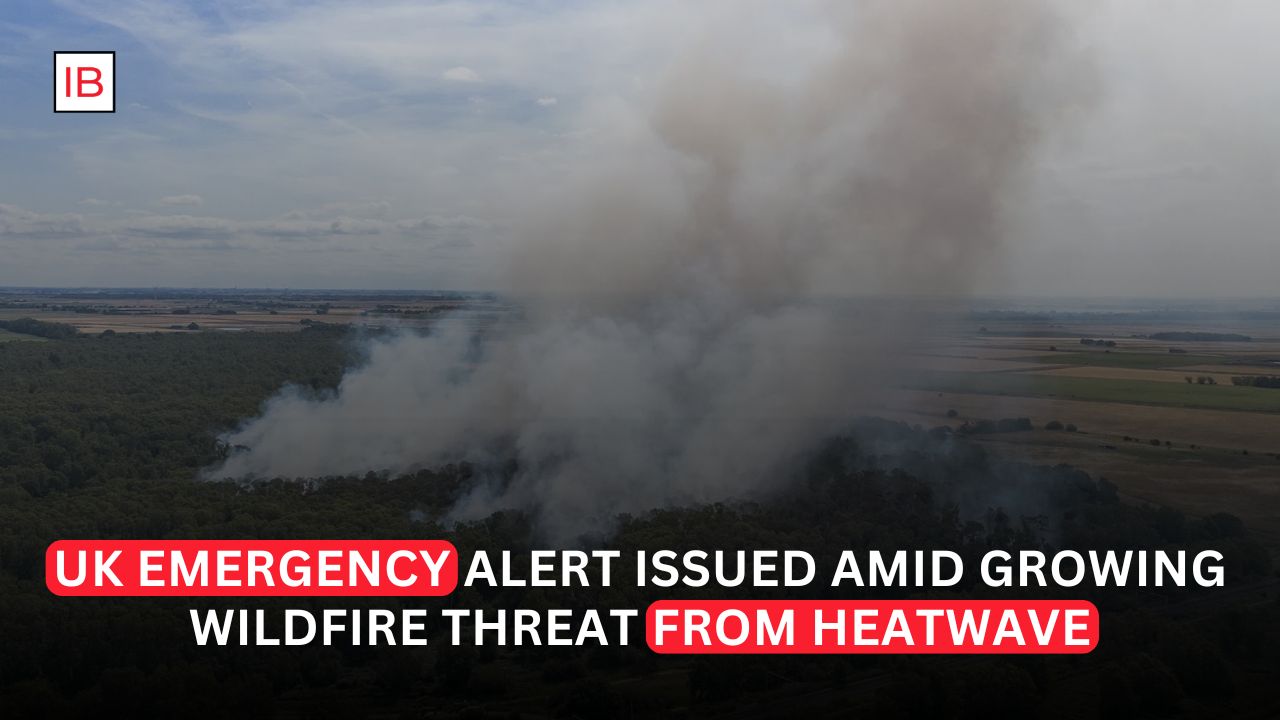
The UK government has issued an emergency alert to millions of people across England and Wales as extreme heat and exceptionally dry conditions push the risk of wildfires to dangerous levels.
The nationwide warning, delivered directly to compatible mobile phones, urged people not to light fires in gardens, parks, countryside or other open spaces. Authorities also warned against activities such as using disposable barbecues, campfires and fireworks, saying even a small ignition could quickly develop into a major wildfire under current conditions.
The alert comes after a surge in fires across Britain, with firefighters already battling multiple major incidents and communities facing evacuations and property damage.
Emergency Alert Marks Escalation of Wildfire Response
The emergency warning represents one of the most significant uses of Britain’s mobile alert system for an active environmental emergency.
The government said the alert was requested directly by fire and rescue services because the wildfire risk remained exceptionally high. Millions of residents in England and Wales received the message on Friday as authorities attempted to prevent additional fires from starting.
The system allows authorities to send warnings directly to compatible mobile devices, providing a rapid way to reach large numbers of people when immediate public cooperation is required.
The government’s message was simple: avoid anything that could ignite a fire.
Record Wildfires Put Communities Under Pressure
The warning comes after Britain recorded an unprecedented number of wildfires this year.
Fire services have already responded to more than 1,000 wildfires, surpassing the previous annual record of 1,017 fires set in 2025. The 2026 wildfire season is also expected to continue for months if dry conditions persist.
The scale of the fires has placed significant pressure on emergency services.
Firefighters have been dealing with multiple incidents simultaneously, while extreme heat has made conditions more difficult for crews working outdoors for long periods.
Authorities have also warned that dry vegetation can allow flames to spread rapidly, particularly when combined with wind.
Stourbridge Fires Destroy Homes
The seriousness of the situation was highlighted by devastating fires in Stourbridge in the West Midlands.
The blaze destroyed 19 homes and damaged another 18, forcing residents to evacuate as flames spread through the area. More than 50 people required medical treatment, with firefighters among those affected by smoke and extreme heat.
The destruction has increased pressure on the government to strengthen its response.
Residents described being forced to leave their homes rapidly as the fire approached, while emergency workers battled difficult conditions.
The fires demonstrated how quickly extreme weather and dry vegetation can transform a local fire into a major emergency.
Britain Records Extreme Temperatures
The wildfire crisis has developed during Britain’s fifth heatwave of 2026.
On August 13, temperatures reached 38.1°C in London, making it one of the hottest days ever recorded in the country. The combination of high temperatures, dry vegetation and drought has created conditions particularly favorable for wildfires.
Britain’s unusually hot summer has also affected infrastructure and transport.
Extreme heat can cause railway tracks and other infrastructure to expand or become unstable, while smoke from wildfires can disrupt roads and transportation networks.
The heat has therefore created risks extending far beyond the fires themselves.
Drought Makes the Situation Worse
The wildfire crisis is occurring alongside severe drought conditions.
Around 45 million people are living in areas affected by drought, while approximately 27 million people face water-use restrictions, according to recent government and Reuters reporting.
July was Britain’s driest July in around 190 years, leaving vegetation and soil exceptionally dry.
Those conditions increase the amount of combustible material available to fires and make it more difficult for the landscape to recover.
Water shortages can also complicate firefighting efforts, particularly when multiple major incidents occur at the same time.
Government Bans Disposable Barbecues
Authorities have introduced additional measures to reduce the number of potential ignition sources.
The government announced an immediate temporary ban on the sale of disposable barbecues across the country. Officials said the measure was designed to reduce the likelihood of fires during the period of exceptionally high wildfire risk.
People have also been urged to avoid campfires, fireworks, fire pits and other activities that can produce sparks or flames.
Fire services are asking the public to take the warnings seriously because emergency crews are already operating under intense pressure.
Military Supports Firefighters
The scale of the emergency has also led to military assistance.
The government deployed additional military personnel to support emergency services in areas affected by major wildfires, including South Wales. Troops have helped with logistics, water supplies and other tasks that allow firefighters to focus on controlling the fires.
The deployment highlights the extent to which the wildfire situation has moved beyond routine firefighting.
Emergency services have had to coordinate firefighters, military personnel, helicopters, drones and other resources to manage the growing number of incidents.
Firefighters Face Extreme Working Conditions
Fighting fires during a heatwave creates additional dangers for emergency crews.
Firefighters must operate in high temperatures while wearing heavy protective equipment and working in areas filled with smoke.
Several firefighters have required medical treatment during the recent fires, adding another challenge for emergency services already facing high demand.
The combination of extreme heat and intense firefighting activity can increase the risk of heat exhaustion and other medical emergencies.
Climate Change Becomes Part of the Debate
The wildfire emergency has also renewed debate over Britain’s preparedness for increasingly extreme weather.
Climate scientists and government officials have pointed to rising temperatures and changing weather patterns as factors that can contribute to longer and more severe periods of heat and drought.
The European Commission’s Joint Research Centre has warned that drought and record heat are affecting large parts of Europe this summer, with continued risks of heatwaves and dry conditions into September.
For Britain, the current crisis raises questions about whether infrastructure and emergency planning are adequately prepared for increasingly frequent extreme-weather events.
Public Behavior Becomes Critical
Authorities are emphasizing that public behavior can make a significant difference.
A cigarette, barbecue, campfire or firework can become an ignition source when vegetation is extremely dry.
That is why the government has chosen to send a direct emergency warning rather than relying solely on ordinary weather announcements.
Fire services have also urged people not to call emergency numbers simply to report neighbors using barbecues unless there is an actual emergency or significant smoke, after some emergency control rooms experienced unusually high call volumes.
Transport and Infrastructure Are Also Affected
The heatwave has created additional pressure on Britain’s infrastructure.
Rail services have experienced disruption, while authorities have investigated incidents involving trains during the period of extreme heat. Roads have also been closed in areas affected by smoke and wildfires.
These disruptions demonstrate that extreme heat can affect multiple parts of the economy simultaneously.
Transport interruptions can affect commuters, businesses and supply chains, while fires can damage homes, farmland and other infrastructure.
Looking Ahead
The UK’s emergency phone alert marks a significant escalation in the government’s response to a wildfire crisis fueled by extreme heat and drought.
More than 1,000 wildfires have already been recorded this year, exceeding the previous annual record, while major fires have destroyed homes and forced residents to evacuate.
The Stourbridge fires have provided a stark example of the potential consequences.
Nineteen homes were destroyed and 18 more damaged, while dozens of people required medical attention.
The government has responded with emergency alerts, a temporary ban on disposable barbecues, additional funding and military support for firefighting operations.
But the crisis extends beyond wildfire management.
Britain is also dealing with severe drought, water restrictions, transport disruptions and the broader economic consequences of extreme weather.
The country’s experience this summer is raising difficult questions about whether emergency services have enough resources to manage multiple climate-related emergencies at the same time.
The immediate priority is preventing new fires.
Authorities are asking residents to avoid any activity that could create sparks or flames and to take the emergency alert seriously.
But the longer-term challenge will be preparing Britain for a climate in which extreme heat and prolonged dry conditions may become increasingly disruptive.
The emergency alert may eventually be remembered not only as a warning about a dangerous weekend, but also as a sign of how Britain’s approach to extreme weather is changing.
As temperatures rise and drought conditions become more severe, the country may need stronger wildfire defenses, better water management, more resilient infrastructure and greater public awareness.
For now, officials are focused on keeping fires from spreading and protecting communities. But the scale of the crisis has made one point increasingly clear: extreme heat is no longer simply a summer inconvenience for Britain — it is becoming a major national emergency-management challenge.