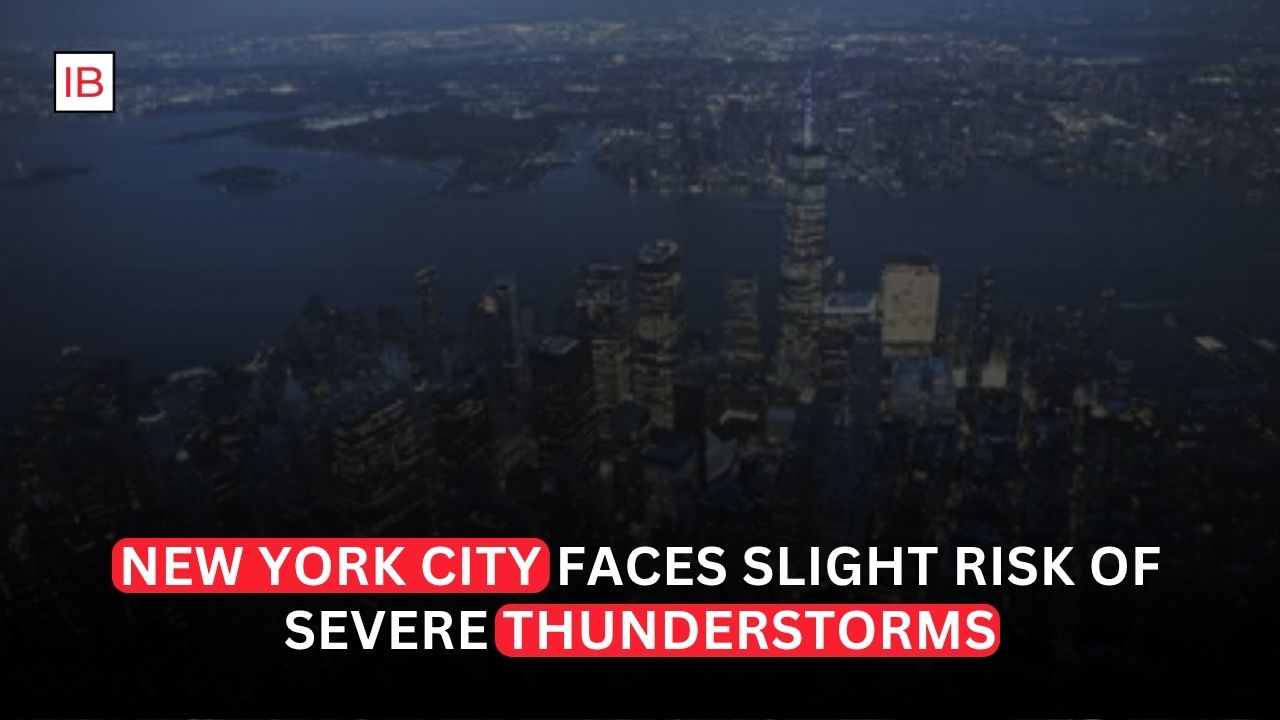
New York City is facing another round of potentially disruptive thunderstorms as a storm system moves across the Northeast, raising concerns about heavy rain, flash flooding and dangerous travel conditions.
The latest weather threat comes after an unusually active summer of severe storms across the region. Forecasters are warning that repeated thunderstorms could create problems for commuters, especially if storms move slowly or pass over the same areas multiple times.
Thunderstorms Threaten the New York Region
The New York metropolitan area is among the locations expected to experience thunderstorms as the weather system moves through the Northeast.
While the overall risk of severe weather is not considered extreme, even relatively limited thunderstorms can create significant problems in a densely populated city.
Heavy downpours can quickly overwhelm drainage systems, while strong winds and lightning can disrupt transportation and outdoor activities.
Heavy Rain Is a Major Concern
Flooding is one of the most important risks associated with the storms.
Urban areas such as New York City are particularly vulnerable because large portions of the city are covered by roads, buildings and other surfaces that prevent rainwater from being absorbed naturally.
When intense rainfall arrives within a short period, drainage systems can become overwhelmed.
Low-lying roads, underpasses and areas with poor drainage are especially vulnerable to flooding.
Travel Could Be Disrupted
Thunderstorms can create problems for New York’s extensive transportation network.
Heavy rain can reduce visibility on highways and slow traffic across the metropolitan area.
Flooding can also affect subway entrances, roads and commuter rail lines.
Air travel is vulnerable as well. Thunderstorms can force flight delays and cancellations when aircraft cannot safely take off or land.
That means the weather could have consequences far beyond the neighborhoods directly hit by the strongest storms.
Damaging Winds Are Possible
The strongest thunderstorms could produce gusty or damaging winds.
Powerful wind gusts can knock down branches, damage infrastructure and cause isolated power outages.
Trees are particularly vulnerable when soils become saturated after repeated heavy rainfall.
For residents, the combination of wind, lightning and torrential rain can make outdoor travel dangerous even if the storm lasts only a short time.
Lightning Adds Another Hazard
Lightning is an additional risk during thunderstorms.
People outdoors can be exposed suddenly because lightning can strike well away from the heaviest rainfall.
Events, construction activity, outdoor recreation and transportation operations can therefore be affected even when rainfall totals are not especially high.
The safest response during a thunderstorm is to move indoors and remain there until the storm passes.
Tornado Risk Remains Limited
The threat of a tornado is considerably lower than the broader thunderstorm and flooding risk.
Forecasts indicate only a limited possibility of tornado development in the wider region.
That distinction matters.
A slight severe-weather risk does not mean a major tornado outbreak is expected. It means atmospheric conditions are sufficient for some storms to become severe.
For most New Yorkers, heavy rain and localized flooding are likely to be more relevant concerns.
Repeated Storms Can Increase Flooding
One of the biggest concerns is not necessarily a single extreme storm but repeated rounds of thunderstorms.
When storms repeatedly move over the same location, rainfall can accumulate rapidly.
Forecasters have previously warned that the New York and Philadelphia areas could experience multiple rounds of storms, meaning conditions can deteriorate even when individual thunderstorms are not exceptionally powerful.
This is particularly important in urban environments where drainage capacity can be exceeded quickly.
The Northeast Has Had an Active Summer
The latest threat comes after months of frequent severe weather across the Northeast and Mid-Atlantic.
The region has experienced heavy rainfall, damaging winds and flooding during several storm episodes.
Recent storms have disrupted transportation and caused power outages in parts of the Northeast.
That history means authorities and residents are paying close attention to another period of unsettled weather.
Flood-Prone Areas Face the Greatest Risk
Not every part of New York City will experience the same conditions.
Neighborhoods and roads located in low-lying areas are more exposed to flooding.
Highways and underpasses can become particularly dangerous because water can collect quickly.
Drivers may also encounter reduced visibility and standing water, increasing the possibility of accidents.
Businesses May Feel the Impact
Severe weather can affect more than transportation.
Restaurants, retailers and other businesses can experience lower customer traffic when people avoid traveling during storms.
Construction projects may also need to pause during periods of lightning or dangerous winds.
Outdoor events can face cancellations or delays.
For companies dependent on deliveries, severe weather can create additional logistical problems.
New York’s Dense Infrastructure Is Vulnerable
New York City’s enormous population and infrastructure network make even relatively localized weather events economically significant.
Millions of people rely on subways, buses, commuter rail and road networks every day.
A storm that affects only a limited geographic area can therefore create widespread disruption.
The city’s underground transportation system is particularly sensitive to heavy rainfall and flooding.
Residents Should Watch Local Alerts
Weather conditions can change quickly during the summer.
A storm initially forecast as a general thunderstorm can strengthen as atmospheric conditions change.
Residents should therefore pay attention to updates from the National Weather Service and local emergency authorities rather than relying solely on an earlier forecast.
The most important information will be the timing and location of the strongest storms.
The Risk Is Serious but Not Extreme
The wording of the forecast is important.
A slight risk of severe thunderstorms does not mean that severe weather is guaranteed across New York City.
Most locations may experience ordinary thunderstorms or heavy rain rather than extreme conditions.
The concern is that a smaller number of storms could become significantly stronger and produce damaging winds, hail, flooding or isolated tornadoes.
Climate and Urban Flooding Add Pressure
New York City’s vulnerability to intense rainfall is also connected to its urban environment.
Large amounts of paved and built-up land reduce natural drainage.
When rainfall becomes concentrated into short, intense bursts, water can accumulate rapidly.
This creates a continuing challenge for cities as weather patterns become more difficult to predict and extreme rainfall events become an increasing concern.
The Immediate Economic Impact Could Be Transportation
For the city’s economy, transportation disruption may be the most immediate consequence.
Thousands of workers and travelers can be affected when subway lines slow down, roads flood or flights are delayed.
Even short interruptions can create cascading delays throughout the metropolitan area.
Businesses can then experience knock-on effects as employees arrive late and deliveries are delayed.
Conclusion
New York City faces a renewed threat from thunderstorms, with forecasters warning about heavy rainfall, flooding and the possibility of severe weather across parts of the Northeast.
The most important risk for the city is not necessarily a major tornado outbreak but the combination of intense rainfall and repeated thunderstorms.
Urban drainage systems can become overwhelmed quickly when large amounts of rain fall in a short period.
That makes low-lying roads, underpasses and flood-prone areas especially vulnerable.
Strong thunderstorms can also produce damaging winds, lightning and transportation disruptions.
The wider Northeast has already experienced an active summer of severe weather, including storms that have disrupted flights, transportation networks and power supplies.
For New Yorkers, the practical implications are straightforward.
Commuters should expect the possibility of delays during periods of intense storms, while drivers should be cautious around standing water and avoid flooded roads.
People attending outdoor events should also be prepared for sudden changes in weather.
The limited tornado risk should not overshadow the more immediate danger posed by flooding and strong thunderstorms.
A slight severe-weather risk means that most areas will not experience extreme conditions, but some storms can still become dangerous.
Because thunderstorms can strengthen and move quickly, the situation will depend heavily on the exact track and intensity of individual storms.
The biggest question for New York City is therefore how much rain falls, how quickly it arrives and whether storms repeatedly affect the same neighborhoods.
If storms remain scattered, disruption could be relatively limited.
If several rounds pass over the city, however, flooding and transportation problems could become considerably more serious.