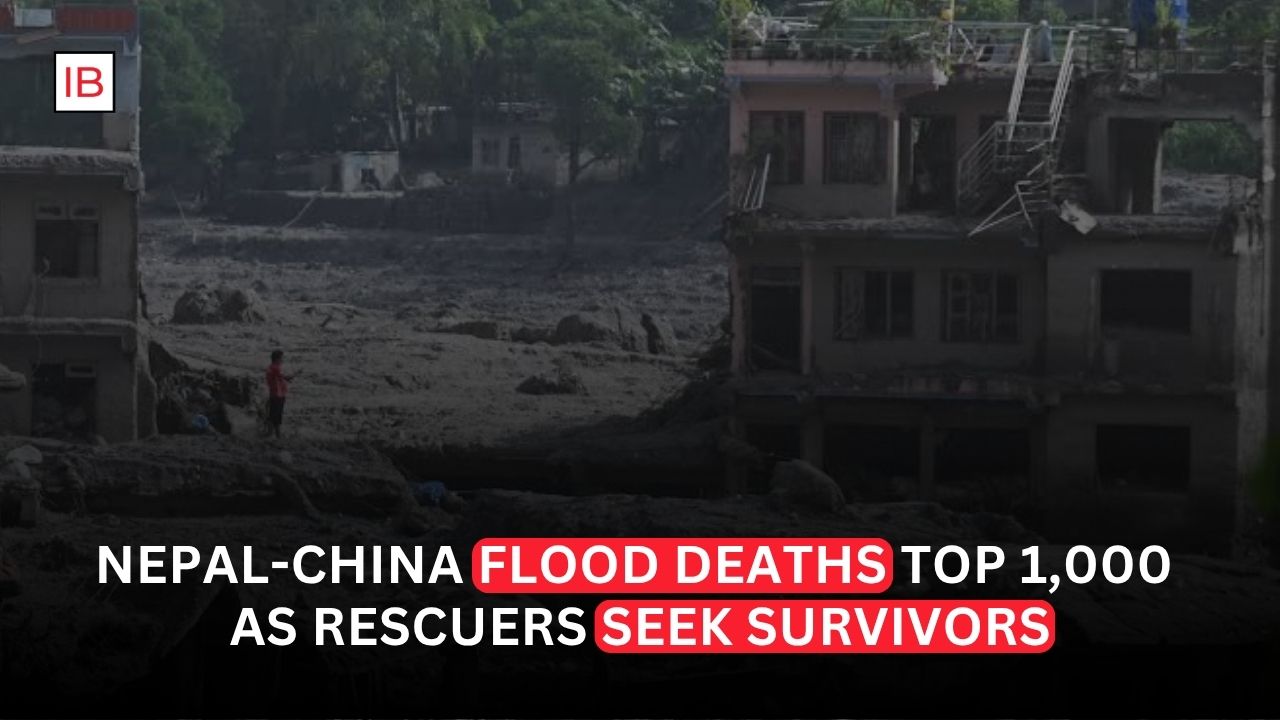
The death toll from catastrophic flooding across Nepal and China’s Tibet region has surpassed 1,000, as rescue teams continue searching for thousands of people still missing after a devastating glacial collapse unleashed torrents of water, ice, rock and mud through Himalayan valleys.
Nepalese authorities reported 987 deaths and 3,916 people missing as of Tuesday, while Chinese authorities had reported 16 deaths and 546 missing in Tibet’s Gyirong County. The combined confirmed death toll has therefore passed 1,000, with the final scale of the disaster still unclear because several heavily affected areas remain difficult to access.
The disaster began on Aug. 26 after a massive collapse high in the Himalayas sent an enormous surge downstream. The resulting floods and landslides destroyed homes, roads, bridges and other infrastructure, leaving entire communities isolated.
Rescue Operations Continue
Rescue teams are working across some of the most difficult terrain in the region.
Helicopters and other aircraft have been used to reach communities cut off after roads and bridges were destroyed. More than 11,800 people had been rescued in Nepal, according to authorities, but thousands remain unaccounted for.
Search teams are also using heavy machinery, boats and trained dogs to locate survivors and recover bodies from areas buried beneath mud and debris.
The difficult terrain is slowing the operation.
Thousands Remain Missing
The number of missing people is one of the most troubling aspects of the disaster.
Nepal alone has reported more than 3,900 missing people, including hundreds of foreign nationals. China has reported another 546 missing people in the affected Tibetan region.
The figures may change substantially as communications are restored and isolated communities are reached.
Some families have been unable to contact relatives for days.
The uncertainty is particularly severe in areas near the Nepal-China border, where infrastructure has been almost completely destroyed.
Hydropower Workers Are Trapped
Among the most urgent rescue efforts are searches for workers at hydropower projects in Nepal.
Around 900 workers at 12 hydropower projects were reported missing, with hundreds believed to be trapped inside tunnels that were inundated or blocked by mud.
The Upper Trishuli-1 hydropower project has been particularly affected.
Rescuers have recovered bodies from some tunnels, but thick layers of debris have made access extremely difficult.
Families of missing workers are waiting for news as emergency crews attempt to clear routes into the damaged facilities.
The Disaster Started With a Glacial Collapse
The flooding was not simply the result of heavy rainfall.
A massive glacial or rock-and-ice collapse in the Himalayas triggered a sudden release of water and debris.
The event generated a powerful flood wave that moved through valleys below, carrying enormous quantities of rock, ice and mud.
The geological event was also associated with a seismic disturbance estimated at around magnitude 5.2.
The combination of geological instability and water created a disaster that overwhelmed settlements and infrastructure with very little warning.
Infrastructure Has Been Destroyed
Roads and bridges across the affected region have been washed away or buried.
That has made the rescue effort much harder.
Emergency crews cannot simply drive into many of the affected communities.
Instead, helicopters and aircraft have become essential for transporting rescuers, evacuating survivors and delivering supplies.
The destruction of infrastructure also means that even after rescue operations end, rebuilding the region will be a major undertaking.
Gyirong Port Was Badly Hit
On the Chinese side, the Gyirong Port area has suffered extensive damage.
The border crossing is an important connection between Nepal and China and serves as a major route for trade and travel.
The destruction of roads and facilities has disrupted movement through the area.
Chinese rescue teams have had to reach some locations by helicopter or on foot because normal road access has been lost.
The damage therefore has implications beyond the immediate humanitarian crisis.
Foreign Nationals Are Among the Missing
The disaster has also affected international travelers.
Nepal’s missing-person count includes hundreds of foreign nationals, while China’s figures also include foreign citizens.
The affected region attracts tourists, trekkers and religious pilgrims traveling between Nepal and Tibet.
The destruction of communications has made it difficult for governments and families to determine the whereabouts of their citizens.
That has added another layer of urgency to the rescue operation.
Families Wait for Information
For relatives of missing people, the rescue effort has become a race against time.
Some families have traveled to Kathmandu seeking information about relatives who disappeared during the floods.
Reports of restored telephone connectivity have offered brief hope, but many people remain unreachable.
The physical destruction of communities means that even when communications return, locating individuals can remain extremely difficult.
Weather Is Making Rescue Harder
Rescue teams are also facing continuing weather and geological risks.
Mud and debris remain unstable, while additional rain could trigger landslides and new flooding.
That creates danger for rescuers working around damaged slopes and blocked rivers.
Emergency crews therefore have to balance the urgency of searching for survivors with the risk of sending personnel into unstable areas.
The Survival Window Is Narrowing
The longer people remain trapped, the harder survival becomes.
This is especially concerning for workers believed to be inside flooded or blocked tunnels.
Some experts have noted that people trapped underground may have access to pockets of air, while others warn that prolonged confinement sharply reduces the likelihood of survival.
Rescuers are therefore prioritizing locations where people could potentially still be alive.
Humanitarian Needs Are Growing
The disaster has created a large humanitarian emergency.
Thousands of people have lost homes, livelihoods or access to basic services.
The destruction of roads and infrastructure makes it harder to deliver clean water, food and medical assistance.
The United Nations has estimated that tens of thousands of people urgently need water, sanitation and hygiene assistance.
That need is likely to increase as rescue operations transition into longer-term relief.
Health Risks Are Rising
Floods can create serious public-health risks.
When water systems and sanitation infrastructure are damaged, contaminated water can spread disease.
Displaced populations may also face shortages of clean drinking water and adequate shelter.
Medical facilities in affected areas have themselves been damaged or cut off.
That means emergency health services must operate under exceptionally difficult conditions.
Nepal Faces a Major Reconstruction Challenge
Even once the immediate emergency is over, Nepal will face an enormous reconstruction task.
Roads and bridges will need to be rebuilt.
Hydropower facilities will require extensive assessment and repairs.
Homes, businesses and public buildings may need to be reconstructed or replaced.
The economic cost could therefore extend far beyond the immediate loss of life.
Hydropower Is Especially Important
Damage to hydropower projects is particularly significant for Nepal.
The country has invested heavily in hydropower as a source of electricity and export revenue.
The disaster has demonstrated the vulnerability of infrastructure built in mountainous terrain.
Future projects may require more extensive consideration of landslide, glacial and flood risks.
The Border Has Strategic Importance
The affected region is also important because it sits along the Nepal-China border.
The Gyirong crossing is a major commercial and transportation route.
Disruption there could affect trade between the two countries.
Rebuilding the border infrastructure will therefore have both economic and humanitarian importance.
China and Nepal Face a Shared Crisis
Although the scale of damage differs between the two countries, the disaster has created a shared emergency.
Nepal has suffered the overwhelming majority of reported deaths, while Tibet has also experienced fatalities and hundreds of missing people.
The geographic connection between the two regions means that cooperation will be important.
Search operations, border access and infrastructure reconstruction may require coordination between authorities.
India Is Also Affected
The disaster has consequences downstream.
At least 17 bodies have reportedly been recovered from rivers in India, adding to the regional toll.
The movement of water and debris across national boundaries demonstrates how disasters in the Himalayas can affect several countries simultaneously.
That creates a broader need for regional disaster-warning and monitoring systems.
Climate Risks Are Under Scrutiny
The catastrophe has also renewed attention on the risks facing Himalayan communities.
The region is highly sensitive to changes in glaciers, snowpack, rainfall and temperature.
Climate change does not mean that every individual glacial collapse is directly caused by warming.
But scientists and governments are increasingly concerned that changing Himalayan conditions could create new or more difficult-to-predict hazards.
That makes monitoring increasingly important.
Early Warning Systems Matter
The disaster highlights the value of early-warning systems.
Even a short warning can allow residents to move away from river valleys and dangerous slopes.
Better satellite monitoring, geological surveys and communication networks could help authorities identify emerging risks.
The challenge is turning scientific information into warnings that reach people quickly enough.
Rebuilding Will Take Years
The immediate focus remains rescue.
But rebuilding the affected areas could take years.
Infrastructure must be reconstructed in locations that remain exposed to future hazards.
That raises difficult questions about whether some roads, settlements and facilities should be rebuilt exactly where they stood before.
In some locations, relocating infrastructure may ultimately be safer.
The Economic Impact Will Be Broad
The economic consequences will extend beyond physical destruction.
Tourism could be affected because the region is an important destination for trekkers, pilgrims and international visitors.
Trade could also suffer because border infrastructure has been damaged.
Hydropower production may be disrupted.
Local businesses could lose income while communities recover.
These effects can continue long after floodwaters disappear.
International Assistance May Be Needed
The scale of the disaster could require significant international assistance.
Nepal has limited fiscal resources compared with the potential cost of rebuilding roads, bridges, homes and energy infrastructure.
International aid organizations can help provide emergency supplies and medical support.
Longer-term reconstruction may require development financing and assistance from neighboring countries and international institutions.
The Final Death Toll Is Unknown
The confirmed death toll has already passed 1,000, but authorities caution that the numbers are still developing.
Thousands remain missing.
Some missing people may eventually be found alive.
Others may be among those whose bodies have not yet been recovered.
The true scale of the disaster may therefore take weeks or months to establish.
A Disaster Still Unfolding
The floods are no longer simply a single catastrophic event.
They have become a continuing emergency involving rescue, displacement, infrastructure damage, health risks and potential secondary hazards.
Every day brings new information about missing people, damaged facilities and inaccessible communities.
The immediate priority remains finding survivors.
Conclusion
The death toll from the catastrophic Nepal-China floods has surpassed 1,000, marking one of the most devastating disasters to hit the Himalayan region in recent years. Nepal has reported 987 deaths and more than 3,900 missing people, while China has reported 16 deaths and 546 missing in Tibet.
The disaster began on Aug. 26 when a massive glacial collapse sent water, ice, rocks and mud through valleys along the Nepal-China border.
The resulting floods destroyed homes, bridges and roads and isolated entire communities.
More than 11,800 people have been rescued in Nepal, but thousands remain missing.
The most difficult rescue missions involve hydropower workers believed to be trapped inside tunnels.
Around 900 workers across 12 hydropower projects have been reported missing, with hundreds potentially trapped underground.
Rescuers are facing enormous logistical challenges.
Destroyed roads mean helicopters and aircraft are essential for reaching many areas, while mud, unstable terrain and continuing bad weather create additional risks.
The situation around Gyirong Port on the Chinese side is particularly severe, with major infrastructure destroyed and normal access disrupted.
The disaster is also an international humanitarian crisis.
Hundreds of foreign nationals are among those reported missing, reflecting the importance of the region to tourism, pilgrimage and cross-border travel.
Beyond the immediate rescue effort, Nepal and China face a long reconstruction process.
Roads, bridges, hydropower facilities, homes and businesses will need to be repaired or rebuilt.
The economic impact could therefore persist for years.
The catastrophe also raises broader questions about Himalayan disaster preparedness.
Glacial instability, extreme weather, landslides and flooding create interconnected risks across borders.
Better monitoring, early-warning systems and resilient infrastructure could reduce the impact of future disasters.
For now, however, the priority remains the search for survivors.
With thousands still missing, rescue teams are working against time in some of the region’s most difficult terrain.
The final death toll is still unknown, and the full economic and humanitarian consequences of the disaster have yet to emerge.
What is already clear is that the Aug. 26 floods have transformed from a regional weather disaster into a major humanitarian catastrophe spanning Nepal, Tibet and downstream areas.