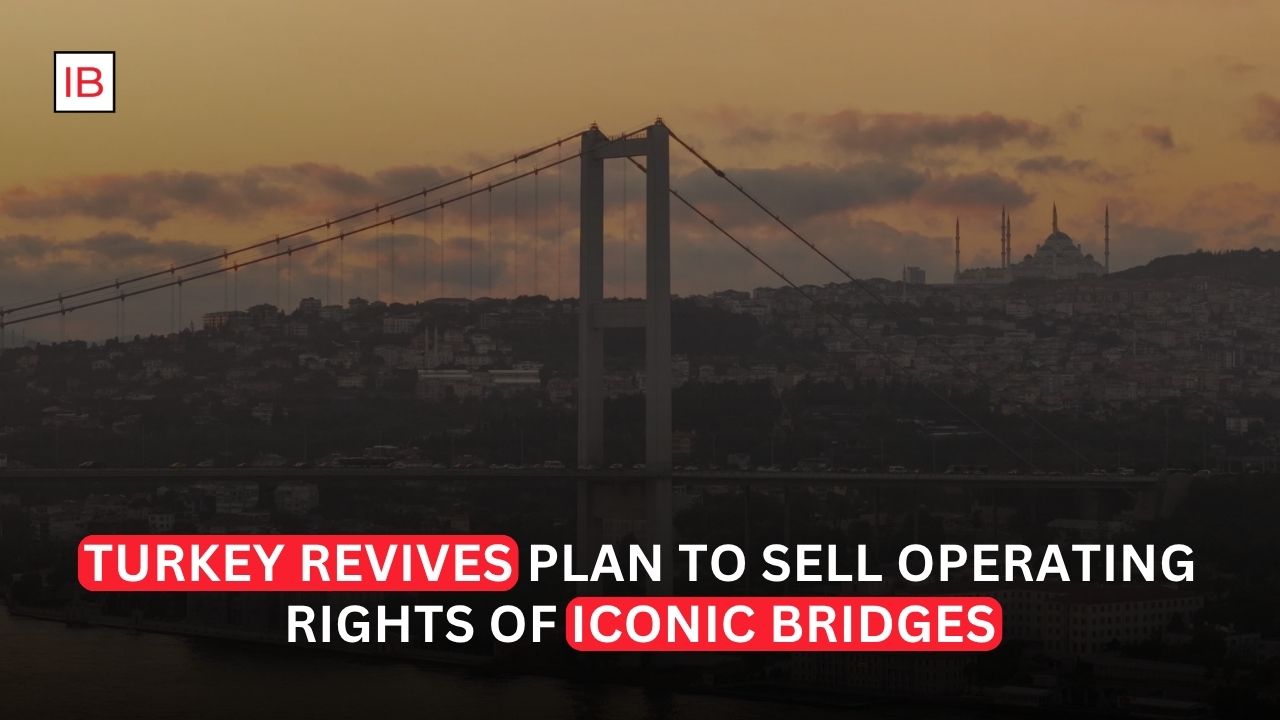
Türkiye is reviving a long-discussed plan to transfer the operating rights of two of Istanbul’s most iconic Bosphorus bridges and a network of toll highways to private investors, potentially creating one of the country’s largest privatization transactions and providing the government with a significant source of revenue.
The assets under consideration include the 15 July Martyrs Bridge, formerly known as the Bosphorus Bridge, and the Fatih Sultan Mehmet Bridge, which connect Istanbul’s European and Asian sides. The proposed transaction is also expected to include several state-owned toll highways, making the plan considerably broader than a simple concession for the two bridges.
The Turkish Privatization Administration has been moving preparations forward and has sought interest from investment banks as the government evaluates how the assets could be packaged and offered to investors. Earlier preparations reportedly involved Ernst & Young as an adviser to the privatization process, while technical and financial work has been undertaken ahead of a potential tender.
The renewed effort comes after Türkiye attempted a similar transaction more than a decade ago. In 2012, the government sought to privatize the operating rights of the two Bosphorus bridges together with roughly 1,975 kilometers of highways. That process attracted bids but ultimately failed to produce an agreement acceptable to the government.
The current proposal could therefore represent a second attempt to monetize some of Türkiye’s most valuable road infrastructure. Unlike an outright sale of the physical assets, the government would retain ownership while transferring the right to operate and maintain them for a defined period. Turkish authorities have previously emphasized this distinction, noting that ownership of the bridges and highways remains with the state.
The financial motivation is significant. Türkiye has been pursuing measures to strengthen public finances while dealing with the economic consequences of high inflation and tight monetary conditions. Selling long-term operating concessions can provide the government with a large upfront payment while shifting some operational responsibilities to private companies.
For investors, the attraction lies in the predictable traffic generated by Istanbul’s transport network. The Fatih Sultan Mehmet Bridge is a crucial route between Europe and Asia and forms part of the Trans-European Motorway network. The 15 July Martyrs Bridge is particularly important for daily urban traffic across the Bosphorus. Together with state-owned toll highways, the assets generate substantial traffic and toll income.
Data cited in reports indicate that the wider network handled hundreds of millions of vehicle crossings in 2025. The state-owned toll roads and bridges generated significant Treasury revenue, highlighting why the concessions could command a substantial valuation from infrastructure investors.
The scale of the potential transaction has already attracted international interest. French infrastructure investor Meridiam is reportedly preparing to participate alongside Turkish contractor Makyol, while other Turkish construction companies have been exploring partnerships with foreign investors. Portugal’s Brisa, one of the country’s major highway operators, has also been reported to have discussed possible participation in the privatization process.
Such international participation could give the Turkish government access to a broader pool of infrastructure investors and potentially increase competition for the concessions. Long-term infrastructure funds are often willing to pay substantial sums for assets that provide stable cash flows, particularly where traffic demand is relatively resilient.
However, the proposal is politically sensitive. Public opposition to privatization has been significant in Türkiye, with critics arguing that transferring profitable infrastructure to private operators could deprive the state of future income. A survey conducted earlier this year found that more than half of respondents opposed privatization of public assets, while a smaller share supported it.
Opposition politicians have also questioned whether the government would receive sufficient value in exchange for long-term operating rights. Critics have argued that if the bridges and highways are already generating substantial profits for the public sector, transferring those future revenues to private companies could ultimately cost taxpayers more than the initial proceeds are worth.
That argument highlights the central trade-off facing Ankara. A concession can provide immediate funds that can be used to support the budget, reduce financing pressures or fund other investments. But the government would potentially give up decades of future toll revenues in return.
The structure of the transaction will therefore be critical. The length of the operating period, minimum investment requirements, toll-setting rules, maintenance obligations, revenue-sharing arrangements and protections for motorists could all influence the final value of the concessions.
There is also no guarantee that the revived plan will result in a completed transaction. Previous attempts demonstrate the difficulty of agreeing on valuations for strategic infrastructure, particularly when the government wants a high upfront payment while investors seek returns that compensate for traffic, inflation, regulatory and political risks.
For Istanbul, the significance goes beyond the financial value of the bridges. The Bosphorus crossings are among the city’s most recognizable pieces of infrastructure and serve as essential links between two continents. Any change in their operation could therefore attract intense public and political scrutiny.
The renewed privatization effort nevertheless signals that Türkiye is again looking at its infrastructure portfolio as a source of capital. If the government succeeds in attracting competing domestic and international bidders, the transaction could become a landmark test of investor appetite for Turkish infrastructure.
For Ankara, the challenge will be balancing the immediate financial benefits of a large concession payment against the long-term value of retaining control over profitable strategic assets. For investors, the appeal will depend on whether the expected toll revenues justify the price and the risks associated with operating critical infrastructure in one of the world’s busiest metropolitan areas.
At this stage, the plan remains a privatization process rather than a completed sale. But after the failure of the previous attempt, Türkiye’s decision to revive the proposal puts Istanbul’s iconic bridges and major toll roads back at the center of the country’s efforts to raise capital from state-owned infrastructure.