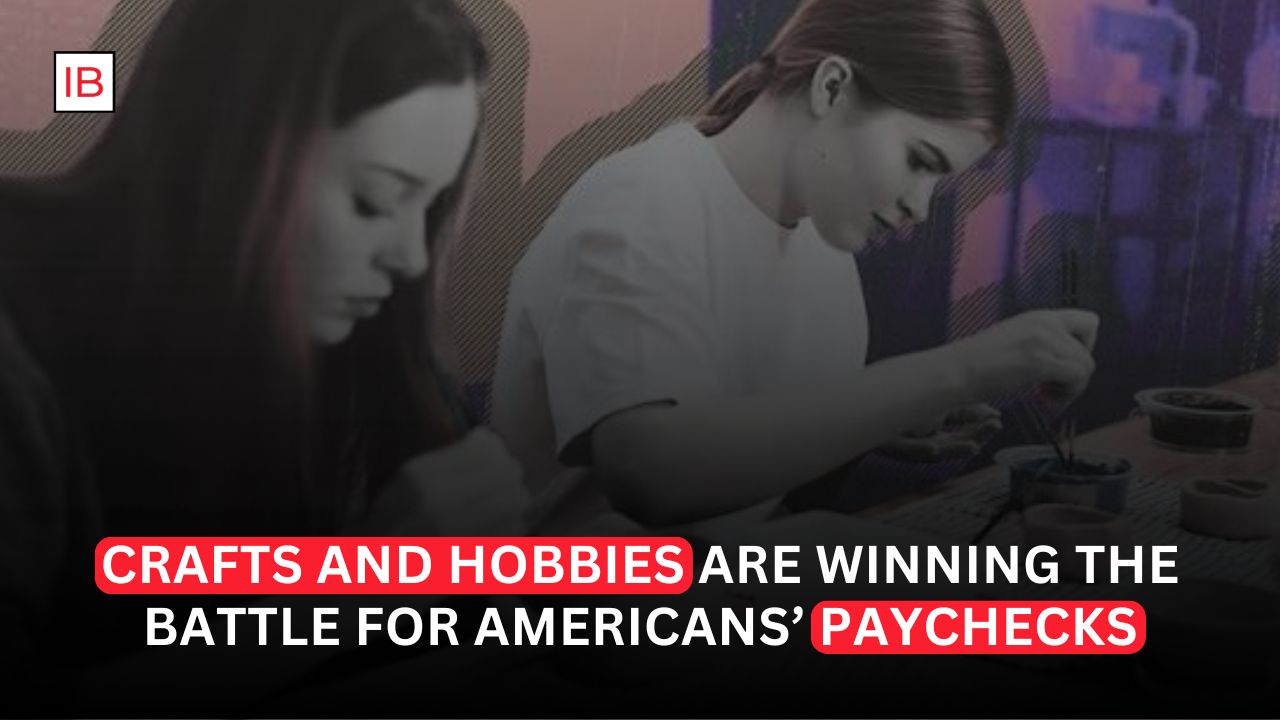
A shift toward hands-on, screen-free hobbies is creating an unexpected consumer trend: Americans are spending more money on crafts, collectibles and other activities that give them something to do away from their phones.
That is creating opportunities for retailers such as Amazon and Michaels, which can sell everything from yarn and beads to model kits, paints and DIY supplies.
The broader trend is being described as a move toward “analog” leisure — activities that replace passive screen time with something physical and creative. Recent consumer coverage points to growing interest in needlepoint, watercolor, puzzles and other hands-on activities.
This Isn’t Just About Crafts
The more interesting story is the reason people are buying them.
After years of smartphones, social media and streaming dominating leisure time, consumers are showing greater interest in activities that require concentration and produce a tangible result.
That includes:
- Knitting
- Crochet
- Needlepoint
- Painting
- Scrapbooking
- Jewelry making
- Model building
- Puzzles
- Journaling
- DIY home projects
- Collecting
The common thread is simple:
Less scrolling, more doing.
Why Amazon Benefits
Amazon has an obvious structural advantage.
Crafting is fragmented across thousands of niche products, colors, sizes and specialized tools.
A physical retailer cannot stock every possible combination.
Amazon can.
Michaels has historically described the arts-and-crafts market as spanning numerous categories, from floral and paper crafts to art supplies, jewelry, needle crafts and seasonal products.
That fragmentation makes online retail particularly attractive.
Someone looking for a very specific type of thread, miniature accessory or specialty tool may not want to drive to several stores.
They can simply search online.
Michaels Has a Different Advantage
Michaels has something Amazon cannot fully replicate:
Discovery.
Walking through a craft store can expose customers to hobbies they weren’t originally planning to try.
That matters because craft spending is often impulse-driven.
A customer may enter looking for paint and leave with:
- A canvas
- Brushes
- Beads
- A beginner kit
- Storage containers
- Decorative materials
The physical store can therefore function as both retailer and hobby incubator.
But Michaels Has a Serious Weakness
The assumption that a craft revival automatically means Michaels wins is too optimistic.
Consumer complaints suggest that some shoppers increasingly find Michaels expensive, poorly stocked or less useful for specialized supplies. Recent Reddit discussions include complaints about shrinking selections, more décor and fewer traditional craft materials.
That’s important.
If consumers are rediscovering hobbies but then buying their supplies on Amazon because Michaels doesn’t have the right product, the trend benefits Amazon more than Michaels.
So the real competition isn’t:
Crafting vs. technology.
It’s:
Who captures the spending created by the crafting revival?
The “Analog” Trend Could Be More Durable Than a TikTok Trend
There is a risk of treating this as another social-media fad.
But the underlying motivation is broader.
People are increasingly talking about screen fatigue and deliberately looking for activities that don’t involve another digital interface. Recent reporting describes “analog” hobbies as a response to excessive screen time, with crafting becoming one way to unwind and focus.
That gives the trend a stronger foundation than a single viral product.
The irony is that social media may actually be helping create the demand.
TikTok, Instagram and YouTube can introduce someone to:
needlepoint → beginner kit → supplies → more advanced projects → recurring purchases.
Digital media becomes the discovery mechanism for offline consumption.
Hobby Spending Has an Attractive Economics
Crafting also has an unusual consumer characteristic:
The initial purchase can create future purchases.
Someone who buys a sewing machine may subsequently need:
- Fabric
- Thread
- Needles
- Patterns
- Storage
- Accessories
Someone who starts painting may later buy:
- Brushes
- Paint
- Canvases
- Easels
- Mediums
The hobby therefore creates a recurring ecosystem of purchases.
That is more valuable to retailers than a one-time discretionary purchase.
It Could Also Reflect a Shift in Leisure Spending
There is another interpretation worth considering.
Consumers aren’t necessarily spending more overall.
They may simply be reallocating discretionary spending.
Instead of:
Restaurant + travel + entertainment
some consumers are choosing:
Home + hobbies + DIY + collectibles.
If that is what is happening, craft retailers could benefit even while other discretionary categories weaken.
That would make the trend particularly interesting in a slower consumer economy.
The Amazon-Michaels Divide
The two companies are positioned differently.
| Amazon | Michaels | |
|---|---|---|
| Product selection | Extremely broad | Curated |
| Convenience | Very high | Lower |
| Specialty items | Strong | Depends on store |
| Physical discovery | Weak | Strong |
| Immediate pickup | Limited by location | Strong |
| Price comparison | Easy | More difficult |
| Hobby inspiration | Digital | In-store |
| Long-tail products | Major advantage | Major weakness |
Amazon wins on selection and convenience.
Michaels wins on physical discovery and immediacy.
The company that combines both advantages has the strongest position.
Why the Trend Matters for Retail
Crafting is part of a larger consumer shift toward experiences that feel more tangible.
The same pattern appears in:
- Board games
- Vinyl records
- Physical books
- Puzzles
- Gardening
- Cooking
- DIY projects
- Collectibles
These categories share one characteristic:
They turn passive consumption into active participation.
That may be particularly attractive as consumers become more conscious of how much time they spend online.
The Bigger Risk
The biggest risk for retailers is that consumers discover hobbies online but buy supplies from whichever marketplace offers the lowest price.
That puts pressure on traditional specialty retailers.
Recent consumer discussions around Michaels show exactly this problem: shoppers report finding comparable craft products cheaper or more conveniently online.
So a craft revival does not automatically mean a revival of craft stores.
It could instead accelerate online craft commerce.
What Investors Should Watch
Michaels’ Sales Growth
The key question is whether increased hobby participation actually translates into higher spending at Michaels.
Amazon’s Marketplace
Specialty craft products are another example of Amazon’s ability to monetize fragmented demand.
Search Trends
Growth in searches for specific hobbies can reveal whether the trend is broadening beyond social-media hype.
Consumer Discretionary Spending
If households are under pressure, hobby spending may compete directly with other discretionary purchases.
Specialty Product Availability
For Michaels, inventory depth could determine whether customers stay with the retailer or migrate online.
Private-Label Products
Exclusive products can give Michaels better margins and reduce direct price comparison with Amazon.
The Bigger Picture
The interesting part of the story isn’t simply that Americans are buying more yarn, paint or craft kits.
It’s that people may be changing how they want to spend their free time.
The growth of screen-free hobbies suggests consumers are looking for activities that provide concentration, creativity and a tangible result.
That creates a potentially valuable retail opportunity.
But Michaels shouldn’t assume it automatically owns the trend.
Amazon has the stronger infrastructure for capturing fragmented, specialized demand, while Michaels has the stronger physical environment for discovering new hobbies.
If the hobby boom persists, the real winner may be whichever retailer best converts “I want to try this” into “I need to buy supplies for this every month.”