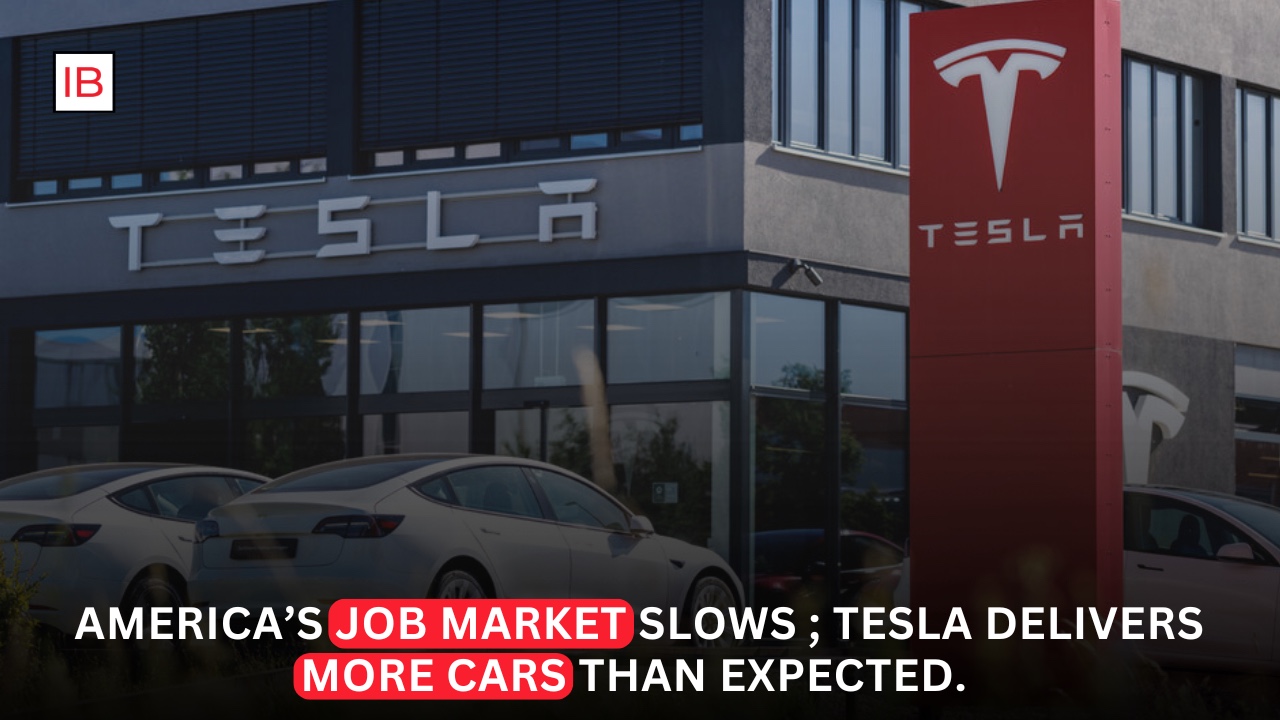
Mixed Economic Signals Highlight Shifting Trends in Employment and the Global EV Market
The latest developments in the United States present a mixed picture for the economy, with job growth slowing sharply in June while electric vehicle maker Tesla reported stronger-than-expected quarterly deliveries.
The slowdown in hiring suggests the labor market may be cooling after several months of robust employment gains, potentially easing pressure on the U.S. Federal Reserve to raise interest rates. At the same time, Tesla exceeded market expectations by delivering significantly more vehicles than a year earlier, reflecting continued global demand for electric cars despite growing competition.
Together, the two developments highlight the evolving economic landscape as policymakers, investors, and businesses assess the outlook for growth, inflation, and consumer spending.
U.S. Hiring Slows Significantly
After three consecutive months of strong job creation, the U.S. economy added just 57,000 jobs in June, falling well below economists’ expectations.
One of the largest slowdowns occurred in the leisure and hospitality sector, where hiring weakened after a surge linked to staffing needs during the FIFA World Cup. The moderation suggests that temporary employment associated with the global sporting event has largely come to an end.
Despite weaker hiring, the labor market continues to show resilience, although at a slower pace than earlier in the year.
Unemployment Rate Improves Slightly
Even with slower job creation, the national unemployment rate edged lower.
The unemployment rate declined to 4.2% in June, down from 4.3% in May, indicating that the labor market remains relatively stable despite softer hiring activity.
The combination of slower payroll growth and steady unemployment suggests that the U.S. economy may be transitioning toward a more balanced labor market after an extended period of strong employment expansion.
Federal Reserve May Delay Further Rate Hikes
The latest employment figures could influence future monetary policy.
A cooling labor market may reduce concerns that wage growth will continue fueling inflation, making it less likely that the Federal Reserve will raise interest rates again this year.
Investors closely monitor employment data because it plays a key role in shaping the central bank’s decisions on borrowing costs, inflation management, and overall economic policy.
Tesla Delivers More Vehicles Than Expected
While economic data disappointed investors, Tesla delivered encouraging news for the electric vehicle industry.
The company reported 25% higher vehicle deliveries during the second quarter compared with the same period last year, significantly outperforming market expectations.
The results suggest that global demand for electric vehicles remains healthy despite increasing competition and ongoing economic uncertainty in several major markets.
Europe Drives Tesla’s Growth
Europe emerged as Tesla’s strongest-performing market during the quarter.
Vehicle sales across Europe increased by 57% year over year, supported by higher fuel prices that encouraged more consumers to switch to electric vehicles.
The region continues to play an increasingly important role in Tesla’s global expansion strategy as governments promote cleaner transportation through emissions regulations and EV incentives.
Investors React Cautiously
Despite reporting stronger deliveries, Tesla’s stock moved lower.
The company’s share price fell nearly 7.5% following the announcement, even though the stock had gained almost 17% during the previous week.
Analysts suggested that investors may have already priced in much of the positive news before the earnings update, leading to profit-taking after the results were released.
Mixed Signals Reflect a Changing Economy
The contrasting developments illustrate the complexity of today’s economic environment.
Slower employment growth may ease inflationary pressures and support financial market stability, while continued strength in electric vehicle demand demonstrates that consumers remain willing to invest in new technologies despite broader economic uncertainty.
Both developments are likely to remain closely watched by policymakers, businesses, and investors as they evaluate the direction of the global economy during the second half of the year.
Looking Ahead
June’s economic data highlights a changing landscape for both the U.S. economy and global industries.
A moderation in hiring could reduce the likelihood of further interest rate increases while signaling a gradual normalization of the labor market. Meanwhile, Tesla’s stronger-than-expected vehicle deliveries reinforce the continued momentum behind electric vehicle adoption, particularly in Europe.
As inflation, consumer demand, and global investment trends continue to evolve, upcoming employment reports, central bank decisions, and corporate earnings will provide important insights into the strength of the global economy in the months ahead.