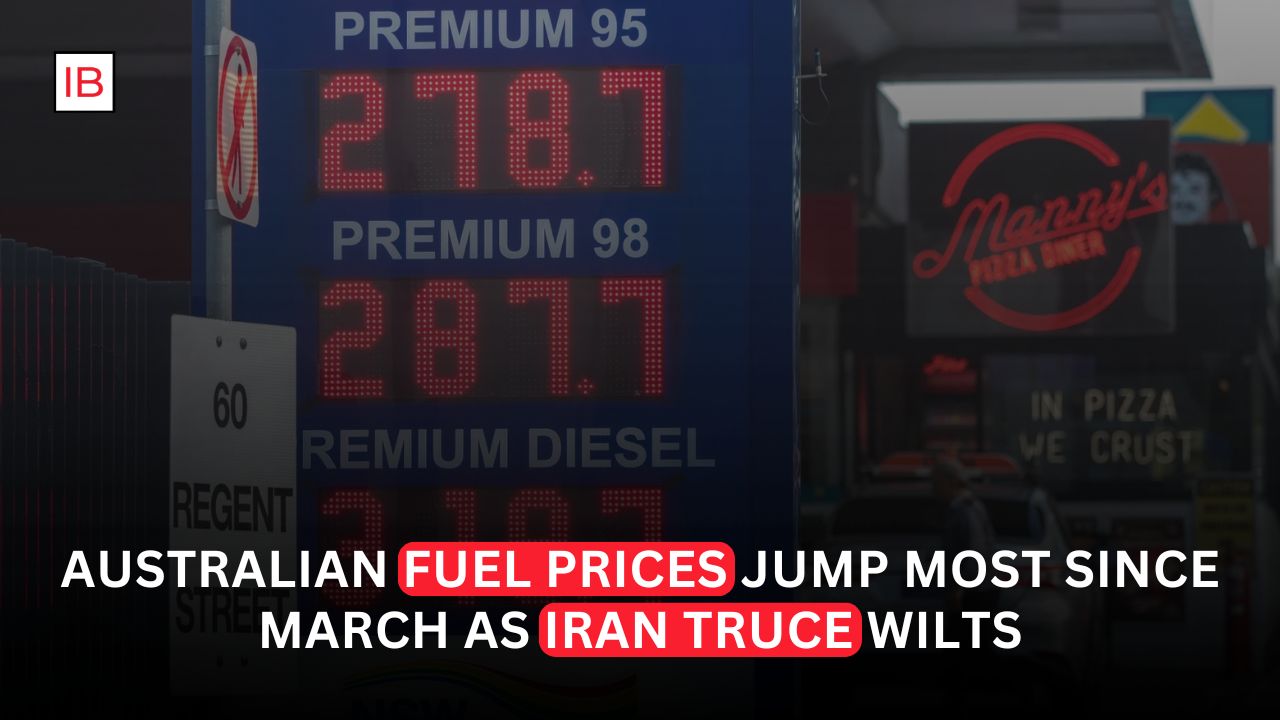
Australian motorists are once again feeling the pinch at the bowser, with petrol prices posting their sharpest weekly increase since March as the fragile truce between the United States and Iran continues to unravel, reigniting fears over disrupted oil flows through the Strait of Hormuz.
Renewed Fighting Sends Crude Prices Higher
The latest spike follows the breakdown of a memorandum of understanding reached in June that had briefly calmed the year-long conflict. As Washington and Tehran resumed trading threats and strikes over control of the Strait of Hormuz, Brent crude prices jumped sharply in response, reflecting the market’s renewed anxiety over supply from a chokepoint that handles roughly a fifth of the world’s oil shipments.
Because Australia imports the vast majority of the liquid fuel it consumes, there is little domestic buffer to absorb these shocks. International crude price swings translate almost directly into what drivers pay at the pump, making the country especially vulnerable whenever tensions flare in the Gulf. The latest weekly jump marks the most significant single-week increase since the height of hostilities earlier in the year, when talks between the two countries first fell apart without producing a lasting ceasefire.
A Familiar Pattern of Volatility
This is not the first time this year that Australians have faced a fuel price shock tied to the conflict. When the war initially erupted in late February, petrol prices across the country surged as panic buying broke out in several cities, with queues reportedly stretching more than a kilometre at some stations. Economists at the time warned that prices could spike well above $100 a barrel for benchmark crude if the strait remained blocked, and pump prices in Australia were projected to rise by as much as 40 cents a litre.
In response to that earlier surge, the federal government moved to blunt the impact on households, halving the fuel excise for three months from late March — relief that was later scaled back and is due to expire in early August. That means drivers could soon face a double hit of rising global crude prices and the removal of the excise discount just as the geopolitical situation worsens again.
Broader Economic Ripple Effects
The renewed price pressure carries implications well beyond the petrol pump. Australia’s central bank has been carefully balancing the need to contain inflation without unnecessarily slowing economic growth, and a sustained rise in fuel costs complicates that task significantly, since energy prices feed directly into headline inflation figures and, in turn, into expectations for interest rates.
The knock-on effects extend to air travel as well, with jet fuel costs tracking crude oil prices closely. Analysts have warned that a sustained conflict could push airfares up by 10 to 20 percent, with the impact likely to be even more pronounced on long-haul international routes given their higher fuel consumption.
Liquefied natural gas prices have also been affected, rising in tandem with oil as traders anticipate tighter global supplies. While Australia’s mandatory gas code offers some protection to domestic consumers on the east coast through price caps and transparency requirements, officials have acknowledged the safeguard is not a complete shield against a dramatic and sustained surge in international prices.
What Happens Next
With the U.S.-Iran truce now effectively in tatters and both sides continuing to exchange strikes and threats over the strait, analysts say further price rises at the pump are likely if the conflict drags on. Much will depend on whether renewed diplomatic efforts can de-escalate the standoff, or whether the fighting intensifies further in the weeks ahead — a scenario that would leave Australian households facing yet another round of pain at the petrol station just as existing government relief measures wind down.