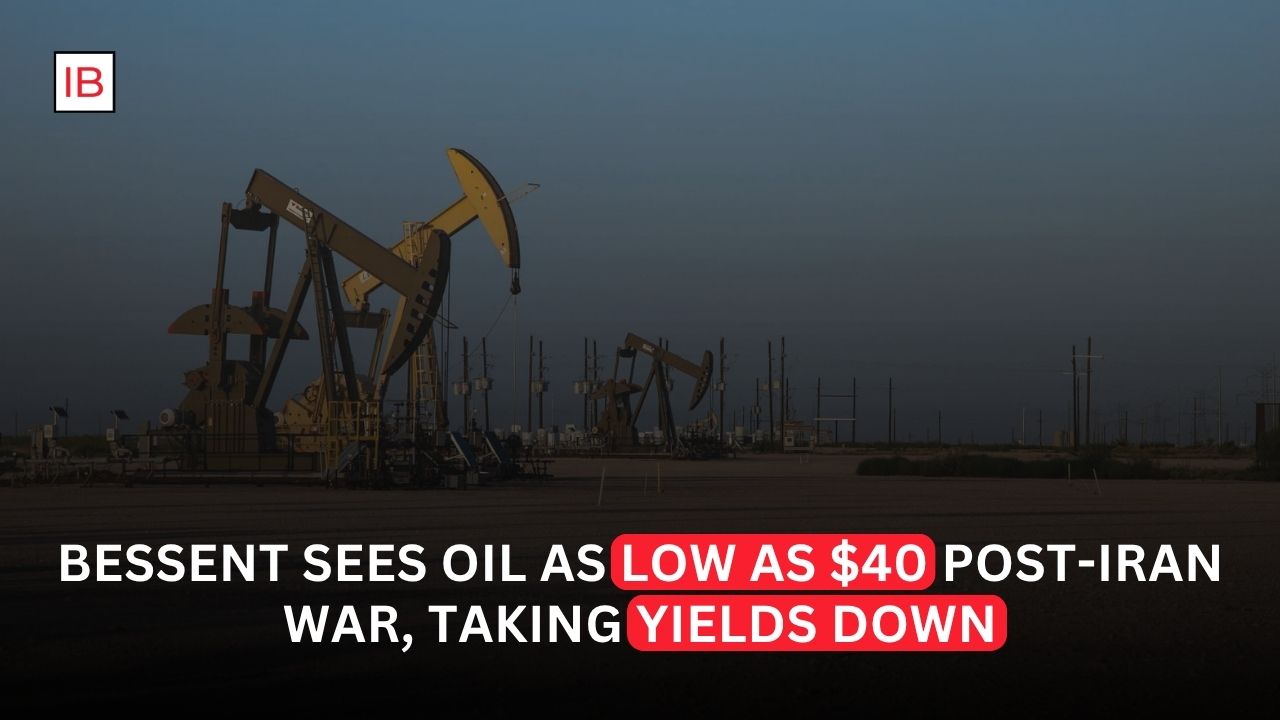
US Treasury Secretary Expects Major Supply Glut Once Conflict Ends. US Treasury Secretary Scott Bessent said oil prices could fall sharply once the conflict with Iran comes to an end, predicting that a surge in global supply could push crude prices as low as $40 a barrel.
Bessent argued that the current high prices are being driven largely by geopolitical tensions and supply concerns linked to the Iran conflict. Once those pressures ease, he expects the oil market to move into a period of significant oversupply.
Bessent Predicts Major Oil Price Drop
Bessent said he expects crude prices to decline substantially after the Iran conflict is resolved, with new supplies entering the market and reducing the geopolitical risk premium currently built into oil prices.
He suggested that the market could see a potential $40 to $50 pullback as additional supply becomes available in the medium term. Such a decline would represent a dramatic reversal from the elevated prices seen during the latest escalation in the Middle East.
Oil prices have remained highly sensitive to developments in the conflict, with concerns over the Strait of Hormuz and the possibility of wider disruptions continuing to support crude prices.
Lower Oil Could Ease Inflation Pressure
A sharp decline in oil prices could have significant consequences for the wider US economy.
Lower fuel and energy costs would reduce inflationary pressure on households and businesses, potentially easing one of the major concerns currently facing financial markets and policymakers.
Bessent’s outlook is based on the expectation that the end of the Iran conflict would remove a major source of uncertainty from global energy markets and allow additional supply to reach consumers more freely.
Bond Yields Could Fall as Inflation Concerns Ease
Bessent also sees lower oil prices as a potential solution to the pressure facing US government bond markets.
Higher energy costs have contributed to concerns about inflation, pushing investors to demand higher yields on long-term government bonds. If oil prices fall sharply, inflation expectations could decline, potentially reducing pressure on Treasury yields.
The connection between energy prices and bond yields has become increasingly important as investors worry that persistent inflation could force interest rates to remain higher for longer.
Treasury Markets Remain Under Pressure
US bond markets have faced significant volatility in recent months, with concerns over inflation, government borrowing and rising debt weighing on long-term Treasuries.
Recent data showed the 10-year Treasury yield rising to around 4.77%, while expectations surrounding future Federal Reserve policy also shifted following stronger-than-expected US employment figures.
A major decline in oil prices could therefore provide the Treasury market with relief by reducing one of the biggest inflation risks currently worrying investors.
Iran Conflict Remains the Key Risk
Bessent’s forecast depends heavily on the conflict with Iran eventually ending and oil supply conditions returning to normal.
For now, the war continues to create uncertainty around Middle Eastern energy exports and shipping routes. Oil prices remain elevated because traders continue to factor in the possibility of future supply disruptions, even where physical exports have not been completely halted.
That means Bessent’s prediction of much lower prices remains dependent on a significant easing of geopolitical tensions.
Lower Oil Prices Could Change Market Outlook
If Bessent’s forecast proves correct, a fall toward $40 a barrel could reshape expectations across global financial markets.
Cheaper energy would reduce fuel costs, ease inflation and potentially give central banks more room to avoid further monetary tightening. It could also support government bond markets by reducing the inflation premium investors demand on long-term debt.
For now, however, oil remains heavily influenced by the Iran conflict. Bessent’s prediction represents a bet that once the geopolitical crisis passes, the world could move from fears of an energy shortage to concerns about too much oil supply.