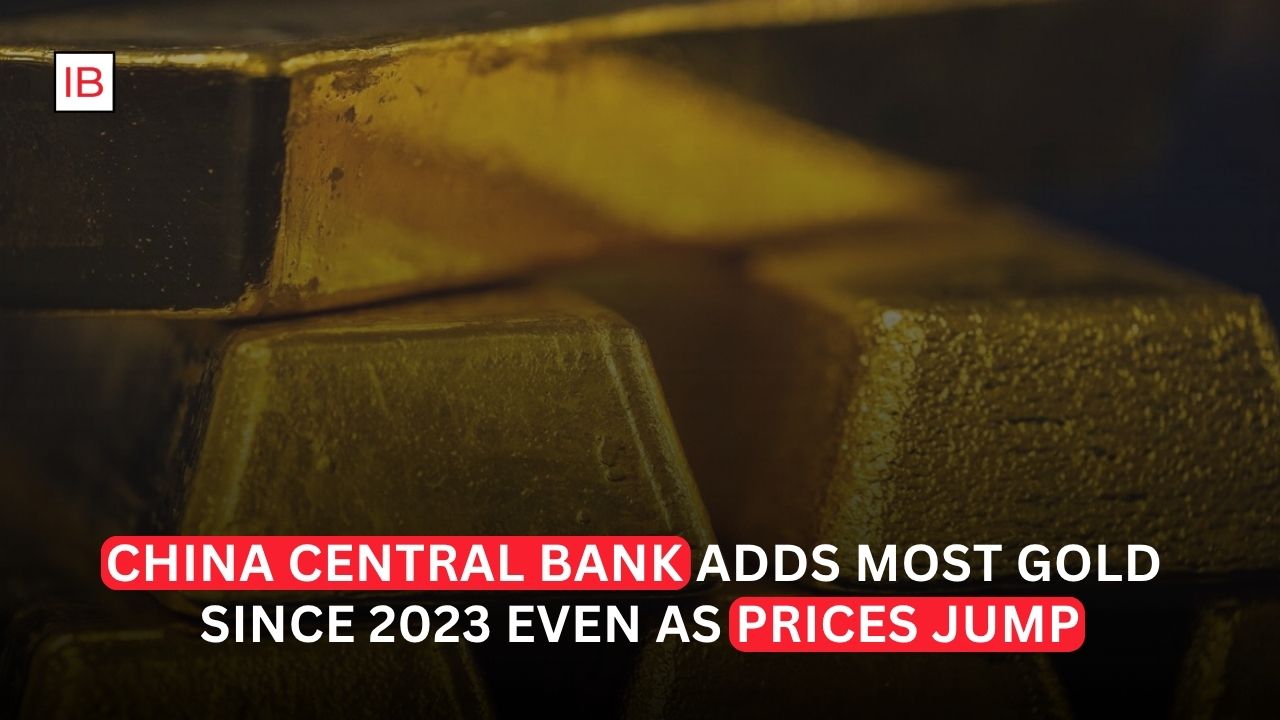
China’s central bank accelerated its gold purchases in August, adding the most bullion to its reserves since 2023 even as gold prices surged sharply, underscoring Beijing’s continued effort to diversify its reserve assets and reduce exposure to traditional currencies and financial risks.
The People’s Bank of China added about 650,000 troy ounces of gold to its reserves in August, equivalent to roughly 20.2 metric tons, according to data released Monday. The purchase extended the central bank’s gold-buying streak to 22 consecutive months and represented its largest monthly increase since late 2023.
The acceleration is notable because gold became significantly more expensive during the month. Bullion prices rose almost 10% in August as investors increased demand for assets viewed as protection against inflation, currency weakness and geopolitical uncertainty. The combination of higher prices and continued central-bank purchases suggests Beijing remains willing to accumulate gold even when valuations are elevated.
China’s gold reserves have been rising steadily as policymakers seek greater diversification of the country’s enormous foreign-exchange holdings. The PBOC’s purchases have become an important source of structural demand in the global bullion market, alongside buying by other central banks.
The latest increase follows a particularly strong purchasing period earlier in the summer. The PBOC bought about 20 tons in July, the largest monthly addition since October 2023 at that time, bringing its official holdings to around 2,377.5 tons. The August purchase pushed the total close to 2,400 tons.
The buying comes against a backdrop of changing attitudes toward reserve management. Central banks around the world have increased their allocations to gold in recent years, reflecting concerns about geopolitical tensions, inflation, sanctions risk and the concentration of global reserves in assets linked to major currencies.
For China, the strategy also has a currency dimension. The country holds the world’s largest foreign-exchange reserves, which stood at about $3.438 trillion at the end of August. That figure increased from $3.419 trillion in July, helped partly by currency movements as the US dollar weakened during the month.
Gold offers China an asset that is not directly tied to the creditworthiness or monetary policy of another government. While bullion produces no interest income, it can provide diversification when currencies and government bonds face political or inflationary risks.
The timing of the August purchase is particularly significant because gold had already experienced a powerful rally. The metal rose roughly 10% during August as investors returned to what has become known as the “debasement trade,” driven by concerns over government debt, inflation and potential weakness in the US dollar. The US Treasury’s plans to increase government-debt buybacks added to those concerns, helping strengthen demand for alternative stores of value.
However, gold’s rally has also created challenges for buyers. Higher prices make additional accumulation more expensive, while elevated global bond yields increase the opportunity cost of holding a non-yielding asset. Those factors could make the pace of future central-bank purchases less predictable.
Gold prices also came under pressure Monday after stronger-than-expected US employment data increased expectations that the Federal Reserve could raise interest rates at its September meeting. Spot gold fell about 0.8% to around $4,393 an ounce, while December US gold futures also declined roughly 0.8%.
That short-term weakness does not necessarily undermine the longer-term case for central-bank accumulation. Gold’s appeal to reserve managers is based less on short-term price movements than on its role as a strategic asset. The PBOC’s uninterrupted buying streak indicates that Beijing’s reserve diversification strategy has continued despite substantial fluctuations in bullion prices.
China is also working to strengthen its position in the international gold market. Hong Kong has introduced new infrastructure designed to increase physical gold trading and clearing, while authorities are seeking to make the financial center a larger regional hub for bullion. The PBOC has also been moving more of its gold reserves toward Hong Kong, according to Reuters reporting, reinforcing Beijing’s broader effort to expand the region’s role in global gold markets.
The increased official-sector demand is important for the wider bullion market because central banks tend to operate with longer investment horizons than private investors. Sustained purchases can therefore provide an underlying source of demand even when speculative investors reduce positions during periods of higher interest rates.
For China, accumulating gold also provides a hedge against several risks at once: currency volatility, geopolitical tensions, inflation and potential disruption to access to foreign financial assets. Beijing does not need to abandon the dollar or other reserve currencies for gold to play a larger role. Even a gradual increase in the share of bullion can materially change the composition of the country’s reserves over time.
The August purchase therefore sends a clear signal that China’s gold strategy remains intact. With bullion prices elevated and global financial uncertainty still high, the PBOC’s willingness to keep buying suggests that Beijing views gold not simply as a commodity, but as a long-term component of its reserve-management strategy.