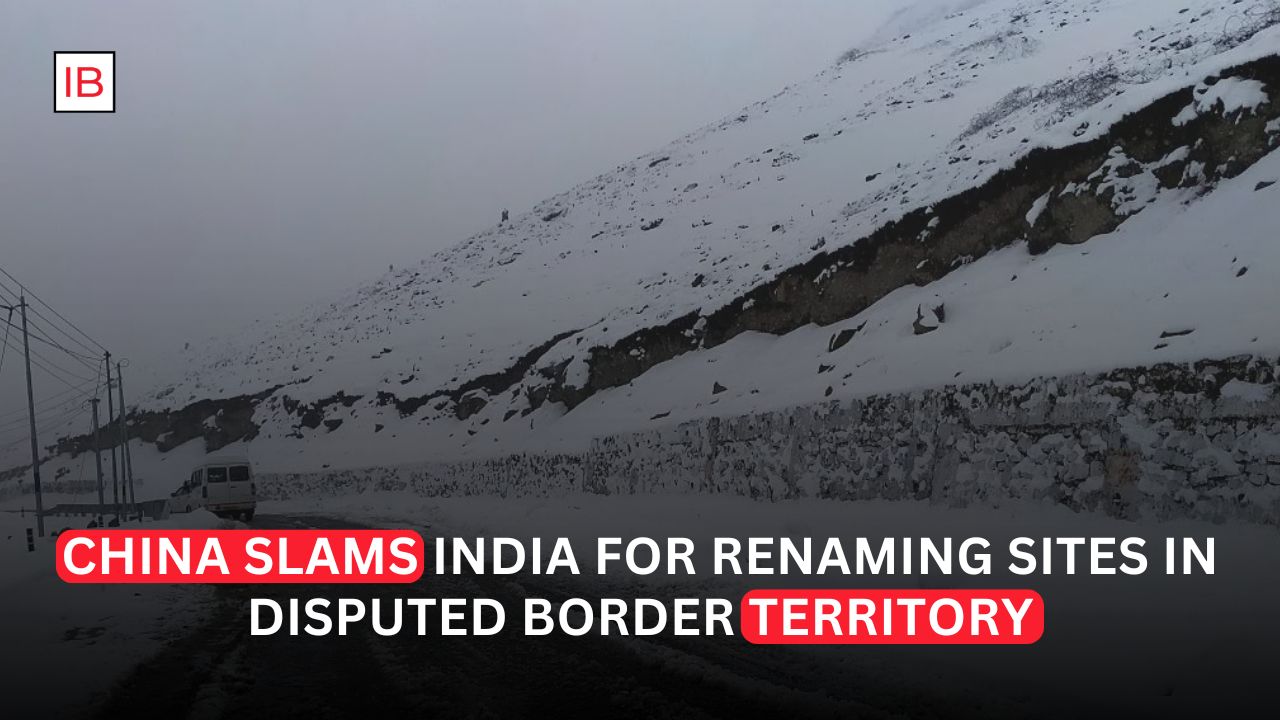
New Naming Dispute Highlights Continuing Tensions Along the India-China Border
China has criticized India over its decision to assign names to locations in a disputed border region, adding another point of tension between the two Asian powers as they continue efforts to manage their longstanding territorial dispute.
The disagreement centers on India’s naming of geographic locations in an area claimed by both countries. Beijing has rejected the move, arguing that India does not have the authority to unilaterally rename places in territory whose sovereignty remains contested.
The latest dispute demonstrates how even symbolic decisions can quickly become sensitive diplomatic issues between India and China.
Territorial Dispute Remains Unresolved
India and China share a long and heavily militarized border, but the two countries disagree over the precise location of their frontier in several areas.
The dispute has continued for decades and covers territory in the Himalayas.
Both governments maintain competing claims, while military forces from the two countries have remained deployed in sensitive border areas.
Because of the strategic importance of the region, territorial disagreements can have consequences far beyond the locations directly involved.
Beijing Rejects India’s Naming Move
Chinese officials have criticized India’s decision to give names to sites in the disputed region.
Beijing’s position is that unilateral naming cannot change the legal or political status of contested territory.
China has previously objected to similar actions by India, arguing that geographical names should not be used to reinforce territorial claims.
For India, however, naming locations can serve as an assertion of administrative authority and national sovereignty.
Symbolic Actions Carry Political Weight
Place names may appear to be a minor issue, but they can carry significant political meaning.
Governments often use official geographic names to reinforce their claims over disputed territory.
Changing or standardizing names can therefore become part of a broader effort to establish administrative and historical narratives.
That is why disputes over place names can generate strong reactions even when no physical changes occur on the ground.
India and China Seek to Manage Tensions
Relations between India and China have been particularly sensitive since a deadly border confrontation several years ago increased military tensions.
Since then, both countries have worked to reduce the risk of further clashes through diplomatic and military discussions.
The two sides have periodically taken steps to ease tensions and improve communication.
However, the broader territorial dispute remains unresolved.
Strategic Importance of the Himalayas
The disputed border region has major strategic importance.
The Himalayas form a natural barrier between South Asia and China, while high-altitude territory provides important military advantages.
Infrastructure development has therefore become an important part of the competition.
Both India and China have invested in:
- Roads.
- Bridges.
- Military facilities.
- Airfields.
- Communications infrastructure.
Improved connectivity allows each side to move personnel and equipment more quickly.
Broader India-China Competition
The naming dispute comes against the backdrop of a much broader strategic competition.
India and China are major economic powers with competing regional interests.
Their relationship includes both cooperation and rivalry across areas such as:
- Trade.
- Technology.
- Manufacturing.
- Infrastructure.
- Regional security.
- Diplomacy.
The two countries also compete for influence across Asia and the wider Indo-Pacific region.
Economic Relations Remain Important
Despite political tensions, India and China remain economically connected.
Trade between the two countries involves a wide range of products, including electronics, machinery, chemicals and industrial components.
India has increasingly sought to reduce dependence on Chinese imports in strategic industries, while Chinese companies continue to play an important role in global supply chains.
This creates a complicated relationship in which economic ties coexist with geopolitical competition.
Risk of Further Diplomatic Friction
The latest disagreement is unlikely by itself to trigger a major confrontation, but repeated disputes can make diplomatic relations more difficult.
Symbolic issues can become politically important when domestic audiences expect governments to take firm positions on sovereignty and territorial claims.
That can limit the room available for compromise.
Looking Ahead
China’s criticism of India’s decision to name sites in a disputed border region highlights the continuing sensitivity surrounding the two countries’ territorial claims.
Although both governments have an interest in avoiding another serious military confrontation, disputes over sovereignty remain deeply rooted.
The latest disagreement is therefore another reminder that India-China relations remain fragile.
For investors and policymakers, the issue also matters because worsening relations between the two countries could affect trade, supply chains, regional security and economic cooperation.
While the naming dispute is primarily symbolic, it reflects a much larger strategic competition that is likely to remain an important feature of Asian geopolitics for years to come.