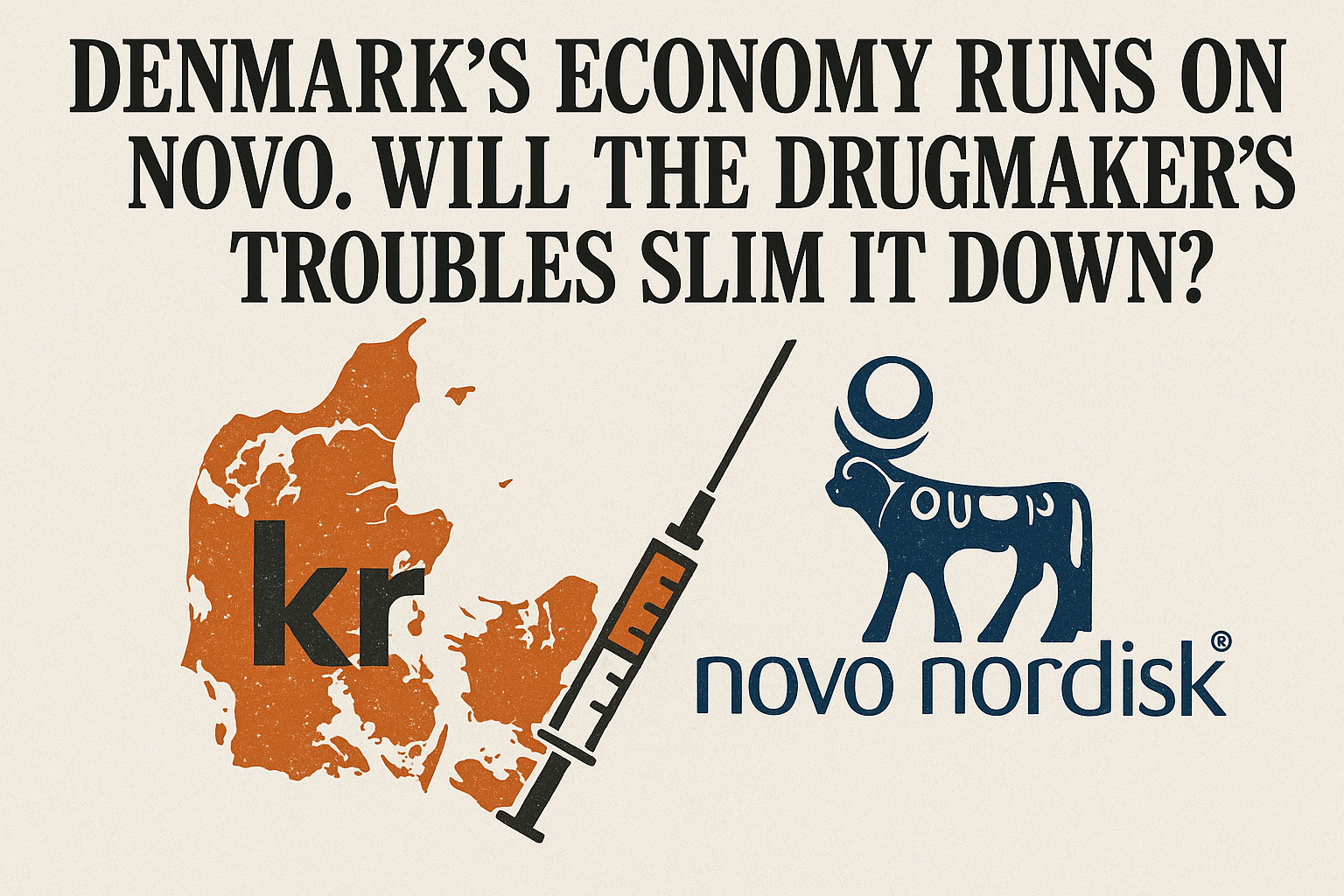
# Denmark’s Economy Runs on Novo. Will the Drugmaker’s Troubles Slim It Down?
Denmark is a country known for its high quality of life, progressive social systems, and robust economy. A significant portion of this thriving economic landscape can be attributed to Novo Nordisk, the world’s largest producer of insulin and a powerhouse in the pharmaceuticals industry. With contributions that extend beyond sheer economic metrics, Novo Nordisk has become a national symbol of medical innovation and public health initiatives. However, in recent months, the company has faced a series of challenges that raise questions about its future and, by extension, the economic stability of Denmark itself.
## Novo Nordisk: A Pillar of the Danish Economy
Since its establishment in 1923, Novo Nordisk has been at the forefront of diabetes care and treatment. Currently, it commands substantial market shares in not only diabetes medications but also treatments for other chronic conditions like obesity and hemophilia. The company is a significant contributor to Denmark’s GDP, with estimates suggesting that Novo Nordisk contributes nearly 10% of the nation’s total exports.
Employment is another critical factor. The company employs over 40,000 people globally, with a significant portion located in Denmark. Its research and development endeavors also foster robust educational and scientific communities in the country. Thus, the health of Novo Nordisk is intimately tied to the economic health of Denmark.
However, as the drugmaker faces various challenges, from regulatory hurdles to market competition and shifting healthcare policies, questions are being raised about potential impacts on the Danish economy.
## Current Troubles Facing Novo Nordisk
The landscape of pharmaceuticals is rapidly changing, and Novo Nordisk is not exempt from these pressures. Here are several key challenges:
### 1. **Regulatory Pressures**
Pharmaceutical companies are constantly navigating an intricate web of regulations globally. Changes in pricing regulations, especially in Europe and the U.S., could substantially affect the profitability of Novo Nordisk. The increasing pressure from governments to offer affordable solutions has led to steep negotiations and, in some cases, price cuts that directly impact revenue.
### 2. **Market Competition**
Novo Nordisk faces fierce competition from other major pharmaceutical players, particularly those investing in diabetes and obesity treatments. Such competition has escalated in recent years, affecting Novo’s dominant market position. Generic drugs and biosimilars have made their way to the market as well, driving down prices for consumers but also squeezing profit margins for drug manufacturers.
### 3. **Supply Chain Challenges**
The COVID-19 pandemic exposed vulnerabilities in global supply chains, and the pharmaceutical industry was not immune. Disruptions in raw material supply, manufacturing transitions, and distribution challenges continue to pose significant hurdles for Novo Nordisk. These broader supply chain issues, exacerbated by geopolitical tensions and trade disputes, can affect production timelines and delivery capabilities.
### 4. **Shifting Healthcare Policies**
The global focus on healthcare has intensified, leading to shifts in policies that could impact the drug market. The rising emphasis on preventive care and cost reductions has led some governments to rethink how they subsidize and regulate essential medications. This shift could pose risks to sales forecasts and may ultimately influence Novo Nordisk’s investment in long-term projects.
## The Ripple Effect on Denmark’s Economy
So, how do these challenges affect Denmark as a whole?
### 1. **Employment Concerns**
As previously mentioned, Novo Nordisk is a major employer in Denmark. The turbulent nature of its operations could result in layoffs or hiring freezes, impacting thousands of families reliant on the company for their livelihoods. This ripple effect can lead to decreased consumption and overall economic contraction within local communities.
### 2. **Impact on Research and Development Investment**
Novo Nordisk’s commitment to R&D is one of its hallmark features. If profitability declines, the company may be forced to scale back on research initiatives, potentially hindering Denmark’s reputation as a leader in medical research and innovation. Danish universities and research institutions that partner with Novo Nordisk might also face funding challenges, directly impacting ongoing studies and projects.
### 3. **Export Revenue Declines**
Given that Novo Nordisk is a significant contributor to Denmark’s export revenues, any downturn in its performance would inevitably lead to decreased export earnings. This decline could further strain Denmark’s economy, which heavily relies on exports for growth.
### 4. **Investor Confidence**
The uncertainty surrounding Novo Nordisk could affect investor sentiment towards Denmark. A decline in a major national company can create hesitation among foreign investors, who might perceive increased risks in the Danish market as a result. Lower investment inflows can lead to weaker economic conditions overall.
## Future Outlook
Despite the challenges, it’s essential to recognize that Novo Nordisk has historically demonstrated resilience. The company has a strong pipeline of products in development and is well-positioned in therapeutic areas that are expected to grow long-term. Government support for the pharmaceutical sector, coupled with a culture of innovation in Denmark, offers a backdrop from which Novo can rebound.
Moreover, as healthcare systems worldwide increasingly invest in technologies and services that support chronic disease management, Novo Nordisk’s offerings