Policymaker Says Energy Shock Could Gradually Feed Into Prices as Central Bank Monitors Economic Risks
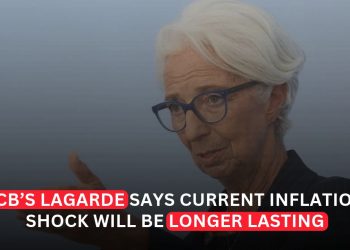
A senior European Central Bank (ECB) policymaker has cautioned that the full inflationary impact of the conflict in the Middle East may not be immediately visible, warning that higher energy prices often take time to spread through the broader economy. The comments come as the ECB closely monitors whether rising oil and gas costs triggered by the Iran conflict will create longer-lasting inflation pressures across the eurozone.
The ECB recently left interest rates unchanged after beginning a new tightening cycle earlier this year, but policymakers have emphasized that future decisions will depend heavily on incoming inflation data. While fuel prices have risen sharply following renewed geopolitical tensions, officials say it is still too early to determine whether those increases will translate into higher wages, broader consumer prices, or persistent inflation.
Energy Prices Drive New Inflation Risks
The renewed conflict in the Middle East has pushed global oil prices significantly higher, raising concerns about another energy-driven inflation shock similar to those experienced in recent years.
Higher energy costs typically affect the economy through:
- Increased transportation expenses.
- Higher manufacturing costs.
- More expensive electricity generation.
- Rising household utility bills.
- Greater business operating costs.
However, these effects often take several months to filter through supply chains before becoming fully reflected in consumer inflation figures.
ECB Watches for Second-Round Effects
For the ECB, the biggest concern is not only higher energy prices themselves but whether they trigger broader inflation through wage increases and higher prices across other sectors.
Officials are paying particular attention to:
- Wage negotiations.
- Consumer inflation expectations.
- Corporate pricing decisions.
- Business confidence.
- Labor market conditions.
So far, surveys indicate that businesses expect wage growth to continue slowing despite higher energy prices, suggesting there is currently little evidence of a wage-price spiral. Only a small proportion of employers expect workers to demand significantly higher pay because of recent inflation.
Interest Rates Remain Data Dependent
The ECB has stressed that monetary policy will remain flexible as economic conditions evolve.
Although inflation has moved above the central bank’s 2% target, policymakers believe recent increases have largely been driven by energy markets rather than broad-based domestic demand.
Future rate decisions will depend on:
- Inflation data.
- Energy market developments.
- Economic growth.
- Wage settlements.
- Financial market conditions.
Several ECB officials have acknowledged that further interest rate increases remain possible if inflation proves more persistent than currently expected.
Growth Outlook Also Under Pressure
Higher energy prices create a difficult balancing act for policymakers because they tend to increase inflation while simultaneously slowing economic growth.
Businesses across Europe continue facing:
- Higher production costs.
- Weak consumer demand.
- Slowing investment.
- Soft industrial activity.
Many companies report that passing higher costs on to consumers has become increasingly difficult because households remain sensitive to price increases.
Markets Expect Cautious ECB
Financial markets are closely monitoring ECB communications for clues about future policy moves.
While investors currently anticipate the possibility of additional rate hikes later this year, officials continue emphasizing that decisions will be made meeting by meeting rather than following a predetermined path.
Economists note that the current inflation shock appears more moderate than the severe energy crisis experienced in 2022, giving the ECB greater flexibility in determining its response.
Looking Ahead
The ECB’s warning that the inflationary consequences of the Iran conflict may take time to emerge highlights the uncertainty facing Europe’s economic outlook. Although higher oil and gas prices have already lifted headline inflation, policymakers are waiting to see whether these increases spread more broadly across wages and consumer prices before deciding on further monetary tightening.
For now, the central bank remains cautious, balancing the need to contain inflation against the risk of weakening an already fragile eurozone economy. As new economic data becomes available over the coming months, the ECB’s next policy decisions are likely to be shaped by whether the current energy shock proves temporary or develops into a more persistent source of inflation.