Stronger Consumer Spending Improves Outlook for the US Economy
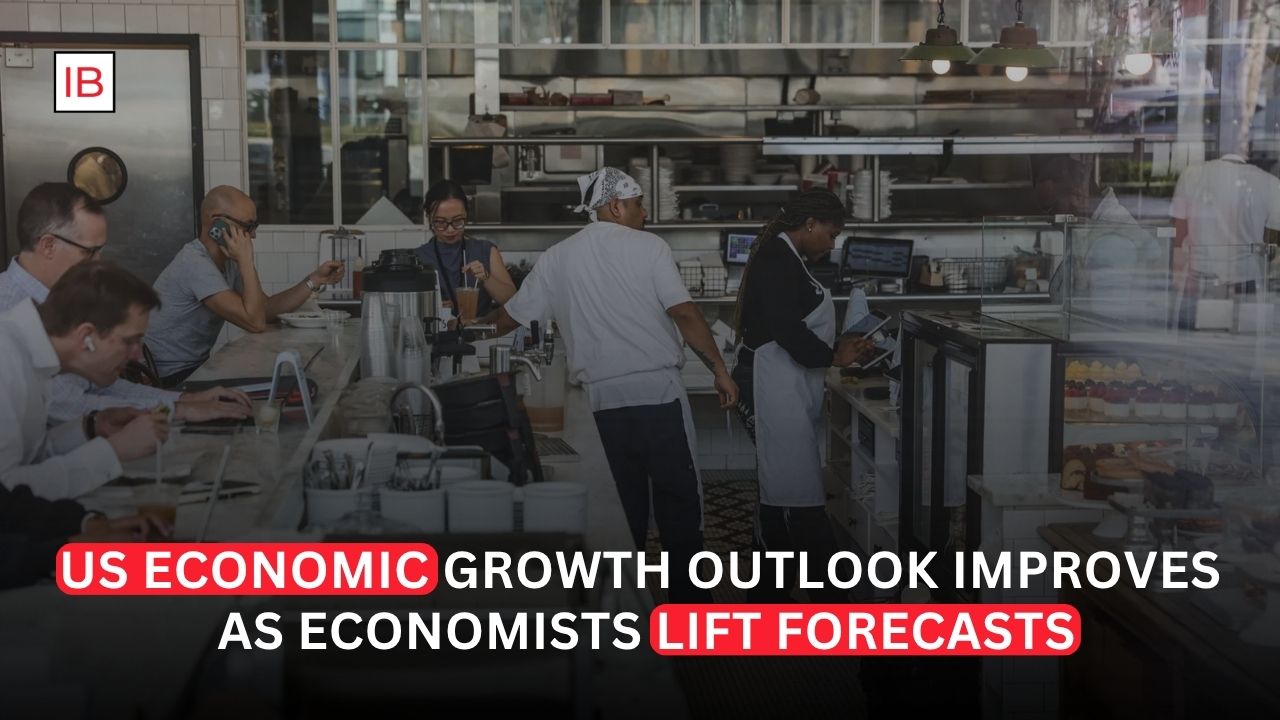
Economists have become more optimistic about US economic growth in the third quarter as recent data points to stronger consumer spending and continued resilience across key parts of the economy. The improved outlook suggests that growth may remain firmer than previously expected despite concerns about tariffs, inflation and the effect of higher interest rates.
Economists Raise Their Third-Quarter Forecasts
The stronger outlook reflects a reassessment of incoming economic data. While the US economy has shown signs of slowing in some areas, economists see enough resilience in underlying activity to raise their expectations for third-quarter growth.
The improvement is particularly important because recent economic reports have sent mixed signals. Retail sales fell 0.6% in July, the largest decline in more than a year, but economists noted that the weakness was partly linked to temporary factors, including the fading impact of tax refunds and a shift in the timing of Amazon’s Prime Day.
That means the headline decline may not fully represent the broader condition of consumer demand.
Consumer Spending Remains the Key Factor
Consumer spending is the largest component of the US economy, making household behavior critical to third-quarter growth.
Despite pressure from higher living costs and energy prices, Americans continue to spend in several important areas. Restaurant sales increased in July, while clothing, furniture and building-material sales also showed strength. Some economists believe the July retail decline was partly a correction after unusually strong spending in June.
The US consumer, however, is becoming increasingly divided.
Higher-income households have benefited from rising financial markets and stronger asset values, helping support spending. Lower- and middle-income households face greater pressure from:
- Higher food prices
- Rising gasoline costs
- Housing expenses
- Elevated borrowing costs
- Persistent inflation
This creates an uneven economic environment in which overall spending can remain resilient even while many households feel financially stressed.
A Mixed Picture Does Not Mean a Weak Economy
The latest economic data shows that the US economy is neither booming across every sector nor falling into a broad downturn.
Instead, the picture remains mixed.
July’s decline in retail sales raised concerns, but other indicators continue to suggest that economic activity has underlying support. The Conference Board’s Leading Economic Index rose 0.2% in July, and its six-month growth rate turned positive for the first time in four years. The organization said business investment, particularly spending connected to artificial intelligence, remains an important source of support.
This combination helps explain why economists have been willing to revise their growth forecasts higher despite signs of consumer caution.
Business Investment Provides Another Source of Growth
The AI investment boom is becoming increasingly important to the US economic outlook.
Technology companies and infrastructure investors are spending heavily on:
- Data centers
- AI processors
- Semiconductor equipment
- Cloud infrastructure
- Power systems
- Networking technology
- Advanced computing facilities
This investment is supporting economic activity beyond the technology sector itself.
Data centers require construction, electricity infrastructure, cooling equipment and specialized hardware. Semiconductor investment also supports manufacturing and supply chains.
The Conference Board has identified AI-related business investment as a major factor supporting continued US expansion, even as consumer expectations remain weaker.
Inflation Is Still Creating Pressure
The improved growth outlook does not mean that the Federal Reserve’s inflation concerns have disappeared.
Inflation eased slightly to 3.4% in July from 3.5% in June, but it remains above the level seen before the recent surge in energy prices. Higher gasoline costs have placed additional pressure on household budgets and could eventually reduce discretionary spending.
Inflation affects the economy in several ways.
Higher prices can reduce purchasing power, particularly for households that spend a large share of their income on necessities.
Businesses may also face higher costs for:
- Transportation
- Energy
- Materials
- Labor
- Financing
If these pressures continue, stronger third-quarter growth could eventually be followed by a slower period of consumer spending.
The Federal Reserve Faces a Difficult Balance
The stronger growth forecasts complicate the outlook for US monetary policy.
A resilient economy can reduce fears of an immediate recession, but stronger activity can also make policymakers cautious about changing interest rates too quickly.
At the same time, recent data has shown slower job growth, softer retail spending and easing inflation pressures.
Goldman Sachs economists recently said they do not expect the Federal Reserve to raise interest rates at its September meeting, citing subdued inflation and weaker economic indicators.
The Fed will therefore need to balance two competing risks.
If it keeps financial conditions too restrictive, it could place additional pressure on consumers and businesses.
If inflation remains elevated, however, policymakers may have limited room to loosen monetary policy.
The Labor Market Remains an Important Signal
Employment conditions will play a major role in determining whether stronger growth can continue.
The labor market has shown signs of cooling, but it has not collapsed.
Weekly unemployment claims remain relatively low by historical standards, suggesting that many workers still have a degree of job security. At the same time, weaker job growth and slower wage gains have increased concerns about future consumer spending.
This is important because a major deterioration in employment would likely have a direct effect on the economy.
Consumer spending depends heavily on income and job security.
If households begin worrying about layoffs or weaker wages, they may reduce spending on travel, restaurants, electronics and other discretionary purchases.
For now, however, the labor market appears to be slowing rather than experiencing a major breakdown.
Higher Bond Yields Remain a Risk
Another challenge is the rise in Treasury yields.
Higher government borrowing costs can affect the wider economy by increasing interest rates on mortgages, corporate borrowing and other forms of credit.
The 10-year Treasury yield has recently climbed, contributing to pressure on highly valued technology stocks and companies involved in capital-intensive AI infrastructure projects.
This could eventually become a problem for economic growth.
AI infrastructure requires enormous investment, and higher financing costs could make some projects more expensive.
Housing is also sensitive to borrowing costs.
With mortgage rates remaining elevated, the housing market has struggled, reducing activity in construction, home sales and related industries.
Consumer Confidence Remains Fragile
One of the biggest risks to the stronger growth outlook is consumer confidence.
Recent surveys have shown that Americans remain concerned about affordability.
Higher food, fuel and housing costs are putting particular pressure on lower-income households, while some consumers are increasingly limiting spending to essential purchases.
Major retailers have also reported signs of changing consumer behavior.
Customers are increasingly looking for discounts and prioritizing necessities, while larger discretionary purchases have become more difficult to sustain.
This suggests that the economy could remain resilient in the short term while still facing longer-term risks.
The Economy Is Being Supported by Several Different Forces
The stronger third-quarter forecasts reflect a combination of factors rather than a single economic boom.
Key sources of support include:
- Continued consumer spending
- Business investment
- AI infrastructure expansion
- A resilient labor market
- Strong financial markets
- Improving leading economic indicators
- Investment in technology and manufacturing
These forces are helping offset weakness in other areas, including housing and parts of the retail sector.
The result is an economy that appears more resilient than many economists previously expected.
Risks Could Still Change the Outlook
Despite the improved forecasts, significant risks remain.
Economists will continue watching:
- Consumer spending trends
- Inflation data
- Employment growth
- Energy prices
- Treasury yields
- Federal Reserve policy
- Business investment
- Housing activity
A sharp increase in energy prices could weaken household purchasing power.
A further deterioration in employment could reduce consumer spending.
Higher borrowing costs could also slow investment and housing activity.
The third-quarter forecast therefore represents improved confidence, not certainty.
AI Investment Could Become Increasingly Important
One of the most interesting developments in the US economy is the growing role of artificial intelligence investment.
The technology boom is generating demand for infrastructure across multiple industries.
Companies are spending billions of dollars to expand computing capacity, while investors are financing new data centers and energy projects.
This investment could provide an important buffer if traditional consumer spending slows.
However, it also creates a new risk.
The economic benefits depend on technology companies continuing to invest at an aggressive pace.
If companies reduce AI capital spending because of higher borrowing costs or weaker returns, a significant source of investment growth could weaken.
Looking Ahead
Economists are entering the third quarter with a more optimistic view of the US economy.
Recent data has been mixed, but underlying activity appears resilient enough to support stronger growth than previously expected. Consumer spending remains uneven, yet business investment and the continued expansion of AI infrastructure are providing important support.
The 0.6% decline in July retail sales highlighted growing pressure on consumers, but economists believe temporary factors played an important role in the weakness. At the same time, the Conference Board’s Leading Economic Index increased 0.2% in July, with business investment and AI-related spending helping improve the outlook.
The biggest challenge will be determining whether this resilience can continue.
Inflation remains above comfortable levels, consumer confidence is fragile and higher energy and borrowing costs could eventually slow spending.
Still, the decision by economists to boost their third-quarter forecasts sends an important message: the US economy continues to show more resilience than many expected, even as consumers face affordability pressures and policymakers navigate a difficult inflation environment.
The coming months will reveal whether stronger growth represents the beginning of a more durable expansion or a temporary boost supported by investment and wealthier consumers. For now, business investment, AI infrastructure and continued household spending are helping keep the US economy on a firmer footing.