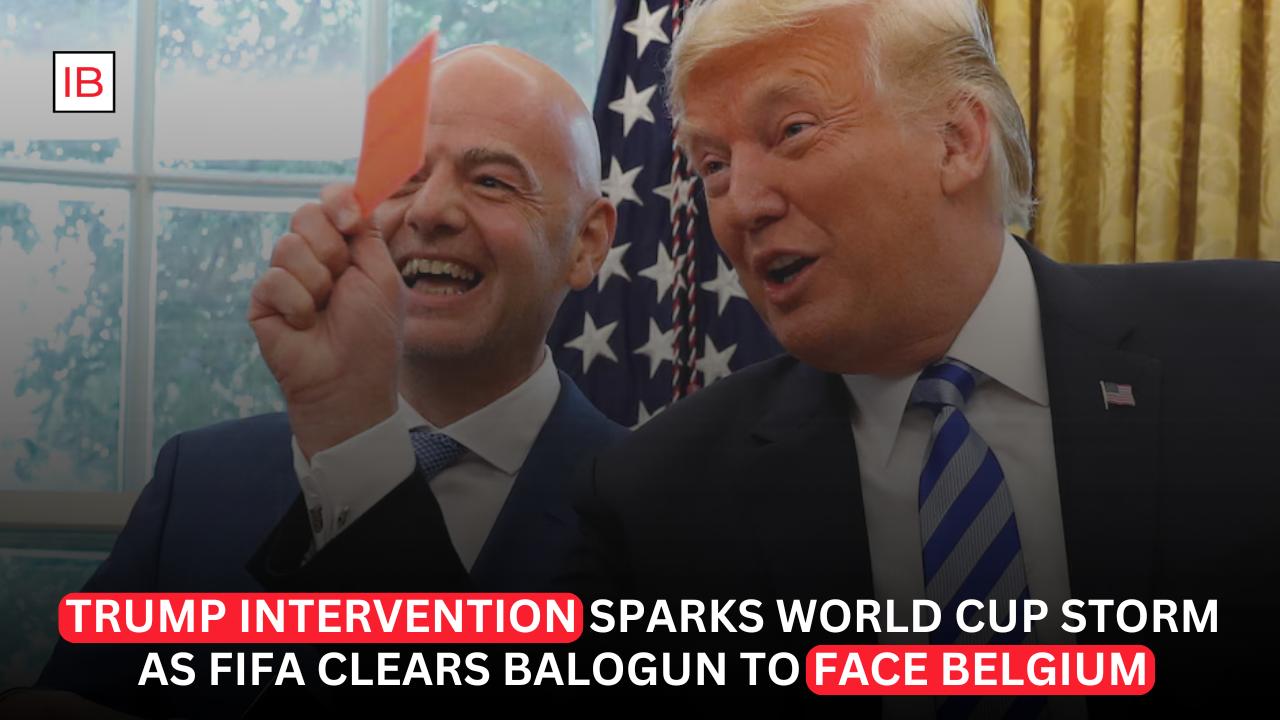
U.S. Striker Reinstated for Belgium Clash After Political Pressure on Disciplinary Decision
FIFA has allowed U.S. forward Folarin Balogun to play in the World Cup Round of 16 match against Belgium, overturning the immediate effect of his red-card suspension after an intervention linked to former U.S. President Donald Trump, triggering widespread controversy over political influence in football governance.
The decision has sparked criticism from Belgium and raised questions about the consistency and independence of FIFA’s disciplinary system, as the governing body faces scrutiny during one of the tournament’s most high-profile knockout fixtures.
Trump Call Reportedly Triggered Review
According to reports, Trump directly contacted FIFA leadership to question the red-card decision issued to Balogun during the United States’ previous match against Bosnia and Herzegovina.
Shortly after the intervention, FIFA’s disciplinary committee:
- Kept the red card officially on record
- Suspended the automatic one-match ban
- Allowed Balogun to play under a one-year probation condition
The move was justified under Article 27 of FIFA’s disciplinary code, which permits suspension of sanctions in specific circumstances.
Belgium Strongly Objects to Decision
The Belgian Football Association (RBFA) expressed strong opposition, arguing that FIFA’s decision contradicts its own tournament regulations.
Belgian officials pointed to rules stating that:
- Red cards normally trigger automatic suspension
- Tournament regulations require consistent enforcement
- Prior disciplinary precedents were not applied uniformly
Belgium has reportedly explored formal options to challenge the ruling, calling it inconsistent with fair play principles.
Balogun Eligible for Crucial Knockout Match
Balogun, who has been one of the standout players for the United States in the tournament, will now be available for selection in the high-stakes clash against Belgium.
The forward had been expected to miss the match after being sent off in the previous round, but FIFA’s ruling reversed the immediate suspension while maintaining the disciplinary record.
U.S. team officials welcomed the decision, describing it as beneficial for squad strength heading into the knockout stage.
Debate Over Political Influence in Football
The incident has intensified debate over the intersection of politics and sport, particularly regarding FIFA’s independence in disciplinary matters.
Critics argue that:
- External political pressure may have influenced the decision
- Disciplinary consistency could be undermined
- The precedent could affect future rulings in major tournaments
Supporters of the ruling say FIFA acted within its legal framework and that similar suspensions of sanctions have occurred in past cases.
Wider Tournament Tensions
The controversy adds to growing tension in the World Cup knockout stage, where several closely contested matches have already heightened scrutiny of refereeing and disciplinary decisions.
The Balogun case is now expected to remain one of the tournament’s most debated incidents, particularly as the United States prepares for a decisive match against Belgium.
Looking Ahead
As the United States advances into one of its biggest matches in recent World Cup history, attention will remain focused not only on the pitch but also on FIFA’s governance decisions.
The outcome of the Belgium clash may determine whether the controversy fades into the background or becomes a defining political and sporting flashpoint of the tournament.