West African Nation Seeks to Use IMF Support and Massive Iron-Ore Project to Strengthen Public Finances and Transform Its Economy
Guinea is preparing for a major economic transformation as the country combines a new International Monetary Fund financing program with rapidly expanding revenues from the giant Simandou iron-ore project.
The IMF has reached a staff-level agreement with Guinea for a 41-month Extended Credit Facility worth about $439 million, or SDR 310.59 million. The agreement still requires approval by the IMF’s Executive Board, but it represents an important step in the country’s effort to strengthen its economic policies and manage the opportunities created by Simandou.
The timing is significant. Guinea is entering a period when exports from Simandou could dramatically increase government revenues, foreign-exchange earnings and economic growth. The challenge for policymakers will be turning that expected resource boom into sustainable development rather than allowing the country to become overly dependent on commodity income.
Simandou Could Transform Guinea’s Economy
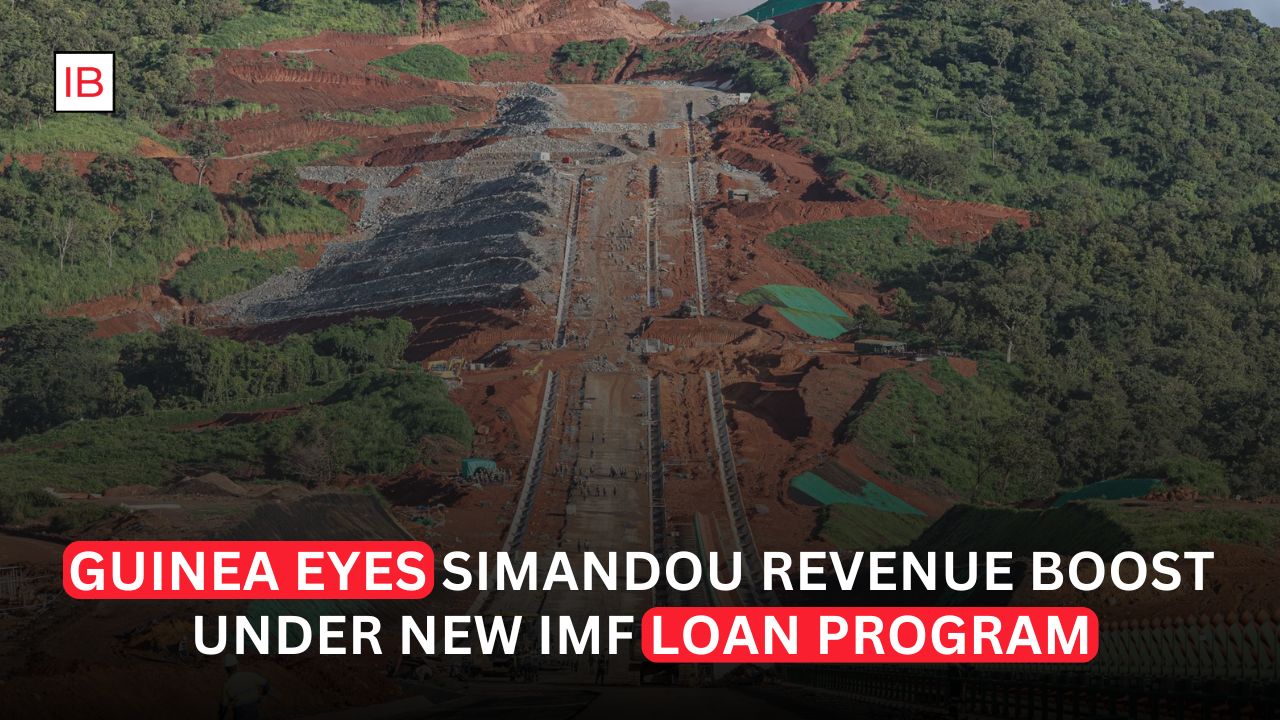
At the center of Guinea’s economic outlook is Simandou, one of the world’s largest and highest-grade undeveloped iron-ore deposits.
The project has attracted billions of dollars of investment and required major infrastructure, including a long railway and a new port system connecting the mining area to the Atlantic coast.
The emergence of Simandou exports is expected to significantly accelerate Guinea’s economic growth. The World Bank has previously warned that while the project could boost GDP, it could also amplify existing challenges unless the government implements appropriate macroeconomic and fiscal policies.
The scale of the project means Guinea could soon have access to substantially greater financial resources than in previous years.
Government Revenue Could Rise Sharply
One of the biggest potential benefits of Simandou is the increase in government revenue.
A June 2026 analysis by the Extractive Industries Transparency Initiative estimated that Simandou could eventually generate approximately $1.6 billion in annual government revenues, assuming an iron-ore price of $80 per metric ton.
For Guinea, that would represent a significant increase in fiscal resources.
The additional money could support infrastructure, education, healthcare, electricity, transportation and other public services.
However, the government will need to manage the revenue carefully because commodity prices can fluctuate considerably.
IMF Program Provides Financial Support
The new IMF program gives Guinea an additional source of financial support as it manages the transition.
The proposed 41-month Extended Credit Facility would provide roughly $439 million if approved by the IMF’s Executive Board.
The facility is designed to support Guinea’s economic program while helping address structural challenges.
For the government, IMF involvement can also strengthen confidence among international investors and development institutions.
A credible economic reform program can make it easier for Guinea to attract additional financing and investment as Simandou expands.
Guinea Faces a Critical Fiscal Challenge
The biggest challenge may not be generating revenue but managing it.
Large natural-resource discoveries have often created difficult choices for developing economies.
Governments can be tempted to rapidly increase spending when commodity revenues rise.
That can create inflation, increase imports and weaken fiscal discipline if commodity prices later fall.
Guinea therefore has an opportunity to establish stronger fiscal institutions before Simandou revenues reach their full potential.
The IMF program could help the government create policies designed to prevent excessive spending and protect public finances from commodity-price volatility.
Simandou Could Boost GDP Growth
The economic impact of Simandou is expected to extend well beyond government revenue.
Mining activity creates demand for transportation, construction, logistics, energy and other services.
The infrastructure built around Simandou can also improve connectivity between mining regions and international markets.
The IMF currently projects Guinea’s real GDP growth at 8.7% in 2026, illustrating the strong expansion expected in the economy.
If Simandou operations expand as planned, Guinea could experience several years of elevated growth.
But maintaining that growth after the initial mining boom will require diversification.
Infrastructure Investment Becomes More Important
Simandou has already required enormous infrastructure investment.
The railway and port associated with the project could become useful beyond transporting iron ore.
Better transportation links could lower logistics costs for other industries and improve access to international markets.
That could help Guinea develop agriculture, manufacturing, services and other sectors.
The government therefore faces a strategic opportunity to use mining infrastructure as the foundation for a broader economic transformation.
Avoiding the Resource Curse
Guinea’s policymakers are also aware of the risks associated with natural-resource wealth.
The so-called resource curse occurs when countries with abundant natural resources fail to translate those resources into broad improvements in living standards.
Problems can include corruption, excessive government spending, weak institutions, economic inequality and dependence on commodity exports.
Simandou gives Guinea an opportunity to avoid those outcomes by establishing stronger financial management and investing resource revenues productively.
An analysis of the project has emphasized that the key question is not simply how much money Simandou will generate, but how those revenues are converted into lasting development benefits.
Sovereign Wealth Fund Could Help Manage Revenue
Guinea has also been preparing to create mechanisms for managing future mining income.
The government previously announced plans for a Simandou-backed sovereign wealth fund, intended to protect the economy from commodity shocks and create a mechanism for long-term investment.
Such a fund could help prevent the government from spending all mining revenues immediately.
Instead, part of the income could be saved or invested, creating financial resources for future generations.
That approach could also help stabilize government finances when iron-ore prices decline.
China Will Remain Important
China is expected to remain an important market for Simandou’s iron ore.
The project is particularly significant for global steel supply because of the high quality of its ore.
Guinea’s ability to export large volumes could therefore increase its importance in international commodity markets.
For China, access to another major source of high-grade iron ore could support efforts to diversify supply.
For Guinea, strong demand from Chinese buyers could provide a major source of export earnings.
Mining Could Reshape Foreign Investment
The development of Simandou is also likely to attract additional foreign investment into Guinea.
Companies involved in mining will require services ranging from transportation and logistics to energy, construction and telecommunications.
Other investors may see opportunities in industries that benefit from stronger economic growth.
The government is already promoting a broader Simandou 2040 development strategy, which envisions investment across multiple sectors of the economy rather than relying solely on mining.
The success of that diversification strategy could determine whether Simandou becomes a short-term mining boom or the foundation of a much larger economic transformation.
Agriculture Remains Critical
Despite the importance of mining, agriculture remains essential to Guinea’s economy and population.
The World Bank estimates that agriculture is the country’s largest employer and provides income for a large share of the rural population.
That means the government will need to ensure that mining revenues also support rural development.
Investments in roads, irrigation, electricity and agricultural technology could help increase productivity and reduce poverty.
A broader economy would also be less vulnerable to fluctuations in iron-ore prices.
IMF Support Comes at an Important Moment
The IMF agreement arrives at a time when Guinea’s economic prospects are changing rapidly.
The country is moving from an economy heavily dependent on existing mineral exports toward one that could receive substantially greater income from Simandou.
That transition creates both opportunities and risks.
The IMF program can provide a framework for fiscal discipline and economic reform while Simandou generates new resources.
The government will need to balance investment in development with efforts to maintain macroeconomic stability.
Revenue Management Will Be the Key Test
The most important question for Guinea may ultimately be how the government manages the money generated by Simandou.
If revenues are invested in productive infrastructure and human capital, the project could raise living standards for decades.
If revenues are spent too quickly or poorly managed, Guinea could remain vulnerable to commodity cycles.
The country therefore needs strong institutions, transparent public finances and clear rules governing mining income.
The IMF program could help reinforce those systems.
Growth Could Extend Beyond Mining
The long-term objective should be to use mining as a catalyst for broader economic development.
Higher government revenues can finance infrastructure.
Improved infrastructure can encourage private investment.
Private investment can create jobs outside mining.
That process could help Guinea build a more diversified economy.
The country’s challenge will be ensuring that the benefits of Simandou reach communities throughout the country rather than remaining concentrated around the mining industry and major urban centers.
Looking Ahead
Guinea is entering one of the most important economic periods in its modern history.
The combination of Simandou’s enormous iron-ore potential and a new IMF financing program could give the government both the resources and policy framework needed to transform the economy.
The IMF’s proposed $439 million Extended Credit Facility provides financial support and a reform framework, while Simandou could eventually generate approximately $1.6 billion in annual government revenue under certain iron-ore price assumptions.
The opportunity is enormous, but so are the risks.
Guinea must avoid excessive dependence on mining, maintain fiscal discipline and ensure that resource revenues are invested in ways that benefit the wider population.
If policymakers succeed, Simandou could become much more than one of the world’s largest iron-ore projects.
It could provide the financial foundation for better infrastructure, stronger institutions, greater economic diversification and higher living standards.
For Guinea, the next few years will therefore be critical. The country’s challenge is no longer simply unlocking the mineral wealth beneath Simandou, but turning that wealth into sustainable economic development for generations to come.