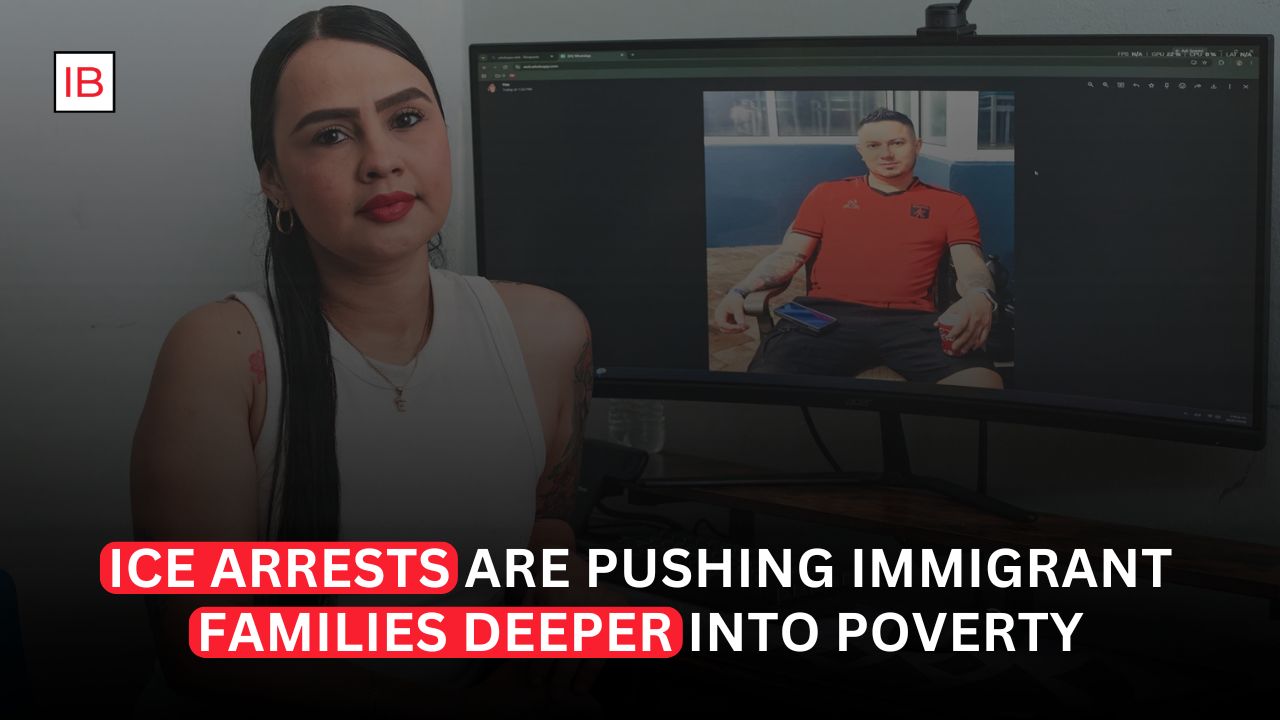
Immigration enforcement in the United States is increasingly producing economic consequences that extend far beyond the people directly arrested. As Immigration and Customs Enforcement (ICE) expands arrests and detention, immigrant households are facing lost wages, disrupted employment, higher legal expenses and growing difficulty accessing basic services. The result is a financial shock that can push already vulnerable families deeper into poverty.
The issue is particularly significant for mixed-status households, where some family members may be US citizens or lawful residents while others face immigration-related risks. When a parent or primary wage earner is detained, the financial consequences can spread immediately across the entire household.
Research from the Urban Institute found that immigration enforcement affected both immigrant and nonimmigrant families during 2025, with families reporting greater concern about enforcement and changes in everyday behavior. The study noted that expanded enforcement, increased detention capacity and broader cooperation between immigration authorities and other agencies contributed to widespread uncertainty.
An Arrest Can Become an Economic Crisis
For many households, the most immediate consequence of an ICE arrest is the sudden loss of income.
A worker who is detained cannot report to work. If that person is the primary or one of the primary earners, rent, utility bills, food costs, transportation expenses and other obligations do not disappear simply because the paycheck does.
Families may have to rely on savings, borrow money from relatives or friends, seek community assistance or fall behind on bills.
For households that were already living paycheck to paycheck, even a short interruption in employment can create long-term financial damage.
The economic impact can become even larger when families have to pay for immigration lawyers, transportation to detention facilities, court-related expenses and other costs associated with fighting a case.
In that sense, an arrest can trigger a chain reaction rather than representing a single financial setback.
Fear Is Changing Everyday Behavior
The economic consequences also arise before an arrest actually happens.
Research from the Urban Institute found that immigrant families increasingly avoided everyday activities because of concerns about immigration enforcement. These included activities connected to work, health care, schools and public life.
That behavior has an economic cost.
Someone who is afraid of encountering immigration authorities may avoid going to a medical appointment, attending a community event or even traveling to work.
Families can therefore lose access to services and opportunities even when nobody in the household has been arrested.
The Urban Institute found that these disruptions were especially significant among families with children. Mixed-status families reported particularly high levels of concern, with more than four in 10 saying they had avoided activities because of immigration worries.
Children Can Feel the Financial Shock
Children are often indirectly affected when immigration enforcement removes a parent or destabilizes a household.
If a parent is detained, children may suddenly experience changes in housing, transportation, childcare and food security.
The emotional consequences can also interfere with school and daily life.
According to Urban Institute research, one in four children in mixed-status families surveyed reported increased emotional distress because of immigration concerns. Families that had experienced local ICE activity were also substantially more likely to report that their children’s distress had increased.
The financial and emotional consequences can reinforce each other.
A family experiencing financial instability may have fewer resources to pay for childcare, tutoring, transportation or counseling. At the same time, children dealing with stress may struggle academically or socially.
Legal Costs Add Another Burden
Immigration cases can also become expensive.
Families facing detention may need attorneys, court representation and help gathering documents. Even households that have some legal resources can face substantial expenses when proceedings become prolonged.
For lower-income families, those costs can force difficult choices.
Money that would normally go toward rent or groceries may instead be redirected toward legal representation.
Some families may borrow money or sell possessions to cover those expenses.
This creates a particularly difficult situation because the legal process itself can take time while the household’s income remains uncertain.
The Economic Impact Extends Beyond Individual Families
There is another dimension that is easier to overlook: local economies can also be affected.
Immigrant workers are employed across construction, agriculture, hospitality, food processing, transportation, caregiving and many other industries.
When workers suddenly disappear from the labor force because of detention or fear of enforcement, employers can face staffing shortages.
That can disrupt businesses and local supply chains.
A 2026 study examining immigration raids in California’s agricultural sector found that intensified enforcement could produce significant labor-market and production effects. The research estimated substantial reductions in agricultural labor and associated crop losses, although those estimates come from a specific case study and should not be treated as a nationwide forecast.
The broader point is that immigration enforcement can create economic consequences beyond the individual people being targeted.
Families May Stop Using Public Services
Fear can also discourage families from accessing government programs and other essential services.
That creates another potential pathway into poverty.
If families avoid health clinics, schools, food assistance programs or other community services because they fear encountering immigration authorities, they may lose access to resources that help them remain financially stable.
The Urban Institute has documented this withdrawal from public life and essential services, warning that it can increase hardship for immigrant families while affecting the well-being of US-citizen children and other household members.
This creates a difficult paradox.
Programs designed to help vulnerable households may exist, but fear can prevent the people who need them from using them.
Mixed-Status Families Face a Particular Risk
The situation can be especially complicated in mixed-status households.
A family may include a US-born child, a lawful permanent resident parent and another relative with uncertain immigration status.
An enforcement action involving one person can therefore destabilize several people who themselves have lawful status or are US citizens.
This is why measuring the impact of ICE arrests simply by counting the number of people detained can underestimate the broader consequences.
The number of people economically affected may be significantly larger than the number actually arrested.
A single detained parent could affect an entire household’s income, housing situation and childcare arrangements.
Fear Can Reduce Economic Participation
Another potential consequence is reduced participation in the labor market.
Workers who are afraid of enforcement may change jobs, avoid certain workplaces or limit their movement.
Some families may even relocate.
Employers can also become more cautious about hiring workers who they believe could create immigration-related risks.
That uncertainty can reduce economic mobility.
Workers may accept less stable jobs or lower wages because they prioritize avoiding situations where they believe they could attract attention.
Over time, those decisions can make it harder for families to build savings or move into higher-paying employment.
Enforcement Policy Has a Broader Economic Debate
The economic effects of ICE arrests have become part of a much larger debate over immigration enforcement.
Supporters of aggressive enforcement argue that stronger measures are necessary to enforce immigration laws and remove people who are not legally permitted to remain in the country.
Critics argue that the economic and humanitarian consequences extend far beyond individual immigration cases and can destabilize families, communities and businesses.
Both sides recognize that enforcement has consequences.
The disagreement is largely about whether those consequences are justified by the government’s immigration objectives and how they should be managed.
The economic question is therefore difficult to separate from the legal and political debate.
The Poverty Risk Can Persist After Release
Even when someone is released from detention, the financial damage may not immediately disappear.
A worker may have lost a job.
Rent or utility bills may have accumulated.
Legal expenses may remain outstanding.
Children may have experienced disruption at school.
The household may have borrowed money to survive.
In other words, the economic shock can continue long after the initial arrest.
For families with little savings, recovering from such a disruption can take months or even years.
Why the Issue Matters for the US Economy
The debate over immigration enforcement often focuses on border security, deportation numbers and criminal enforcement.
But the economic consequences deserve equal attention.
Immigrant households are consumers, workers, renters, homeowners, taxpayers and participants in local economies.
When enforcement causes thousands of households to reduce spending, miss work or withdraw from public life, those effects can spread through communities.
Restaurants, retailers, landlords, employers and service providers can all feel the consequences.
That does not mean every ICE arrest produces a measurable macroeconomic shock. The effects vary considerably by location, industry and household.
But the cumulative impact of widespread enforcement can become significant.
What Comes Next
The central issue for immigrant families is uncertainty.
As long as enforcement remains highly visible and families believe that everyday activities could expose them or relatives to immigration authorities, the economic effects may continue even without a corresponding increase in arrests.
Research already indicates that fear itself is changing behavior.
Families are avoiding activities, worrying about deportation and experiencing disruptions that can affect both adults and children.
The result is a cycle that can be difficult to break.
A family loses income because of detention or fear. It draws down savings or takes on debt. It reduces spending and avoids services. Children experience greater instability. And the household becomes more vulnerable to the next financial shock.
That is why the economic consequences of ICE enforcement cannot be measured solely by the number of people arrested.
The larger question is how many families are economically destabilized as a result.
For households already close to the poverty line, the answer can determine whether they remain financially secure or fall into a much deeper crisis.