White House Adviser Rejects Idea of Replacing Cook if She Leaves the Federal Reserve
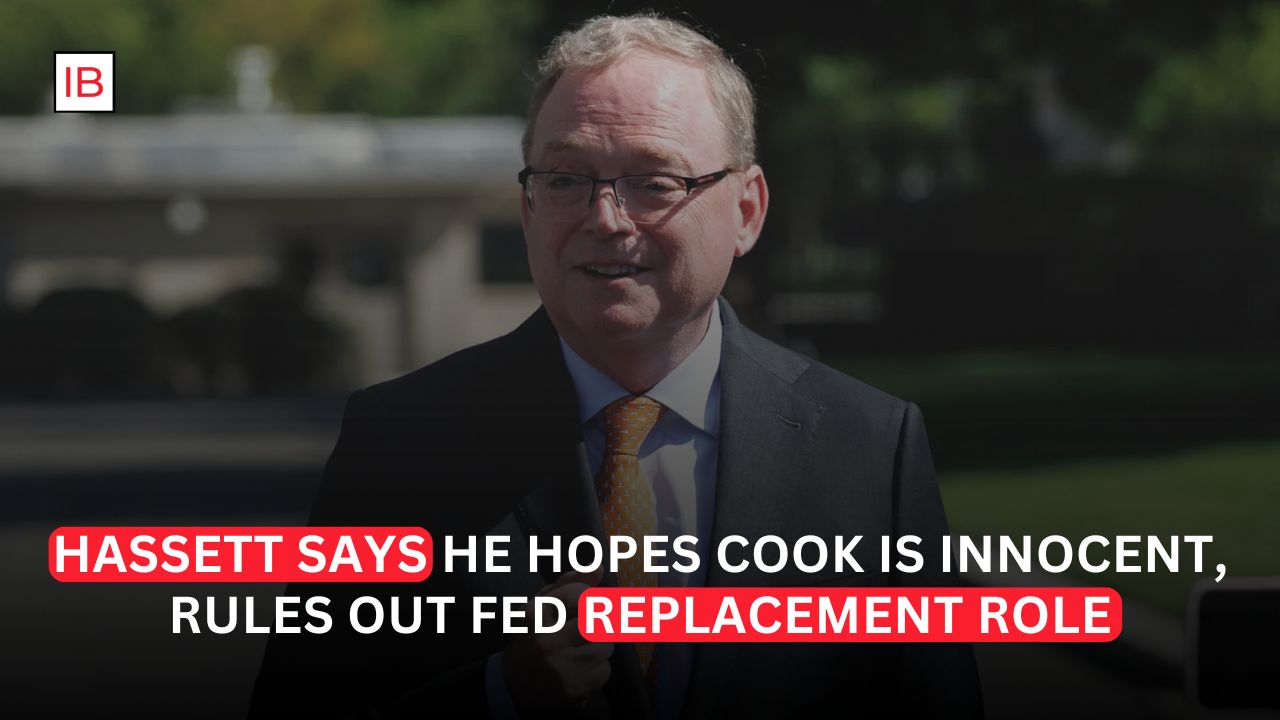
White House economic adviser Kevin Hassett has said he hopes Federal Reserve Governor Lisa Cook is innocent of the allegations being used by the Trump administration to consider removing her from the central bank.
Hassett also indicated that he would not seek to take Cook’s seat on the Federal Reserve Board if she were ultimately removed, adding another layer to an increasingly contentious debate over the central bank’s independence.
Trump Administration Renews Effort Against Cook
The comments come after the Trump administration revived its effort to remove Cook from the Federal Reserve.
The White House has given Cook an opportunity to respond to allegations involving mortgage-related financial disclosures. The renewed process follows an earlier attempt to remove her that was blocked by the U.S. Supreme Court because Cook had not been given sufficient notice and an opportunity to respond.
Cook and her lawyers have rejected the allegations, calling them baseless and saying the administration’s actions threaten the independence of the Federal Reserve.
Hassett Says He Hopes Cook Is Innocent
Hassett’s comments suggest that he does not view Cook’s potential removal as an opportunity to gain a seat on the Fed’s governing board.
His position is notable because Hassett has previously been considered a potential candidate for senior Federal Reserve leadership roles.
Instead, he said he hopes the allegations against Cook prove unfounded, emphasizing that the situation should be resolved based on the facts.
Federal Reserve Independence Under Pressure
The dispute has renewed concerns about political pressure on the Federal Reserve.
The central bank is designed to operate independently from day-to-day political influence so that interest-rate decisions can focus on inflation, employment, and broader economic conditions.
The controversy surrounding Cook has therefore attracted significant attention from investors and economists.
Concerns include:
- Political influence over monetary policy
- The independence of Fed governors
- The future direction of interest rates
- Investor confidence in U.S. institutions
Cook Maintains Her Role at the Fed
Despite the political controversy, Cook continues to participate in Federal Reserve policymaking.
In a speech on August 5, 2026, Cook said U.S. inflation remained too high and had stayed above the Fed’s 2% target for more than five years. She also said she was prepared to support higher interest rates if necessary to bring inflation under control.
Her comments demonstrate that she remains actively engaged in monetary-policy discussions despite the legal and political pressure surrounding her position.
Hassett Has Supported Lower Interest Rates
Hassett’s own economic views have attracted attention because he has generally supported a more accommodative monetary-policy approach.
He has previously argued in favor of interest-rate cuts and has been viewed by investors as more closely aligned with President Donald Trump’s preference for lower borrowing costs.
That has led markets to closely monitor the possibility of Hassett gaining a more influential role at the Federal Reserve.
Earlier reporting also highlighted concerns that a Hassett-led Fed could create uncertainty over central-bank independence and potentially put pressure on the U.S. dollar.
Why Cook’s Seat Matters
The Federal Reserve Board consists of governors who play important roles in setting monetary policy and overseeing the U.S. banking system.
A change in its membership could influence the balance of views within the central bank.
However, interest rates are ultimately determined through the Federal Open Market Committee (FOMC), where policymakers vote on monetary policy.
This means replacing one governor would not automatically guarantee a change in the Fed’s overall policy direction.
Markets Watch the Political Developments
Investors are closely following the dispute because uncertainty surrounding the Federal Reserve can affect financial markets.
Potential market reactions could include movements in:
- U.S. Treasury yields
- The dollar
- Stock markets
- Interest-rate expectations
- Bond-market volatility
Any perception that political pressure is weakening Fed independence could have wider implications for confidence in U.S. monetary policy.
A Broader Debate Over the Fed
The Cook controversy is part of a broader debate about how much influence the White House should have over the Federal Reserve.
Trump has repeatedly criticized the Fed’s approach to interest rates and has pushed for lower borrowing costs.
The administration’s attempt to remove Cook has intensified questions about whether future Fed officials could face greater political pressure.
Looking Ahead
The dispute over Lisa Cook is likely to remain closely watched as she responds to the administration’s allegations.
For Kevin Hassett, the latest comments separate his potential future role at the Federal Reserve from Cook’s current position. His statement that he hopes Cook is innocent and that he would not take her seat highlights the political and institutional sensitivity surrounding the case.
Ultimately, the controversy could become an important test of Federal Reserve independence, with investors watching closely for any impact on monetary policy, interest rates, the dollar, and U.S. financial markets.