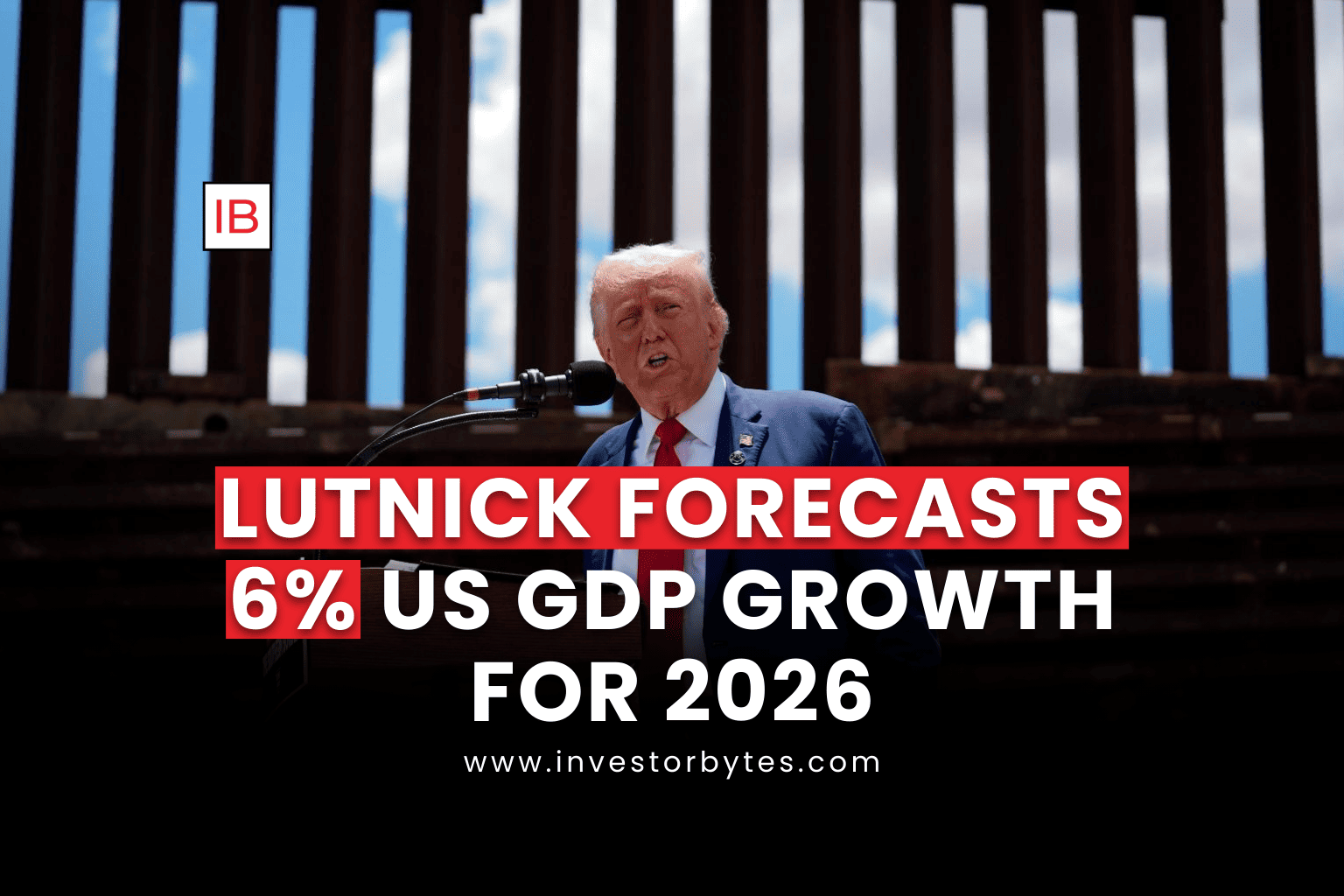
In mid-February 2026, U.S. Commerce Secretary Howard Lutnick has emerged as the administration’s leading economic optimist, forecasting a historic surge in the $30 trillion U.S. economy. Speaking from the World Economic Forum in Davos and in recent high-profile interviews, Lutnick projected that while Q1 2026 should exceed 5% growth, the U.S. could hit a blistering 6% GDP growth rate by year-end if specific monetary conditions are met.
This projection significantly outpaces the IMF’s 2.4% forecast and even the more conservative 4–5% estimate from Treasury Secretary Scott Bessent.
The “6% Path”: Drivers of the 2026 Boom
Lutnick’s “convergence of factors” for a 6% growth rate relies on three primary pillars of the current administration’s “Big, Beautiful Bill” economic agenda:
Aggressive Monetary Easing: Lutnick argues that current interest rates are the primary “bottleneck.” He maintains that if the Federal Reserve delivers a 100-basis-point rate cut, the 6% threshold becomes a “mathematical likelihood.”
Historic Tax Refunds: Due to the 2025 tax overhauls, the current February 2026 tax season is seeing record-breaking refunds. The administration expects this liquidity to unleash a “wave of consumer spending” that will peak in Q2 and Q3.
Manufacturing & Infrastructure Build-out: Citing the revamped CHIPS Act and industrial reshoring, Lutnick points to the doubling of domestic semiconductor investment to over $550 billion as a structural driver of long-term GDP.
The Economic Debate: Growth vs. Overheating
While the administration predicts a “healthy expansion,” Wall Street and international institutions are sounding the alarm on potential “overheating.”
| Indicator | Lutnick / Admin View | Consensus / Critic View |
| GDP Growth | 6.0% (Projected Peak) | 2.2% – 2.5% (Full-year Avg) |
| Inflation (PCE) | “Healthy Expansion” | 2.7% – 3.0%+ (Persistent risk) |
| Fed Policy | Needs 100bps in cuts | Potential “Stay Pat” due to labor strength |
| Tariff Impact | Rebalancing Trade | “Tax on Americans” / Cost-push inflation |
The Overheating Risk: Economists like David Rosenberg warn that a 6% growth target in a $30 trillion economy—fueled by massive stimulus—could trigger a “wage-price spiral.” With January jobs data showing a surprisingly strong gain of 130,000 positions, critics argue that aggressive rate cuts now would be “pouring gasoline on a fire.”