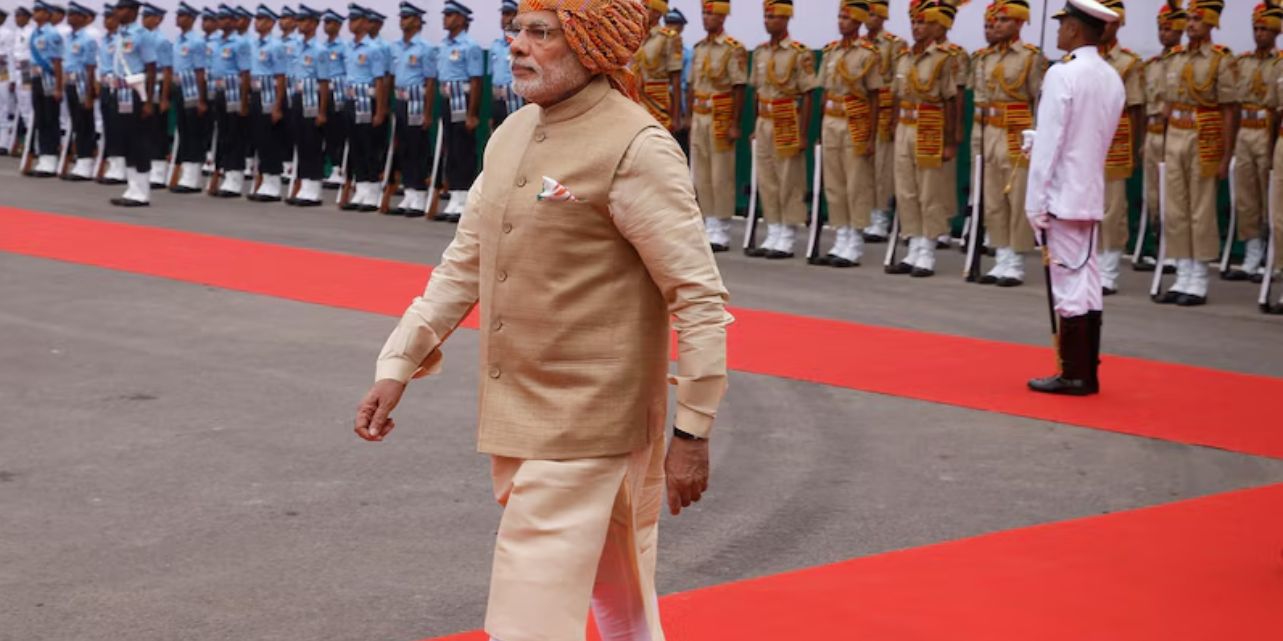
Narendra Modi’s third term as Prime Minister marks a significant milestone in Indian politics. BJP not securing a majority on its own, Modi was legally elected to lead the National Democratic Alliance (NDA) coalition. Which emerged with the most seats in the national elections. This victory underscores the complexities of coalition politics in India and the strategic alliances that shape the country’s governance.
Background of the Indian National Elections
The recently concluded national elections in India witnessed a spirited contest across the country. Spanning six weeks from mid-April, the elections culminated in the BJP securing 240 seat. Failing short of the 272 needed for a majority in the 543-member lower house of parliament. However, the NDA coalition, comprising various regional parties, secured a combined total of 293 seats, paving the way for Modi’s third term.
Formation of the NDA Coalition
Coalition politics plays a pivotal role in Indian governance, where no single party has consistently achieved an absolute majority in recent decades. The NDA coalition’s formation involved strategic negotiations and alliances with regional parties like the Telugu Desam Party and Janata Dal (United), which hold considerable influence in their respective states of Andhra Pradesh and Bihar. These alliances were crucial for Modi to garner sufficient parliamentary support to form a stable government.
Challenges Faced by Modi’s BJP
Despite the BJP’s dominant position in Indian politics over the past decade, the recent elections posed unexpected challenges. The party’s inability to secure a majority independently highlighted shifting voter dynamics and the growing influence of regional parties. This necessitated the BJP to seek coalition partners to consolidate power and ensure effective governance.
Modi’s Endorsement and Acceptance
Following the election results, Modi’s endorsement as the prime ministerial candidate by the BJP and its coalition partners underscored a united front amidst political challenges. Modi emphasized that the NDA government represents the true spirit of India, reflecting unity in diversity and the strength of collective governance across diverse regional interests.
Opposition’s Response and Claims
The opposition, particularly led by Rahul Gandhi of the Congress party, intensified criticism against Modi and his government. Gandhi accused Modi and senior BJP ministers of misleading investors and causing losses in what he termed as the “biggest stock market scam.” These allegations added a layer of contention in the post-election political landscape, highlighting ongoing tensions between the ruling coalition and its adversaries.
Economic and Market Reactions
The announcement of election results triggered significant volatility in India’s financial markets. Initial optimism following exit polls gave way to uncertainty, reflected in a sharp decline of over 5% in key stock indexes. Modi and Home Minister Amit Shah’s predictions of a market surge contrasted with the actual market response, raising questions about the economic impact of political transitions and policy shifts under the new government.
Future Prospects for the NDA Coalition
Looking ahead, Modi’s third term presents both opportunities and challenges for the NDA coalition. Managing diverse regional interests, navigating economic reforms, and addressing social issues will be critical priorities. The coalition’s ability to maintain unity and deliver on electoral promises will shape its credibility and longevity in Indian politics.
In conclusion, Narendra Modi’s re-election and the formation of the NDA coalition underscore the resilience of coalition politics in India. Despite electoral challenges, Modi’s leadership and strategic alliances have ensured continuity in governance. The coming years will test the coalition’s ability to govern effectively amidst diverse socio-political dynamics, setting the stage for India’s future trajectory under Modi’s leadership.
What does it mean for a Prime Minister to lead a coalition government?
Leading a coalition government involves forming alliances with multiple political parties to secure a parliamentary majority, enabling governance despite not having a single-party majority.
How did the NDA coalition manage to form a government without a majority?
The NDA coalition secured sufficient seats through alliances with regional parties, demonstrating the importance of coalition-building in Indian politics.
What are the challenges Modi might face with a coalition government?
Challenges include balancing diverse interests, managing coalition dynamics, and ensuring consensus on policy decisions.
How did the opposition react to Modi’s third term victory?
The opposition, led by Rahul Gandhi, criticized Modi’s government over alleged financial irregularities, signaling continued political rivalry and scrutiny.
What were the economic implications of Modi’s re-election?
Market volatility post-election underscored investor uncertainty, highlighting the economic ramifications of political outcomes.