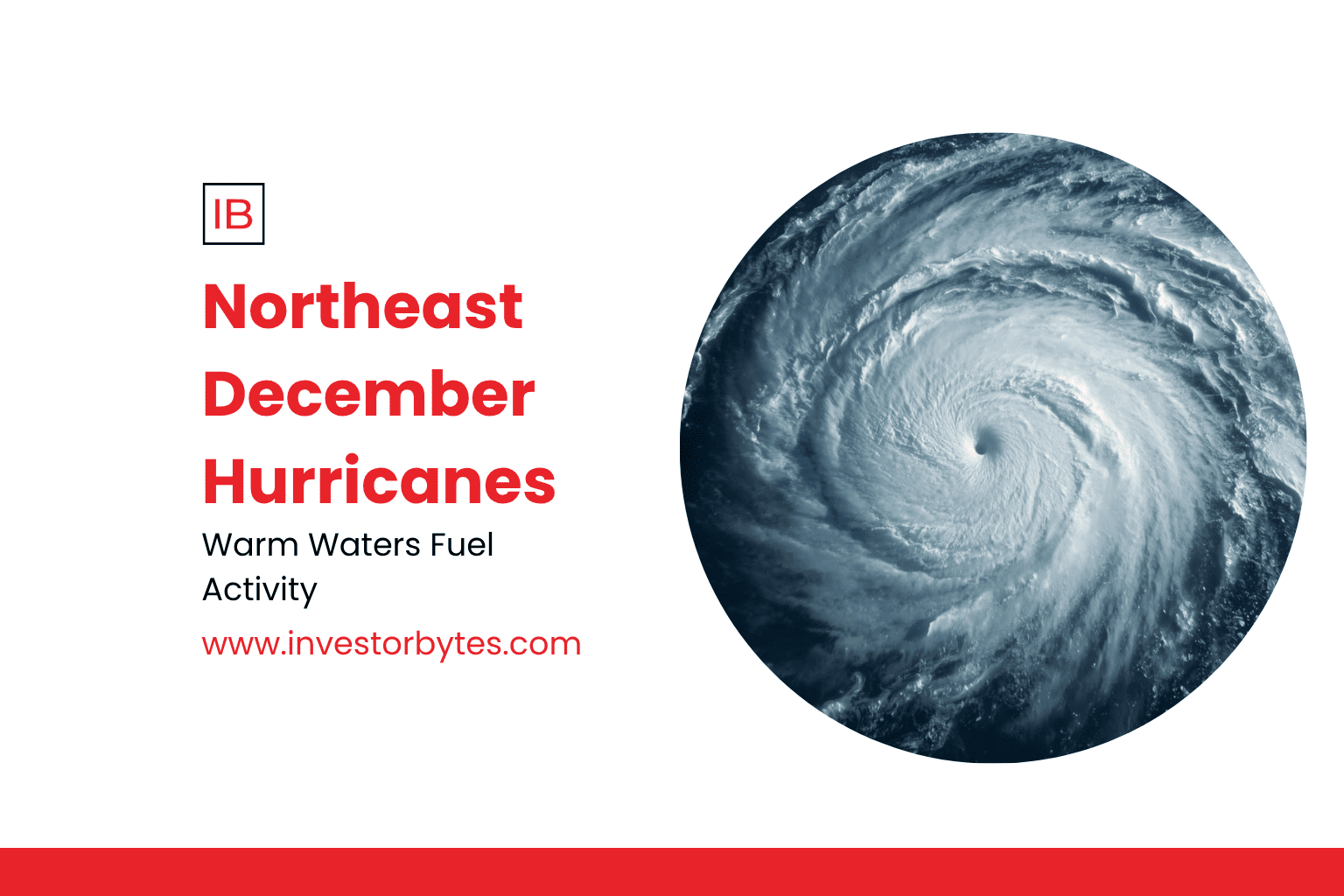
La Niña’s equatorial chill supercharges late-season Atlantic fury, amplifying November–December tropical threats and tilting the odds toward a rare Northeast hurricane landfall—the region’s first direct major strike since Sandy in 2012. NOAA’s extended ensemble now pegs a 28% chance of a post-November 15 named storm curving north of Hatteras, with 2025’s hyperactive basin already logging 18 named systems, 9 hurricanes, and 4 majors—exceeding May forecasts by 38% despite the season’s official close on November 30.
The pattern is textbook La Niña mischief: cooled eastern Pacific waters weaken wind shear across the MDR, allowing late-blooming waves to spin up off Africa and intensify in the warm Gulf Stream. AccuWeather’s probabilistic tracker flags a 1-in-4 shot of a Category 2+ system brushing Long Island or Cape Cod by mid-December—climatology’s overdue debt, with the Northeast cycling every 18–22 years for high-impact hits. Since 1851, 14 hurricanes have formed after October 22; 9 struck the U.S., and 4 targeted the corridor from Virginia to Maine—yet none since 1991’s Bob have delivered sustained winds over 100 mph north of Delaware.
This year’s survivors—Humberto, Imelda, Karen—tracked harmlessly east, swallowed by the jet. But a nascent wave near 45W shows hybrid vigor: 29°C SSTs, low shear, and a blocking Bermuda high that could recoil it northwest. Models coalesce on a December 8–12 threat: a slow-moving 975 mb hurricane stalling off Jersey, lashing NYC with 70 mph gusts, 6–10 inches of rain, and a 5-foot storm surge that floods the Subway for the first time since Ida. Boston braces for nor’easter-hybrid blizzard conditions if cold air entrains—12–18 inches of wet snow atop tidal flooding.
The risk isn’t abstract. La Niña doubles late-season ACE by 110% versus neutral years; 2025’s residual warmth (1.8°F above average) sustains fuel into winter. FEMA pre-positions 2.1 million meals in Philly; ConEd hardens 1,800 manholes; Amtrak readies Acela cancellations. Insurers model $22 billion in surge-wind losses for a Sandy-like track—40% uninsured in coastal zones.
This isn’t anomaly—it’s awakening. La Niña unveils not storm’s fleeting roar, but pattern’s durable dance—veiled veils of post-November spins from shearless warmth, where weather’s artistry yields reinvention’s radius across the vigilant Northeast.