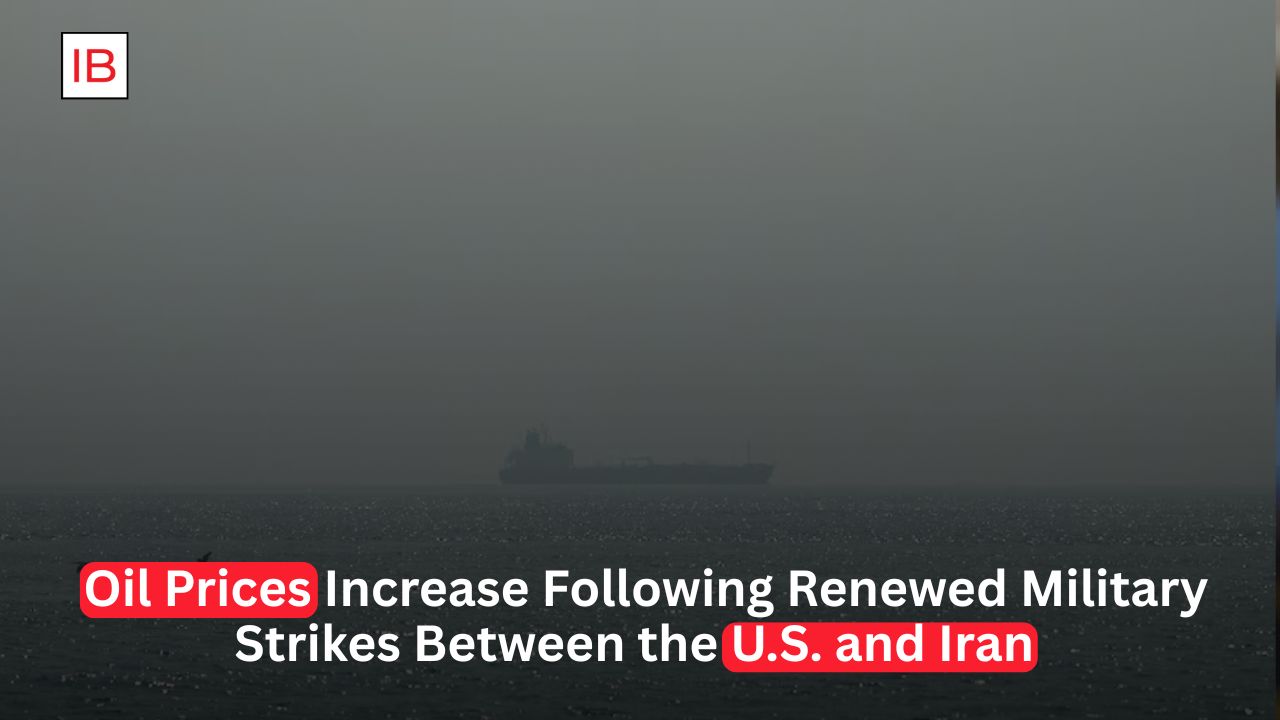
Global oil prices moved higher after renewed military action between the United States and Iran increased concerns about the stability of energy supplies from the Middle East. Investors closely monitored developments in the region, particularly around the Strait of Hormuz, a vital shipping route through which roughly one-fifth of the world’s oil passes each day.
Although global supplies remain largely uninterrupted for now, traders fear that any escalation in the conflict could disrupt exports, tighten supply, and push energy prices significantly higher. The renewed geopolitical tensions also revived concerns about inflation and their potential impact on the global economy.
Fresh Military Strikes Lift Oil Markets
Crude prices advanced after reports of renewed U.S. military strikes targeting Iranian-linked positions, prompting fears that tensions between the two countries could escalate further.
Markets reacted quickly as geopolitical risks often translate into higher oil prices, particularly when the conflict involves major oil-producing regions. Investors remain cautious that any military escalation could affect shipping routes, production facilities, or export terminals across the Gulf.
The increase reflects the market’s tendency to price in future supply risks even before any physical disruption occurs.
Strait of Hormuz Remains Key Concern
Much of the market’s attention remains focused on the Strait of Hormuz, one of the world’s most strategically important maritime trade routes.
Around 20% of global oil consumption passes through the narrow waterway each day, making it essential for exports from Saudi Arabia, Iraq, Kuwait, the United Arab Emirates, and other major producers.
Any disruption to commercial shipping through the strait could have immediate consequences for global energy markets, increasing transportation costs and reducing available supply.
Supply Has Not Yet Been Disrupted
Despite rising tensions, there have been no major interruptions to oil production or exports from the region.
Energy analysts noted that production continues across major Gulf producers, while international shipping remains operational. However, insurance costs for tankers and shipping companies have risen as operators assess the growing security risks.
Oil traders continue to monitor military developments closely, recognizing that conditions could change rapidly if hostilities expand.
Markets Balance Geopolitical Risks and Demand Outlook
While geopolitical tensions supported oil prices, concerns about slower global economic growth continued to limit gains.
Higher interest rates in several major economies and signs of moderating manufacturing activity have raised questions about future fuel demand. Investors are therefore balancing fears of supply shortages against the possibility that weaker economic growth could reduce global oil consumption.
This combination has contributed to increased volatility in energy markets throughout recent trading sessions.
OPEC+ Production Policy Also in Focus
Alongside geopolitical developments, investors are closely watching production decisions by OPEC+, the alliance of major oil-producing countries.
The group has maintained supply management policies aimed at supporting prices, and any future adjustments to production targets could influence market direction.
Analysts say the combination of disciplined OPEC+ output, geopolitical uncertainty, and resilient global demand continues to provide support for crude prices despite broader economic concerns.
Inflation Risks Return to the Spotlight
Higher oil prices could once again complicate efforts by central banks to bring inflation under control.
Rising energy costs typically increase transportation, manufacturing, and consumer prices across the global economy. If crude prices continue climbing, policymakers may face additional pressure to maintain higher interest rates for longer, potentially slowing economic growth.
Financial markets are therefore monitoring both geopolitical developments and energy prices as key factors influencing future monetary policy.
Investors Watch Middle East Developments Closely
The latest increase in oil prices highlights how quickly geopolitical events can influence global commodity markets.
Although current supplies remain stable, uncertainty surrounding the conflict between the United States and Iran continues to keep traders on alert. Any further escalation could significantly affect oil exports, shipping routes, and global inflation, making developments in the Middle East one of the most closely watched factors for financial markets in the weeks ahead.