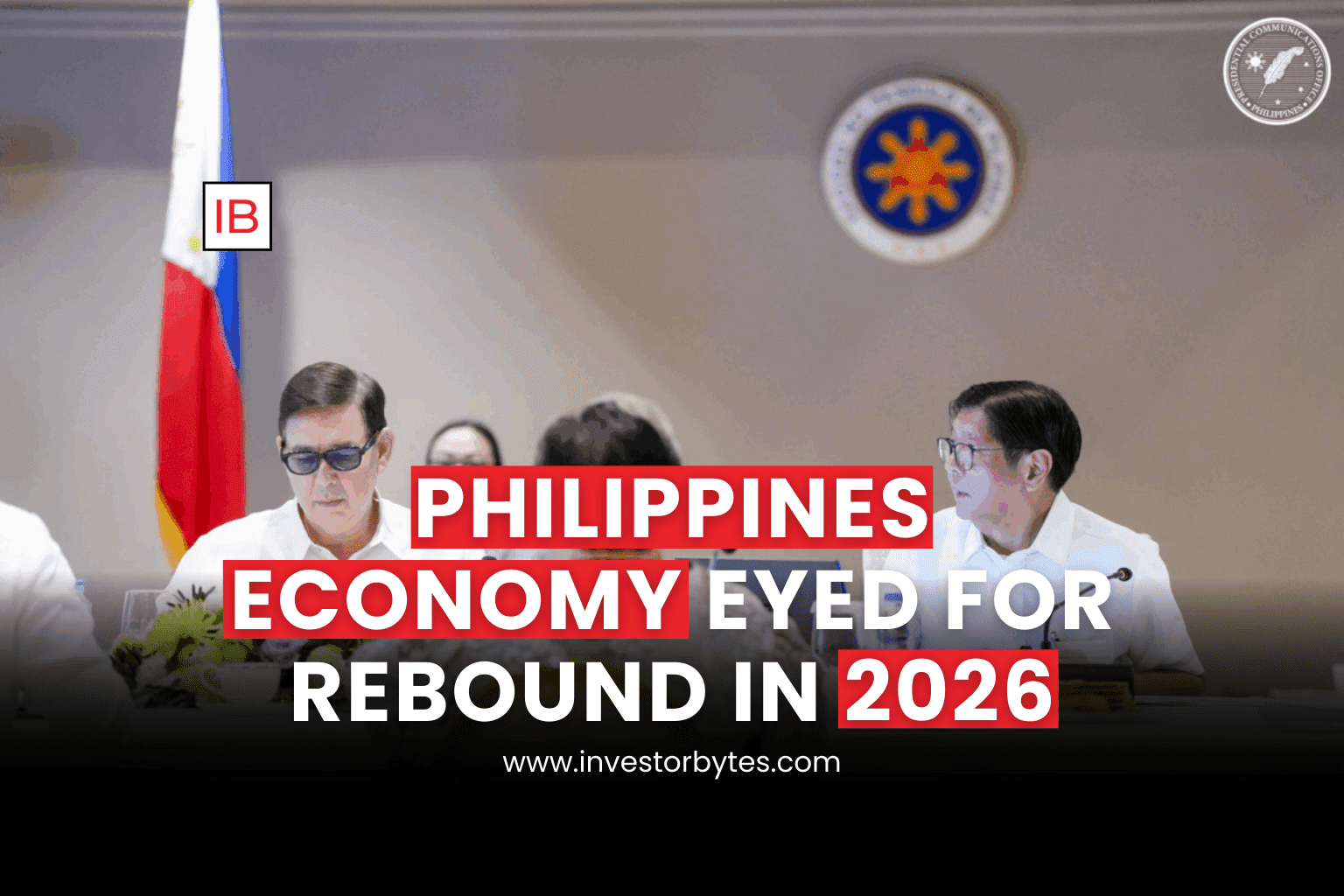
Philippine government reaffirmed its confidence in an economic recovery, with Economic Planning Secretary Arsenio Balisacan and Finance Secretary Frederick Go targeting a rebound to at least 5% GDP growth for the year.
The outlook follows a challenging 2025 where growth slowed to 4.4%, missing government targets due to weather-related disruptions, global uncertainties, and a high-profile corruption scandal involving flood control projects that hampered public spending.
The 2026 Growth Roadmap
The government’s strategy for 2026 hinges on restoring investor confidence and accelerating the rollout of critical infrastructure projects.
Revised Targets: The Development Budget Coordination Committee (DBCC) recently recalibrated the 2026 growth target to a range of 5% to 6%, down from earlier, more ambitious projections.
Q2 Pivot Point: Balisacan noted that while the first quarter may still feel the effects of the 2025 slowdown, the economy is expected to “rally” by the second quarter. Achieving 5% growth by June is seen as the necessary threshold to hit the full-year target.
Monetary Support: To stimulate activity, the Bangko Sentral ng Pilipinas (BSP) has aggressively cut interest rates to a three-year low of 4.5%, providing much-needed relief for consumers and businesses.
Key Drivers of the Rebound
Economic managers are counting on a “solid and reliable” set of pillars to drive the 2026 recovery:
| Growth Pillar | Role in 2026 Recovery |
| Infrastructure | Restarting “Build Better More” projects and resolving the “flood control mess” that stalled 2025 spending. |
| Governance Reforms | Implementing stricter oversight to restore public trust and ensure efficient budget execution. |
| BPO & Remittances | Continued double-digit growth in service exports and steady inflows from Overseas Filipino Workers (OFWs). |
| Low Inflation | Inflation has stabilized (averaging 1.5% late in 2025), which is expected to boost household consumption. |
Challenges & Skepticism
Despite the government’s optimism, global analysts and credit institutions remain cautious.
The “Corruption Drag”: Analysts warn that the lingering effects of the 2025 graft fallout could still dampen private investment if governance reforms are perceived as purely “cosmetic.”
Fiscal Pressure: The government is bracing for a weaker Peso (assumed at 58.60 to 60.00 per USD), which could increase the cost of imports and debt servicing.
External Risks: Ongoing climate-related disruptions and a fluctuating global economic climate continue to pose downside risks to the 5% goal.
“2026 will be our rally point. By improving governance and public services, we are restoring the trust needed to drive sustainable, long-term capacity building.” — Arsenio Balisacan, Economic Planning Secretary